NixOS 26.11 “Zokor” is out as the latest version of the independently developed Linux distro known for declarative system configuration and reproducible builds, powered by the long-term-supported Linux kernel 6.18 series.
On the desktop side, NixOS 26.11 ships with GNOME 51 and KDE Plasma 6.8, both available as dedicated graphical installation images. Users can also install alternative desktop environments, including Cinnamon, Xfce, MATE, LXQt, Budgie, and COSMIC, through the distribution’s declarative configuration system.
Interestingly, NixOS now supports running Nix without its background daemon, allowing store operations to be performed directly, though this usually requires root privileges. Users can configure automatic removal of old Nix build logs based on a retention period.
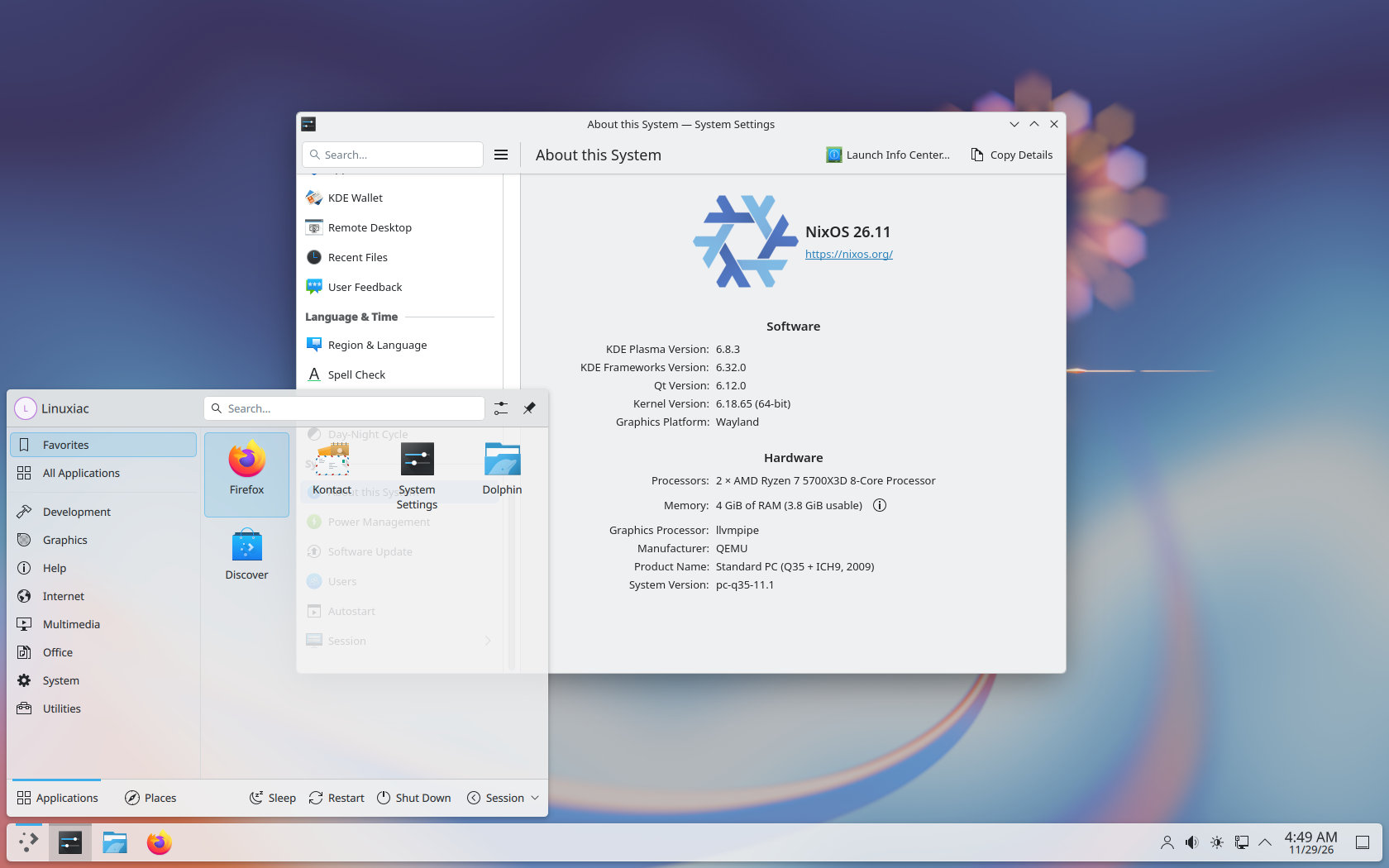
The development toolchain moves to GCC 16, while PostgreSQL 18 becomes the default database version for fresh installations. Similarly, new Nextcloud deployments now default to version 34.
Regarding security, OpenSSH now generates hybrid ML-DSA-44/Ed25519 host keys by default, introducing post-quantum protection alongside conventional cryptography. PHP-FPM services also benefit from improved security hardening.
This update also expands the distro’s declarative configuration capabilities. Brave gets a dedicated browser configuration module, while a new XDG module lets users manage base directory environment variables directly through their NixOS configuration.
New modules are also available for Portmaster, an application-level firewall; Atlantis, a Terraform automation tool; OpenBao Agent, a secrets management solution; and Zerobyte, an automated backup application.
Desktop users gain dedicated configuration modules for Dux Files and Dux Calendar, while administrators running Kubernetes infrastructure benefit from improved container image management in K3s and RKE2.
Finally, there are some backward-incompatible changes worth reviewing before upgrading. Among them, the firewall’s reverse path filtering now defaults to loose mode rather than strict mode. Administrators requiring strict filtering must explicitly enable it in their system configuration.
For a complete list of changes, new modules, and migration instructions, refer to the NixOS 26.11 release notes.