
Canonical has revealed plans for a new Ubuntu desktop launcher that combines application launching, file search, and optional AI-powered assistance in a single interface, with the first functional version expected in January 2027.
The announcement follows the appearance of an experimental application called warty-prototype in the Snap Store last month. Initially a design mockup, the prototype has since evolved into working code.
The idea is to provide Ubuntu users with a central point of interaction with their desktop through keyboard and voice input, rather than integrating separate AI-powered tools throughout the operating system.
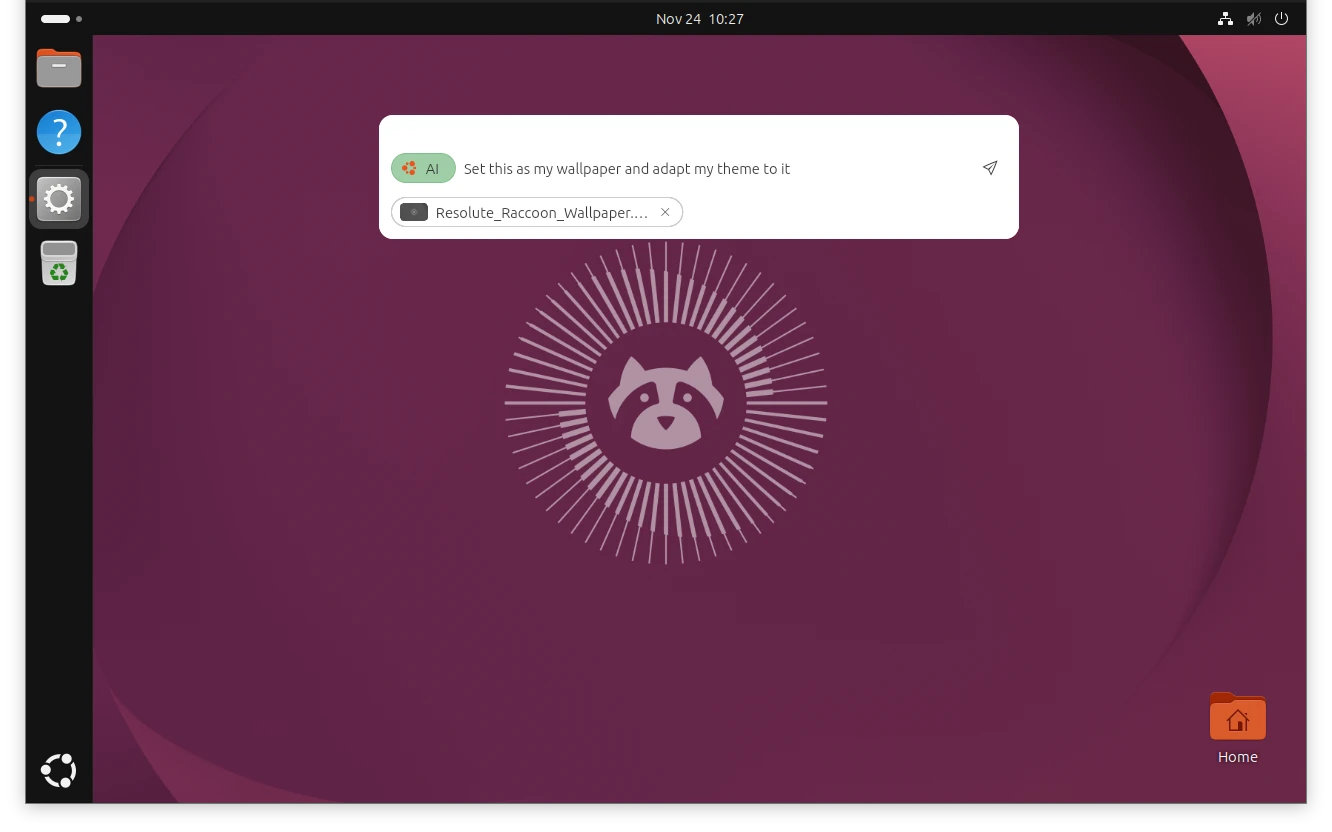
However, Canonical makes it clear that AI will not be mandatory. All AI features will be strictly opt-in, letting users use the application as a conventional desktop launcher without enabling AI functionality.
The company intends to favor local AI inference over cloud processing, keeping personal data on users’ computers. Ubuntu will not include large AI models in its default installation.
From a security standpoint, the project will rely on Ubuntu’s existing sandboxing and confinement features to isolate components in charge of AI functionality from the host system.
For now, development focuses on fundamentals like fast startup times, low resource consumption, and seamless desktop integration before introducing advanced functions.
Canonical plans to publish the first functional version in January 2027, accompanied by technical details about its architecture.
There is currently no confirmation of whether the new launcher will become a default component of Ubuntu or make its debut in the upcoming Ubuntu 27.04 release.
For more information, see the announcement.
Image credits: Canonical