IncidentRelay, a new open-source platform for managing on-call schedules, alert routing, escalations, and incident response, has reached its first stable release, version 1.1, following several beta builds.
The project targets SRE, DevOps, platform, infrastructure, and operations teams seeking to manage incident workflows on their own infrastructure rather than relying exclusively on hosted services such as PagerDuty.
To be clear, IncidentRelay is not another monitoring system. Instead, it sits between existing monitoring tools and the people responsible for responding to their alerts.
When a monitoring platform detects an issue, IncidentRelay receives the alert, verifies its source, labels, severity, routing rules, and team ownership, then forwards it to the appropriate on-call responder. The alert can then be acknowledged, resolved, silenced, or escalated if there is no response.
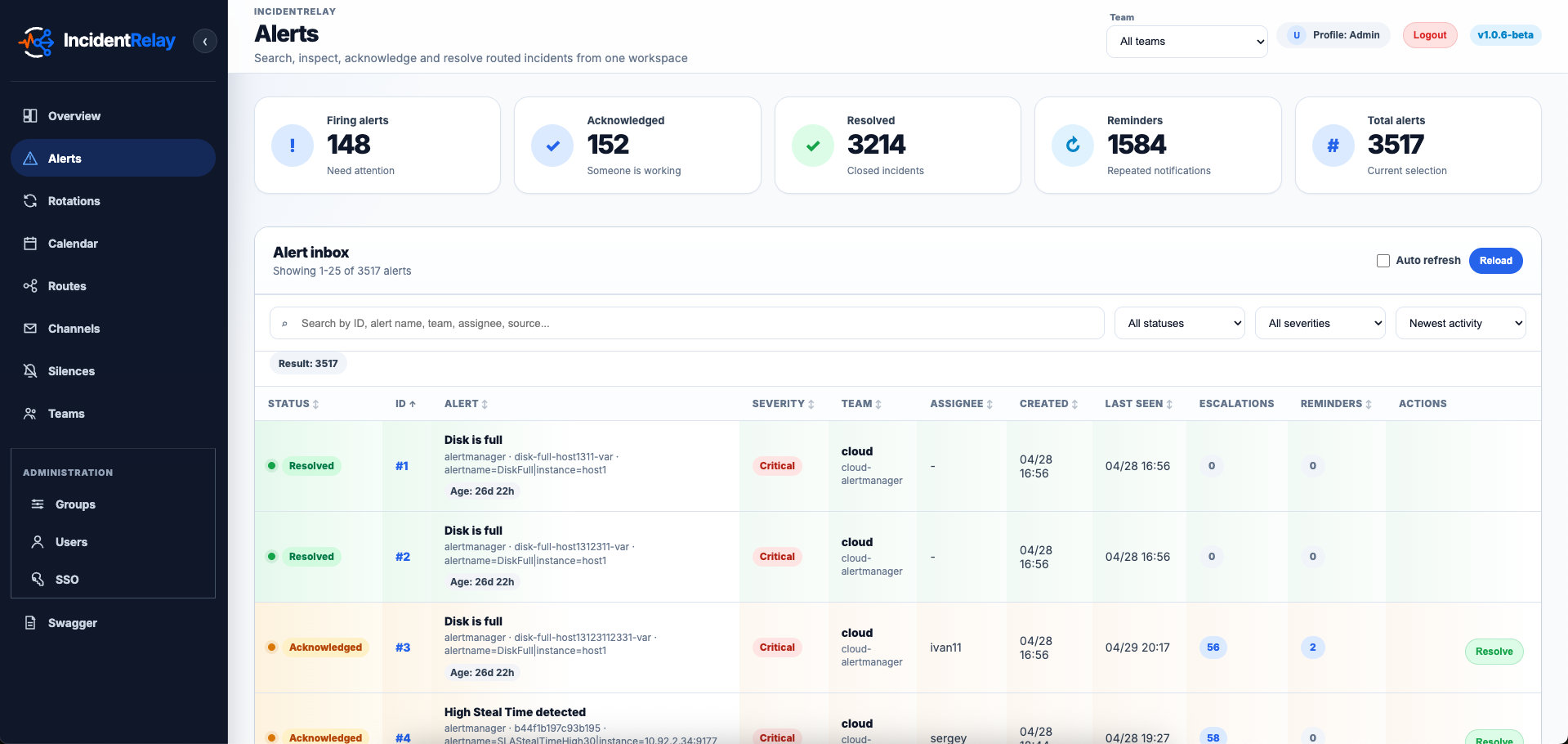
IncidentRelay supports on-call schedules, recurring rotations, temporary overrides, reminders, and escalation chains. Unacknowledged alerts trigger repeated reminders before escalating to the next person in the rotation, helping teams avoid missed critical alerts.
The platform also provides maintenance windows and alert silences for planned work, along with grouping and access controls for organizations running several infrastructure or development teams. Plus, its calendar interface shows current assignments and overrides.
For incoming alerts, IncidentRelay integrates with Prometheus Alertmanager, Grafana Alerting, AWS SNS and CloudWatch, Zabbix, Sentry, LibreNMS, RMON, and generic webhooks. Notifications are delivered via Slack, Mattermost, Telegram, Discord, Microsoft Teams, email, outbound webhooks, browser or PWA push notifications, and pluggable voice-call providers.
The platform features group-based access controls and multi-team support, as each route uses a unique intake token, allowing administrators to specify which external systems can submit alerts to a team or rotation.
The application also exposes documented OpenAPI endpoints and supports personal API tokens. In addition, a separate Terraform provider is available for teams that want to manage parts of their IncidentRelay configuration through infrastructure-as-code workflows.
Expectably, as a self-hosted platform, IncidentRelay operates with an organization’s own database, network rules, and operational policies. Administrators can choose between SQLite support for smaller, single-node deployments and PostgreSQL, which is recommended for larger or long-term installations.
Deployment options include Docker Compose, a Helm chart for Kubernetes, and manual systemd installation. An RPM repository is available for RHEL-compatible distributions. IncidentRelay is written primarily in Python and distributed under the permissive MIT license.
For more information, including installation instructions and documentation, visit the project’s website or GitHub repository.
Image credits: IncidentRelay