
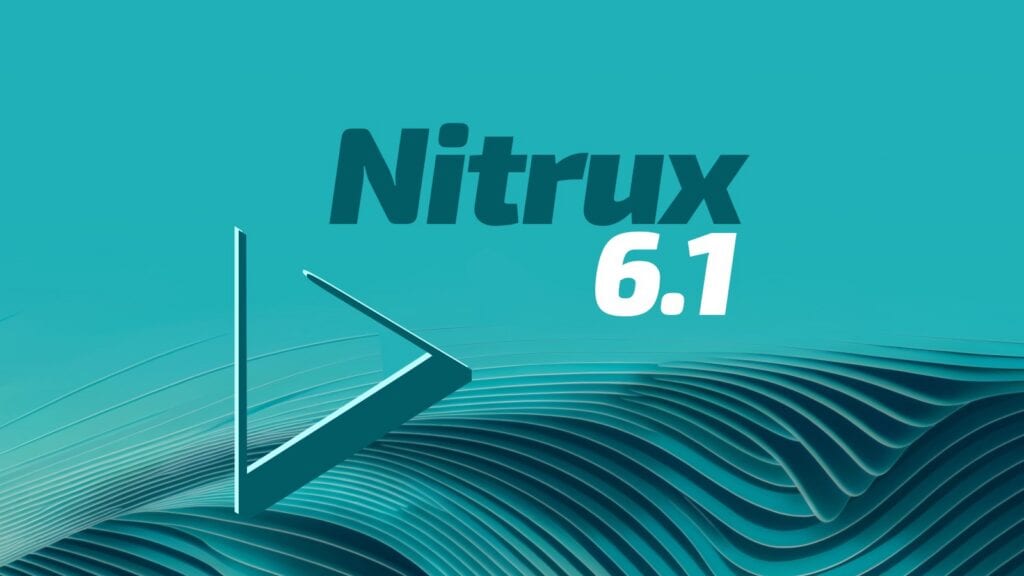
The Nitrux team has announced Nitrux 6.1, an immutable, systemd-free Debian-based Linux distribution that uses AppImage-based software delivery and includes Hyprland as the default desktop environment.
This release includes Linux kernel 7.0.8 with CachyOS patches, Hyprland 0.55.1, Qt 6.10.2, KDE Apps 26.04.1, KDE Frameworks 6.23, and Calamares 3.4.2. The NVIDIA Open Kernel Module is updated to version 595.71, which supports only Turing and newer NVIDIA GPU architectures.
MauiKit, MauiKit Frameworks, and Maui Apps are now at version 4.0.3. Updates include interface improvements, stability fixes, build-system cleanup, and conditional x86-64-v3 compiler flags for supported x86_64 builds. MauiKit receives additional fixes for core controls, browser and tab behavior, QML loader paths, MauiModel reliability, sidebar resizing, and visual consistency.
Several Maui Apps also receive updates. Buho introduces a Markdown split-view editing workflow and enhanced note browsing. Clip standardizes playback with libmpv, improves playlist behavior, and adds video thumbnails in list delegates.
Fiery features enhanced browser security, password manager improvements, privacy and content-blocking upgrades, and tab and session refinements. Index, Nota, Pix, Shelf, Station, and VVave also benefit from UI, stability, and workflow enhancements.
The desktop configuration has been updated as well. Nitrux 6.1 migrates Hyprland configuration to Lua and replaces Wofi with Vicinae, a Raycast-inspired launcher. Additional updates include refreshed PipeWire latency settings, Waybar configuration, MauiKit app configuration files, ZSH configuration, WirePlumber Bluetooth policy handling, and QMLGreet’s Hyprland configuration.
On the security side, Nitrux 6.1 introduces mitigations for CVE-2026-31431 (Copy Fail), CVE-2026-43284 (Dirty Frag), CVE-2026-43500 (Fragnesia), and CVE-2026-46333 (ssh-keysign-pwn). The release also adds YubiKey two-factor authentication for LUKS disks, PAM support for Universal 2nd Factor, and tooling checks for PAM files.
New components include dmemcg-booster, a fork of Valve’s daemon for OpenRC environments; an HID-BPF loader based on udev events; Fatresize for non-destructive FAT16/FAT32 partition resizing; RealtimeKit; Meslo Nerd Font variants for Powerlevel10k; KDE Partition Manager; and Vicinae.
For additional details, refer to the official announcement.
The release is available as two ISO images: cachy-nvopen for NVIDIA GPUs and cachy-mesa for AMD and Intel GPUs. Existing Nitrux 6.0 users should use the Nitrux Update Tool System when the OTA update becomes available.

Nitrux gets far less than favorable reviews on Distrowatch. Oddly enough though, its Distrowatch trending rank continues to rise. And Nitrux is now right behind Aurora (UBlue) and Vanilla OS on Distrowatch.
Because it’s no secret that Distrowatch hates Nitrux, unfortunately, for them, the distribution is alive. Their message only resonates with people that bissfully to fall for their narrative.
Systemd-free distros are gaining a lot of ground these days, with Artix, Void and Devuan leading the charge. They all rose through distrowatch rankings, out of people new interests and looking for info on those before migrating.
I don’t know Nitrux, but it doesn’t mean all of them are good. It could be astroturfing from Red Hat too, they are known to throw bots massively to cheat trends and create fake narratives. And systemd is one of their pet projects, so they would have a vested interest at their usual astroturfing.