Recent age-verification laws targeting operating systems have become a central topic in open-source and privacy-focused communities. Measures like California AB-1043 or Brazil’s ECA Digital require operating systems to verify or attest to a user’s age, shifting responsibility from websites and apps to the OS.
In response, GrapheneOS, an open-source Android-based mobile operating system strongly focused on security and privacy, has stated it will not implement identity or age-verification requirements tied to these regulations. Laws like AB-1043 would require handling user age information at the OS level, which conflicts with these design principles.
In a post on its X social media account, the project confirmed its operating system will remain usable without personal information, identification, or user accounts, and its services will remain globally accessible.
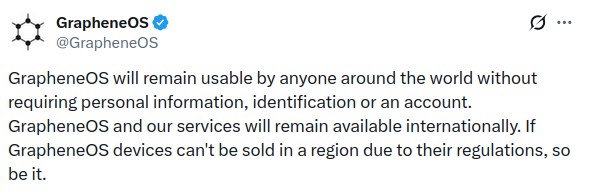
The project’s position is clear: it will not modify the OS to comply with identity or age verification regulations. If these requirements prevent sales in certain regions, GrapheneOS will accept those limitations rather than introduce such features.
This makes GrapheneOS one of the first operating system projects to publicly state non-compliance with new OS-level age-verification mandates. This development highlights the broader tension between regulatory efforts to enforce age-based access controls and the design of privacy-focused, open-source systems that do not process personal identity data.
For better or worse, as similar legislation expands beyond California, the impact on alternative operating systems, distributions, and privacy-oriented platforms remains uncertain. Some of them, such as MidnightBSD, have already revised their licensing policies to prohibit the use of the operating system in Brazil.
Finally, just to remind you, GrapheneOS’s stance follows a recent development for the project. Earlier this month, Motorola announced a partnership with the GrapheneOS Foundation to collaborate on future smartphones compatible with GrapheneOS, marking the first step beyond its long-standing Pixel-only support.