Ladybird, an independent web browser built from scratch, has officially entered public alpha, denoting a major milestone for the project. Prebuilt versions are now available for Linux and macOS, letting users try the browser without compiling it from source.
What sets this new project apart from most modern browsers is its entirely independent browser engine. Rather than relying on Chromium, Gecko, or WebKit, the project is developing its own implementation of web standards, developing a genuinely independent alternative in a browser market dominated by a handful of engines.
The alpha is distributed through a rolling release channel with automatic updates delivered regularly. Users can follow the browser’s development and benefit from improvements as they arrive without manually downloading or compiling newer versions.
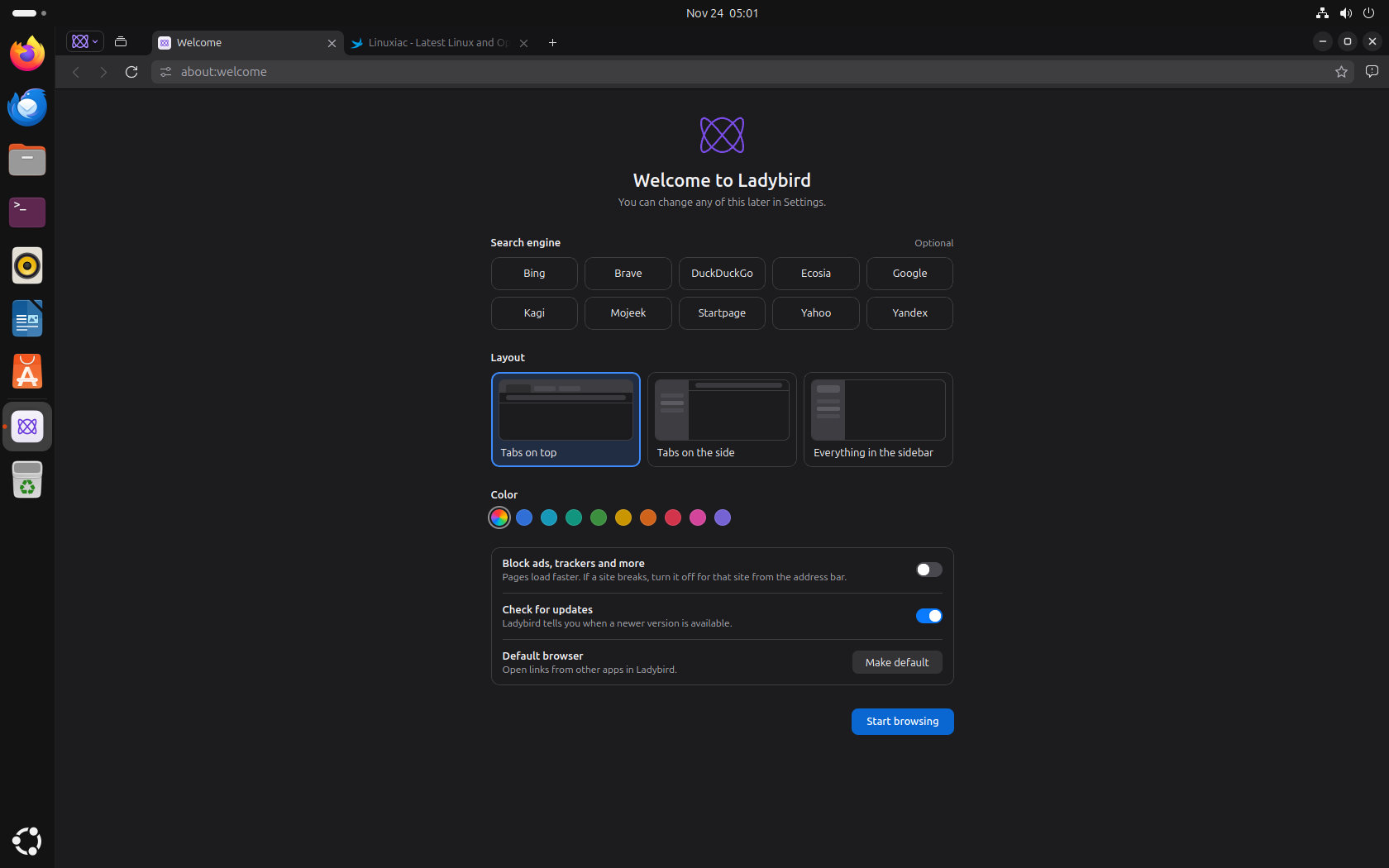
Of course, expectations should be kept in check. Project founder Andreas Kling warns that some websites may not work correctly, crashes are to be expected, and the project makes no guarantees about security at this stage.
To deal with these issues, Ladybird includes a built-in mechanism for reporting broken websites. Users can review crash reports before deciding whether to submit them to the developers. Security researchers are encouraged to investigate the browser and report any vulnerabilities they find.
For web developers, Ladybird supports WebDriver for automated testing and the Firefox DevTools protocol. The project encourages developers to test their websites against its independent engine and report compatibility issues.
The release follows months of preparations during which Ladybird gained essential features like file downloads, searchable browsing history, improved developer tools, and default process sandboxing on Linux and macOS.
As part of those preparations, the project stopped accepting public pull requests in June, restricting code changes to maintainers while staying open to external testing, bug reports, and technical feedback.
On Linux, Ladybird is available as a Flatpak, the recommended installation method for most distributions. The project also provides native DEB packages for Ubuntu 24.04 LTS and 26.04 or newer, as well as RPM packages for Fedora 44 and 45, through its own software repositories. Installation instructions and downloads are available on the project’s website.
For more information, see the official announcement.