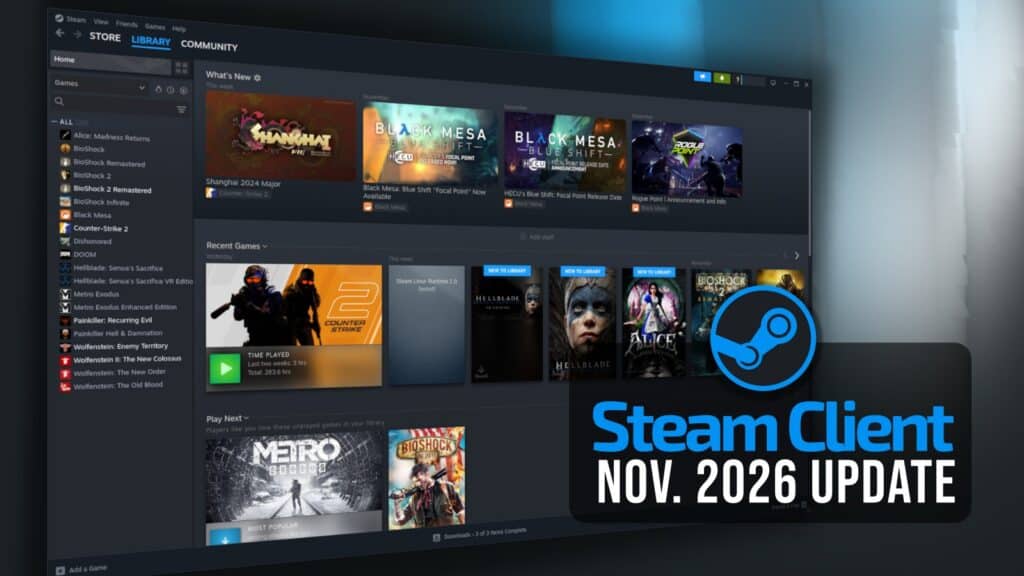
Valve has just released a new Steam client update that is now a 64-bit app and runs inside a Steam Runtime container for Linux users, rather than relying as much on the host distro’s software environment as before. Valve says this uses the same technology already used for Steam games and should result in a more consistent experience across different Linux distros.
The Linux-specific changes also include a redesigned Steam updater UI and a fix for the case where the updater window would fail to appear. Two crashes have been fixed: one when resuming from suspend and one when creating a multiplayer lobby in a game using the ISteamNetworking interface.
Remote Play gets some improvements, too, particularly for Linux. Steam now supports HDR capture via PipeWire on Linux desktops, so you can capture HDR content for streaming. Additionally, HDR streaming has been re-enabled on the Steam Deck OLED.
Valve has also expanded the HDR settings for Remote Play with three options: Automatic (enables HDR when HDR content is available), On (keeps HDR on and allows increased brightness for SDR content), and Off.
A brightness slider has been added to the streaming overlay, and a new Display Style setting has been introduced, which allows you to stretch or zoom the stream if your source and your client have different aspect ratios.
On top of that, Remote Play now starts streaming faster when you’re connecting to a computer on your local network. HDR capture is now supported when streaming from macOS, and HDR playback is available on Android 15 and above via the beta Steam Link app.
Outside of Linux, the update brings a second wave of Steam startup performance improvements, and some memory leaks affecting game streaming and controller operation have been addressed, along with a number of rare crashes and other stability issues.
Steam Cloud gets a fix for incorrectly reported sync conflicts in some games, and the Library’s activity feed is now more robust in offline mode, and Steam Store searches have been improved with a new algorithm for text search and suggestions.
Moreover, Big Picture Mode now has a much more convenient way to accept game invites and navigate group chat, and the Quick Access Menu has been improved; multiple incoming messages from friends are now grouped into a single notification.
Finally, Valve updated the Hardware Compatibility dialog to show the average game framerates reported by Steam Deck users who have opted into the anonymous performance data collection. The desktop Steam client now also has the option to participate in that data collection.
Full details in Valve’s release announcement.