The Kali Linux team has released Kali Linux 2026.2, the second update this year for the Debian-based penetration testing and security distribution. The release introduces two major desktop environment updates: GNOME 50 and KDE Plasma 6.6.
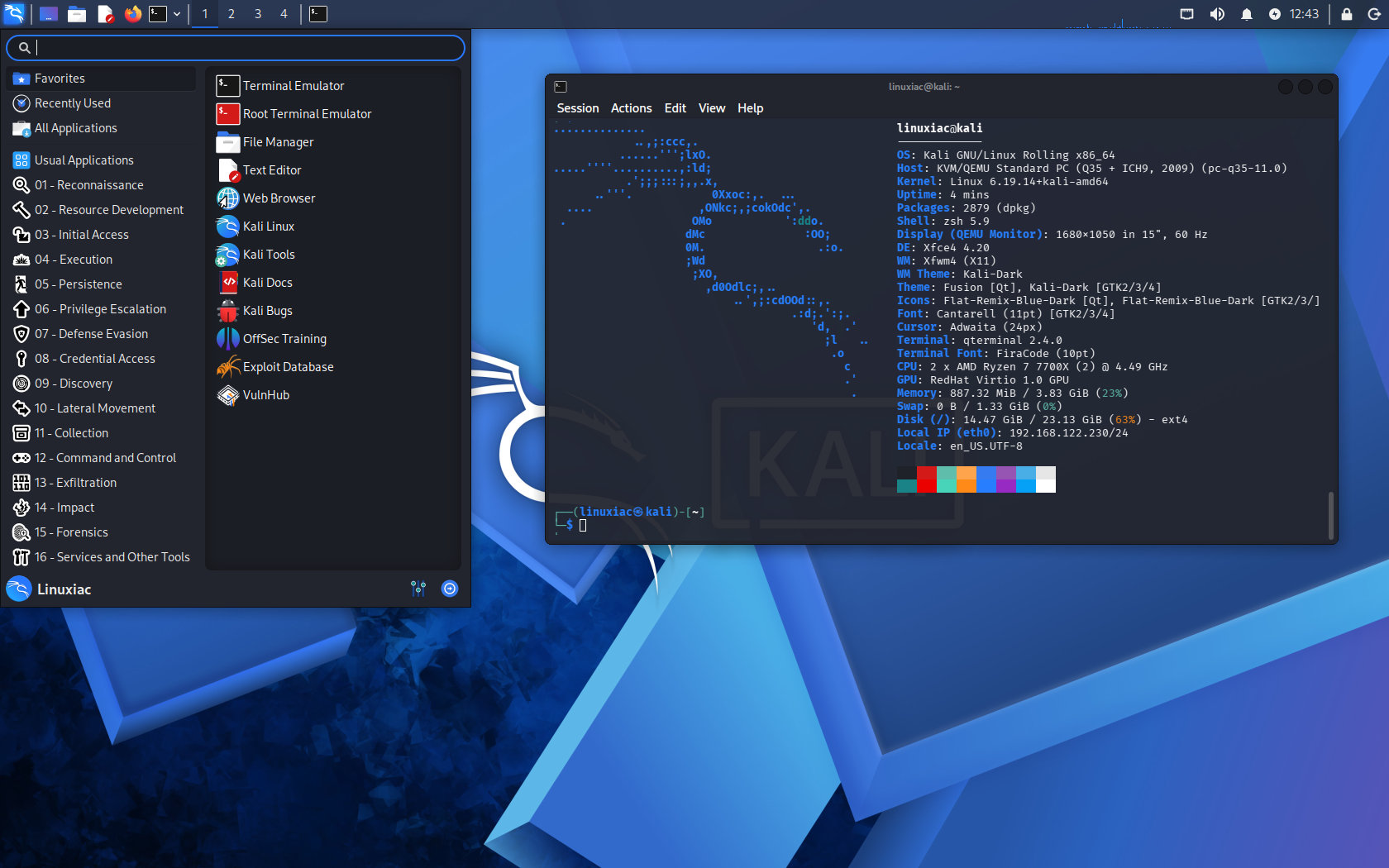
GNOME 50 delivers performance and usability enhancements, such as faster thumbnail and icon loading in the file manager, improved responsiveness, reduced memory usage, new accessibility features, and support for document annotations in the Document Viewer.
KDE Plasma 6.6 enhances usability and accessibility, introducing a new on-screen keyboard, improved touch support, OCR in Spectacle for text extraction from screenshots, color-vision accessibility options, updates to Zoom and Magnifier, Slow Keys support on Wayland, and support for the standardized Reduced Motion setting.
Moreover, this release adopts Debian’s deb822-style APT sources format for new installations. New Kali installs now use /etc/apt/sources.list.d/kali.sources instead of the traditional /etc/apt/sources.list file. Existing installations remain unchanged, and both formats are still supported. However, APT will eventually warn about the older format and recommend updating, making this a gradual transition.
Kali Linux 2026.2 also improves the experience for virtual machine users. Prebuilt VM images no longer include graphics firmware by default, and installer images detect VM environments to skip graphics firmware installation. As a result, the initrd size for VM users decreases from about 200 MB to 60 MB.
For bare-metal installations, there are no changes. Kali continues to include the necessary graphics firmware for physical hardware, ensuring users retain graphics support after the update.
This update ships with Linux kernel 6.19 by default, despite the availability of Linux 7.0. The team chose 6.19 due to reported compatibility conflicts with NVIDIA DKMS drivers in kernel 7.0, intending to prevent disruptions for NVIDIA users. Users who do not require NVIDIA compatibility can access Linux 7.0 through Kali’s experimental or rolling repositories.
Kali’s devs have also improved the distro’s service helper scripts. Tools relying on background services now offer more consistent behavior, including commands to start and stop services, check status, display default credentials when relevant, and provide instructions for accessing web interfaces.
And, of course, as with every release, Kali Linux 2026.2 introduces new tools, adding nine to its repositories:
- arsenal-ng, a Go-based command library with more than 200 cybersecurity cheat sheets;
- hydra-gtk, the GTK-based GUI for the Hydra network logon cracker;
- legba, a multiprotocol credentials bruteforcer, password sprayer, and enumerator;
- oletools, for analyzing MS OLE2 files and Microsoft Office documents;
- penelope, a shell handler;
- shell-gpt, a command-line productivity tool powered by large language models;
- tailscale, a secure connectivity platform;
- tookie-osint, an OSINT tool for finding social media accounts;
- uro, a tool for decluttering URLs during crawling and pentesting.
Kali NetHunter, the mobile version of Kali Linux, also receives major updates. According to the devs, the NetHunter app now launches instantly, issues with custom commands and the chroot manager have been resolved, and a new EvilTwin tab adds a password-verification captive portal.
Additional updates include qcacld3 injection patches, a refreshed kernel flasher tab, Magisk standalone kernel flashing support, new NetHunter kernels, and expanded NetHunter Pro support for more devices, including various Pixel, Samsung, Sony, Xiaomi, LG, Fairphone, and SHIFTphone models.
For more information, see the announcement.
Kali Linux 2026.2 is now available on the project’s website. Existing users can update their systems through the standard APT upgrade process.