

Recently, Brave introduced Brave Origin, a minimalist version of its browser whose main appeal lies in what it removes rather than what it adds. The new edition strips out many optional Brave services, including AI, crypto, VPN, Rewards, Tor, and several telemetry mechanisms, while remaining free for Linux users.
According to Brave, Origin is designed for users who want the browser’s core privacy and security protections without the wider set of features included in the standard Brave browser. It keeps Brave Shields, ad and tracker blocking, frequent software updates, Chromium security patches, and ongoing security and privacy improvements.
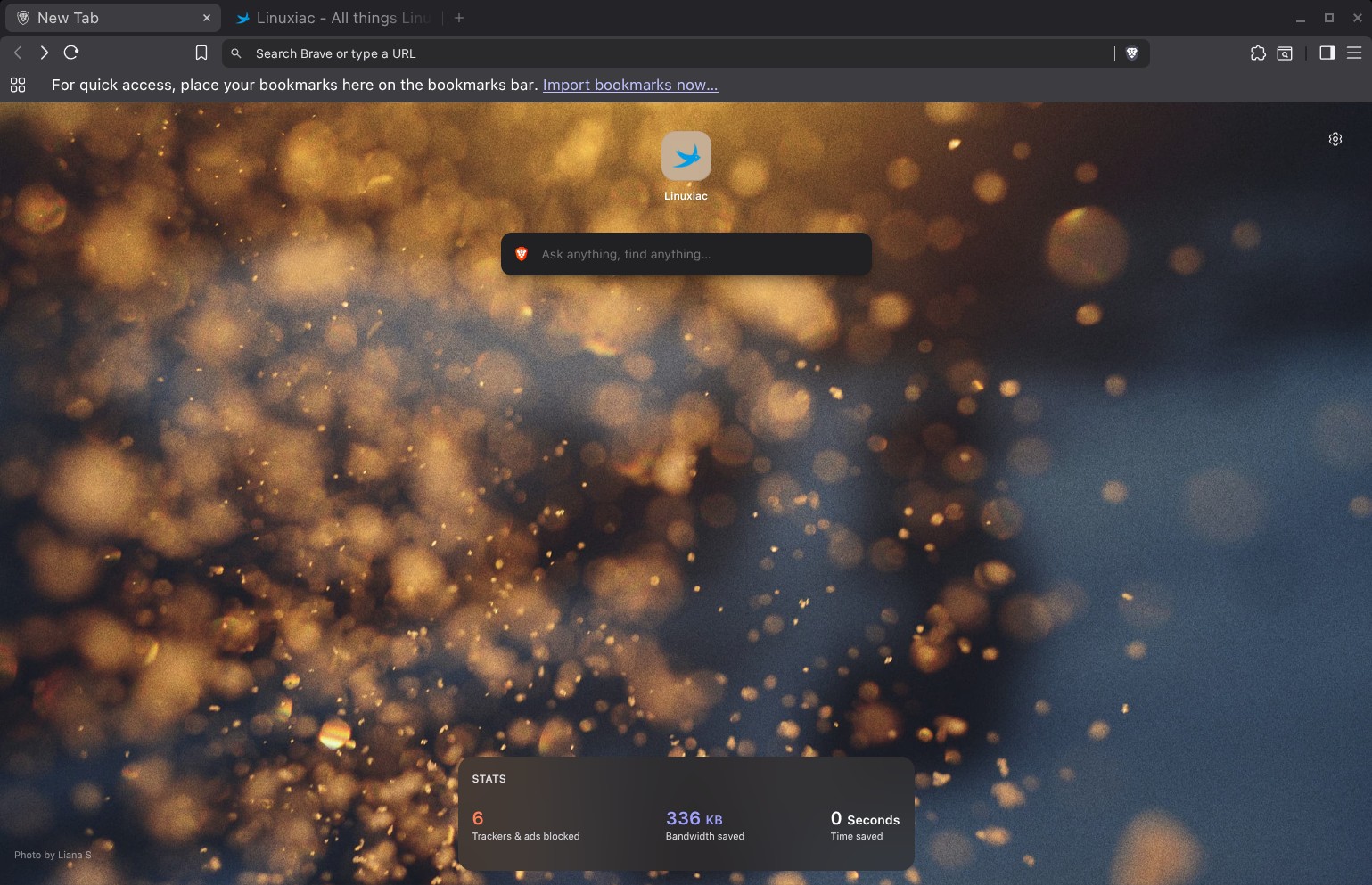
The difference is that Brave Origin removes or disables a long list of extras. These include Leo AI, Brave News, Playlist, Rewards and browser-based Brave Ads, Speedreader, Talk, Tor, VPN, Wallet and Web3 domains, Wayback Machine, Web Discovery Project, email aliases, daily usage ping, crash logs, and privacy-preserving product analytics, known as P3A.
That makes Origin an unusual browser release. Brave frames it as a premium experience, but its main value is a smaller feature set. But what’s even more interesting is that on Windows and macOS, Brave Origin is a one-time purchase priced at $59.99. On Linux, users can access Origin for free.
The browser is available in two forms. The first is a standalone desktop browser, available through a separate download. The second is an upgrade mode for the existing Brave browser on desktop and mobile devices.
There is an important technical distinction between the two. In the standalone Brave Origin app, the affected features are compiled out of the build. In upgrade mode, the features appear in a new Settings panel and are off by default.
According to Brave, future features outside the core Brave Shields experience will also be disabled by default in Origin.
For Linux users, Origin can be used as a standalone browser or as an upgrade to an existing Brave installation. The upgrade option requires Brave 1.91 or later. Linux users installing the standalone version can skip the purchase process during setup, while those upgrading an existing installation can proceed from the Brave Origin section in the browser’s settings.
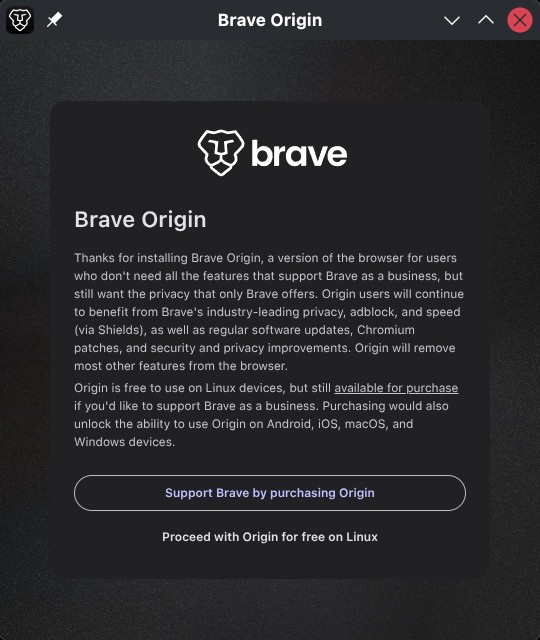
The regular Brave browser remains unchanged. Brave says the existing browser will continue to be free and fully supported for users who want the full feature set or do not want to use Origin. The company also notes that users can already hide or disable many Brave features manually, although doing so does not remove those components from the browser executable.
And finally, the idea behind all of this. Brave says Origin was created in response to users who wanted a more minimal browser while still supporting Brave’s privacy and ad-blocking work. The company also says Origin uses a blind token protocol based on Privacy Pass to verify purchases without linking payment identity to browser use.
You can find instructions here on how Linux users can install it for free, depending on their distribution.


Who really wants to use a stripped down version of something that is supposed to be much better ? I’m not going to drive a Volkswagen Beetle with tinted windows and pretend its a TESLA.
I love Brave. I’m not gonna install Brave Origin though, it removes features that I liked. I think the best is to install Brave and disable the features that we don’t want.
Yeah I just hope this doesn’t incentivize them to leave out ways to turn all the extra crap off.
I already turn their browser into something similar by disabling the huge amounts of crap and pare it down to something that more closely resembles what Chrome was like originally with only 4 or 5 buttons on the toolbar.
Luckily there’s still Firefox which can still be customized when Brave decide to extort users to disable all the bloat, and if Firefox goes bad, there’s always that q-anon browser from SerenityOS whose name escapes me, probably called Mussolini or Adolf browser or something like that.
Excellent post. I’m going to try this now.
I also use vivaldi in a similar light mode. I found out that if you run vivaldi as:
(Linux) /usr/bin/vivaldi-stable –disable-vivaldi %U
(Windows) vivaldi.exe –disable-vivaldi
The speed difference is noticeable. It’s basically Chromium (Vivaldi without the Vivaldi UI).
I have used brave for awhile and had no idea this even existed.
Brave is my preferred browser: no extension, no ads, no cookie law, no trackers. Brave search engine is not yet complete and affordable. I prefer Brave + DDG for now.
I have not tried brave search in awhile. Last time I did it kept wanting me to verify I was not a bot or something and it became super annoying so I switched back to duckduckgo search since I never had that issue with it. It needs to work with vpns without annoying checks. I may retry in future someday.