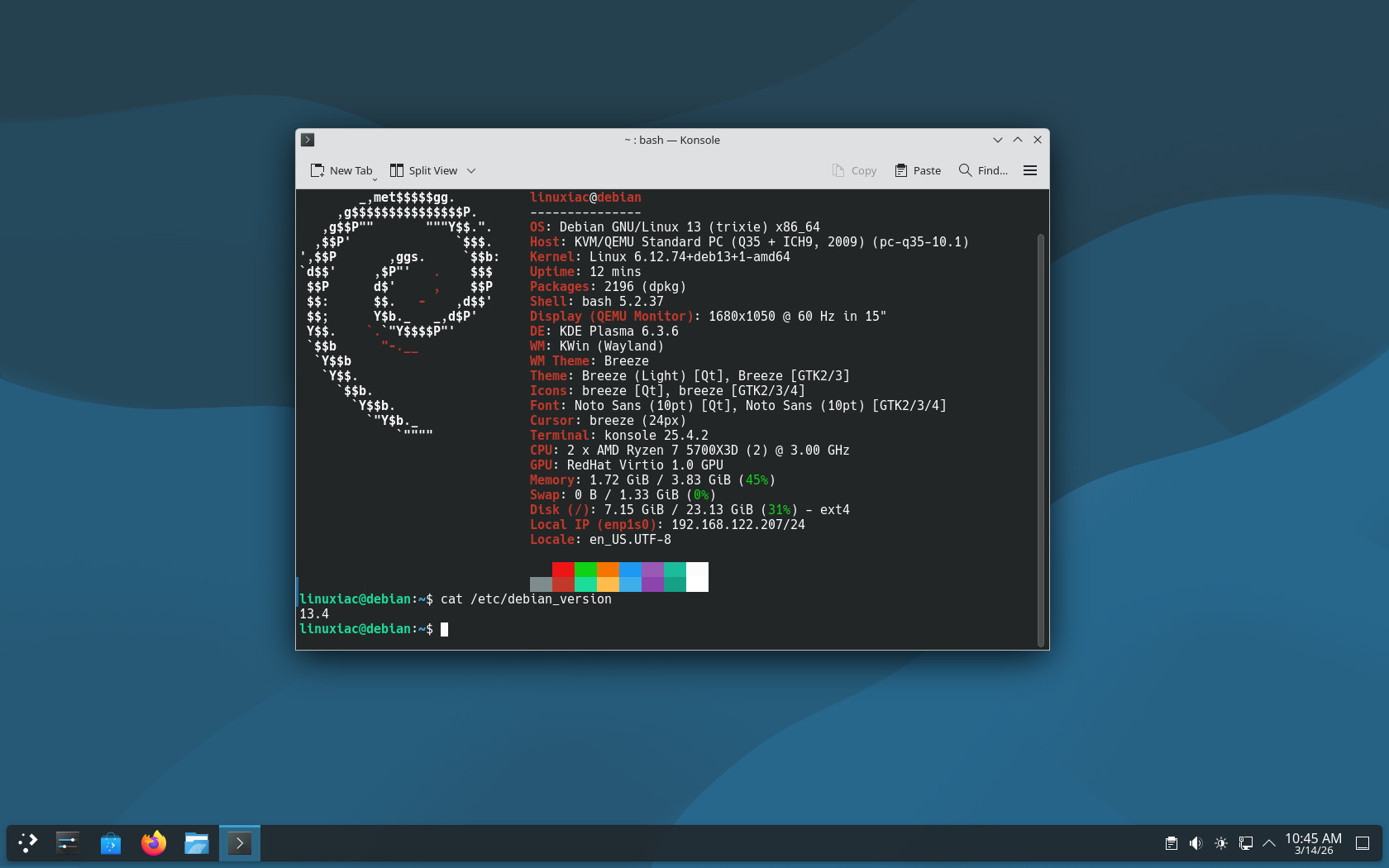
Over two months after the previous 13.3 release, the Debian Project rolled out the fourth update to the stable 13 “Trixie” series, consolidating corrections for security vulnerabilities and serious functional issues across a wide range of packages.
However, if you’ve been keeping your system updated through security.debian.org, there’s not much to do with this release, because most of the fixes were already included in earlier updates. 13.4 just brings them together in one place.
Debian 13.4 delivers bug fixes for a broad set of packages, including an HTTP/2 regression in Apache2, enhancements to Bird2 routing software, crash resolutions in Dovecot, and corrections in the dpkg package manager. The release also features updated upstream versions of MariaDB, Samba, Xen, Flatpak, OpenSSL, PostgreSQL 17, and QEMU.
Several low-level components received updates. The glibc library was refreshed from the upstream stable branch to address vulnerabilities and memory-handling issues. This update also changes the currency symbol in the Bulgarian locale to the euro and resolves bugs in optimized functions.
Additional fixes resolve security vulnerabilities in packages such as libpng, Suricata, Python libraries, SQLite, wget2, and Wireshark. Many packages were rebuilt with the updated glibc to ensure system compatibility and stability.
Moreover, the update refreshes the Debian Installer, which now includes fixes from the stable repository and uses Linux kernel 6.12.73.
In addition to package fixes, Debian’s security team issued a large set of security advisories covering widely used applications and libraries. These include updates for Chromium, Firefox ESR, Thunderbird, OpenJDK, ImageMagick, Nginx, PostgreSQL, BIND9, and many others.
Once again, Debian 13.4 doesn’t add any new features to the “Trixie” release. It’s all about fixing bugs and addressing security issues in certain packages. If you’re already using it, simply run the command below to update your system to the latest stable version.
sudo apt update && sudo apt upgradeCode language: Bash (bash)For more in-depth information on all the changes in Debian 13.4, see the release announcement. A comprehensive list of all packages that have received updates is available here.
If you are planning a fresh install, Debian 13.4 netinst ISO images are available for download here. They offer a base system ideal for servers or users who want to customize the installation to their needs, with support for six architectures: amd64, arm64, armhf, ppc64el, riscv64, and s390x.
For a ready-to-use experience, the new release also provides Live images with pre-installed desktop environments: GNOME, KDE, LXDE, Xfce, Cinnamon, and MATE. These are available only for the AMD64 architecture.
Finally, consider enabling automatic security updates to receive future patches without delay if you haven’t already. If you’re unsure how, our guide will have you up and running in no time.