LXD, the system container and virtual machine manager from Canonical, has released version 6.7, the seventh feature update in the 6.x series. Here are the highlights.
A key addition is AMD GPU CDI support, which improves GPU resource exposure for containers. Virtual machine users benefit from enhanced GPU passthrough, enabled by significant updates to QEMU and EDK2.
LXD 6.7 also brings several improvements for clustered environments. Storage pool database recovery support enhances resilience against metadata corruption. Instance state field retrieval is now optimized, reducing overhead when querying at scale.
Moreover, administrators can now perform forced instance deletion via the API, enabling direct recovery of stuck resources.
Security and access management are enhanced with a new bearer authentication method. VM bus port limits are now configurable, allowing more precise control over device exposure. Support for amd64v3 architecture variant images enables better optimization for modern x86-64 processors with advanced CPU features.
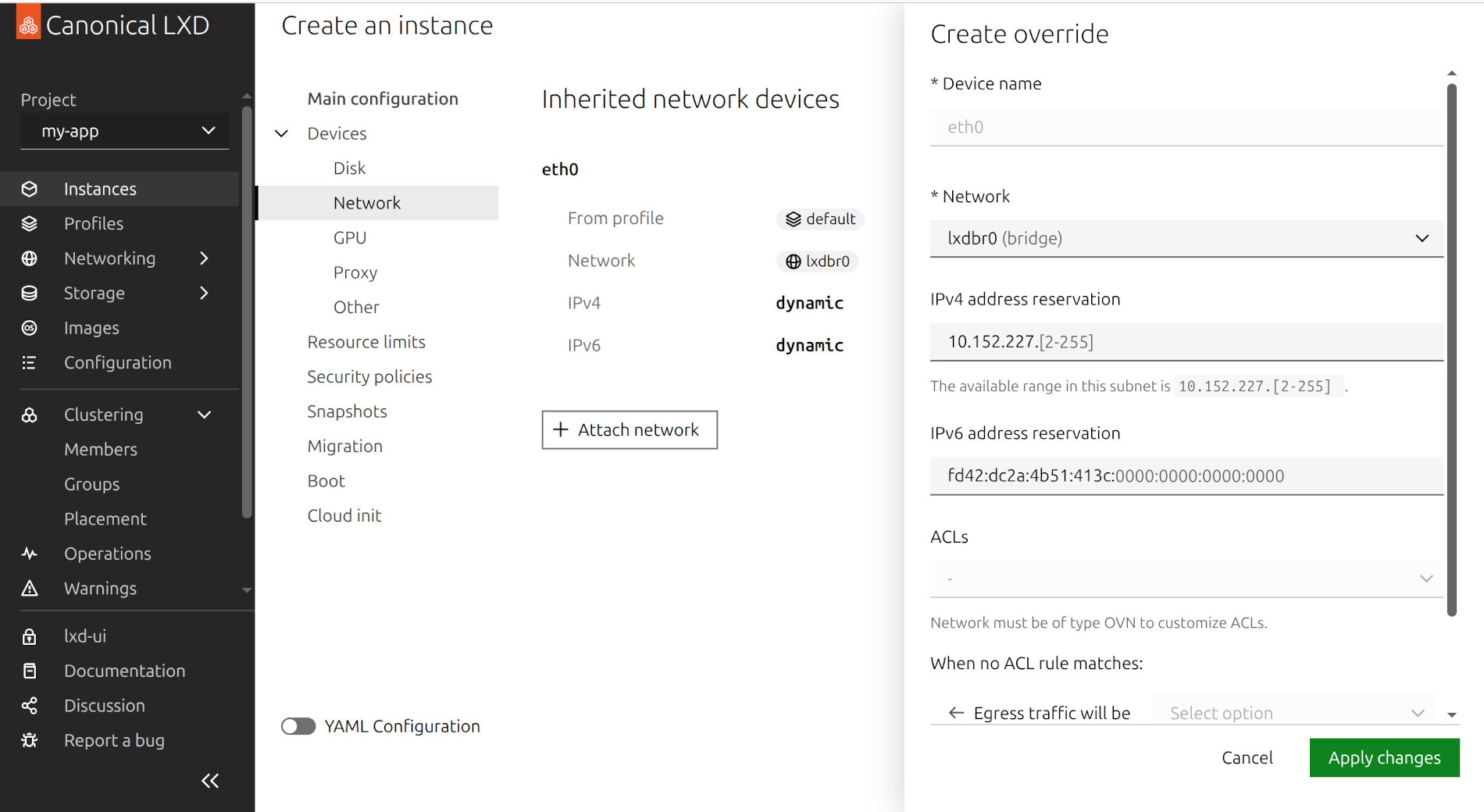
The web interface includes several usability enhancements. Initial access to the LXD UI is now simpler, and placement groups can be configured during instance creation. Network configuration improvements include IP reservation and access control list management directly in the UI.
In addition, a full-screen cloud-init editor is available, and cluster member listings now display memory information. Enhanced chip components with tooltips improve visibility for cluster members and networks. OVN networking now supports local peering to improve subnet connectivity.
Tooling has been updated to align with API changes. With the removal of the legacy /1.0/containers and /1.0/virtual-machines endpoints, pylxd now uses the unified /1.0/instances endpoint.
Finally, the Terraform LXD provider now supports managing and reading authorization groups and identities through dedicated resources and data sources.
For more information, see the annoucement ot refer to the project’s GitHub page.
Image credits: LXD Project