
Shelly 3.3, a graphical package manager for Arch Linux and Arch-based distros, is now available with a redesigned GTK4 interface, improved AUR and Flatpak update management, and clearer package installation progress reporting.
The most visible change is the new Pearl-inspired appearance, which is now the default. It features rounded windows, circular window controls, softer colors, accent-colored selections, and redesigned toolbars. Page titles are larger, while the expanded sidebar groups navigation items more clearly, with Settings and Utilities placed under a dedicated System section.
The application also introduces improved appearance controls. By default, Shelly follows the desktop’s light or dark preference, but users can select either mode manually under Settings > Look & Feel. Changes take effect immediately, and the option to use the system’s GTK theme remains available.
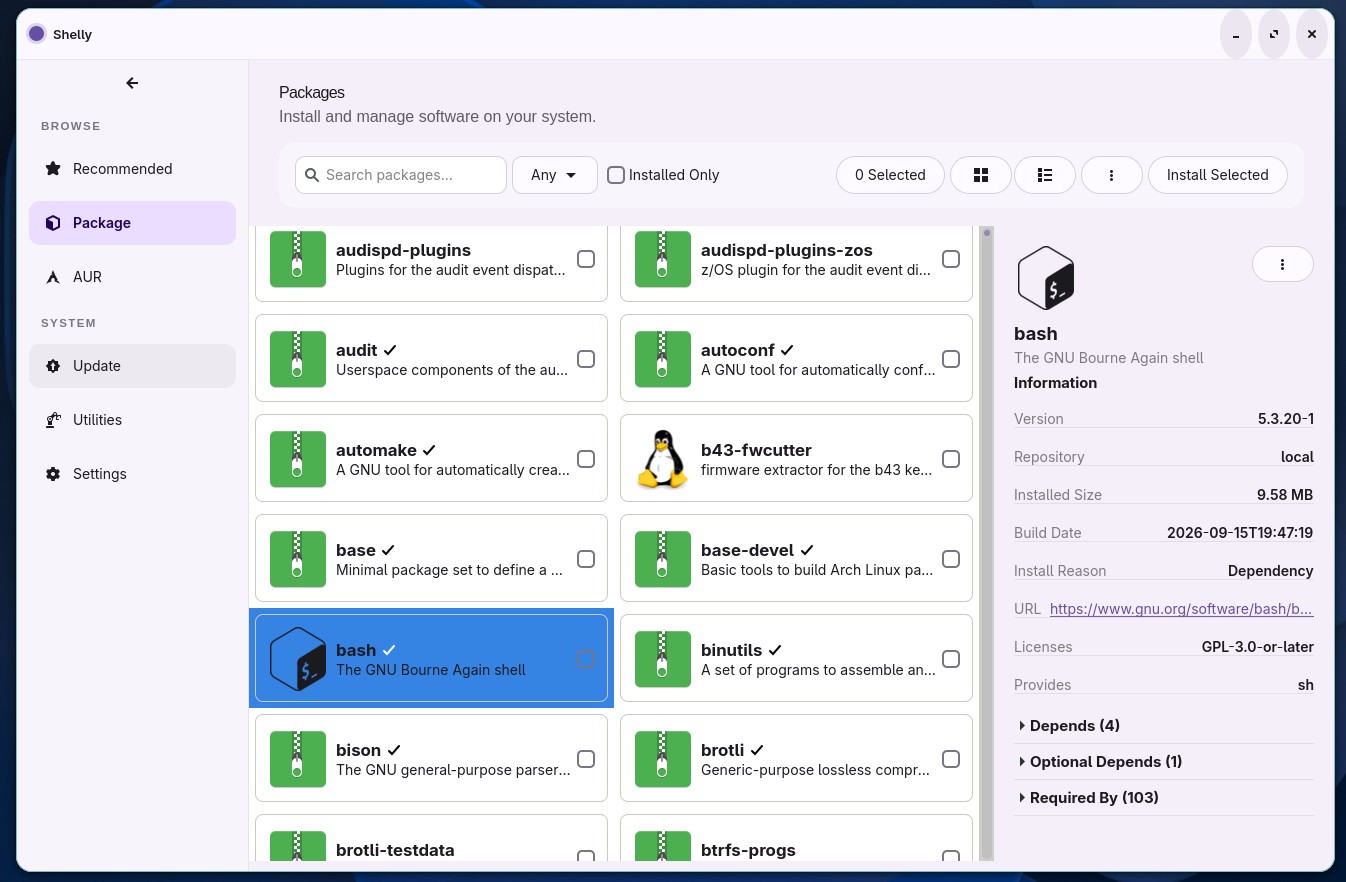
Apart from the visual changes, Shelly 3.3 improves how users review and install package updates. The redesigned Updates page now separates System, AUR, and Flatpak packages through source filters that display the number of available updates in each category.
Users can see a summary of selected updates and their total download size before proceeding. AUR and Flatpak updates can now be selected individually, while native Arch packages remain grouped into a complete system upgrade, consistent with Arch Linux’s approach to avoiding partial system upgrades.
Package installation progress has been redesigned. A new progress card displays the overall download and installation stages, including transfer information when available. Individual package entries distinguish between pending, downloading, building, completed, and failed operations.
For users who need more technical details, terminal output is still accessible but is collapsed by default, keeping the main interface focused on the current operation.
On the reliability side, the release fixes an issue where update checks could encounter temporary contention with the system tray after an upgrade. Service restart handling has also been improved to recognize display-manager aliases, including Plasma Login Manager, so session-critical services are reported rather than restarted automatically.
For more details, see the changelog.