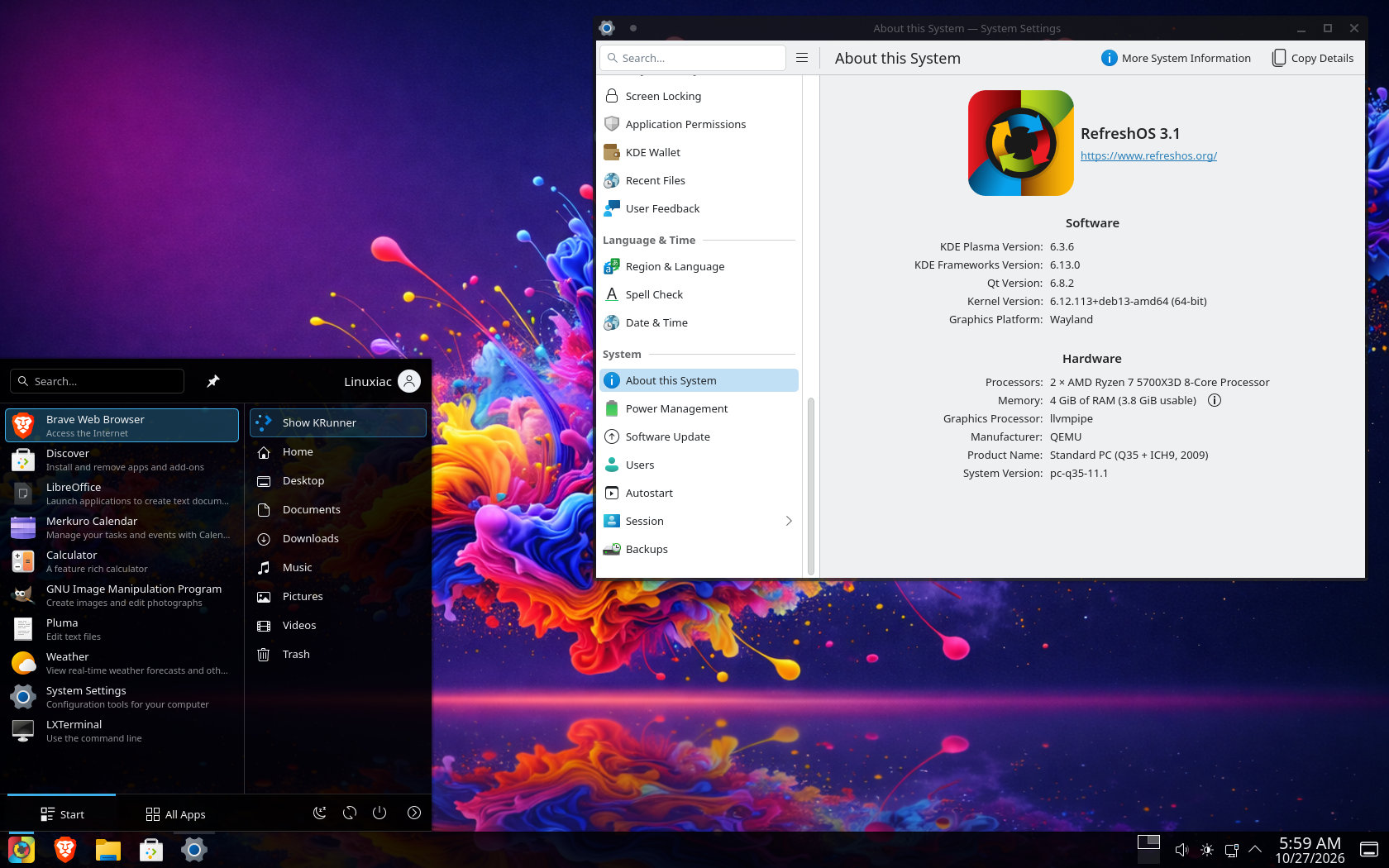
The Debian-based RefreshOS Linux distro has released version 3.1, an update to its 3.x “Colorful Cosmos”, shipping with KDE Plasma 6.3.6.
The new version updates the system from Debian 13.4 to Debian 13.7, incorporating the latest package updates for the new installation image. It also ships with Linux kernel 6.12.113, replacing the older kernel from the previous release.
The headline change, however, is the introduction of an official RefreshOS APT repository, available at repo.refreshos.org/v3. It establishes three channels, Stable, Testing, and Experimental, providing a dedicated infrastructure for distributing and testing RefreshOS-specific packages.
Alongside this, the developers introduced a new refreshos-release package to handle future updates to system branding and configuration through APT. The distro now uses signed repository metadata and a dedicated APT keyring, with package preferences set to prioritize RefreshOS-provided packages where applicable.
Another improvement is support for the i386 architecture. This enables installation of compatible 32-bit software and dependencies, including those required by Steam, potentially making RefreshOS more convenient for Linux gaming.
On the desktop side, RefreshOS 3.1 fixes an issue with its Reload Menu, where shortcuts to standard directories like Home, Desktop, Downloads, Documents, and Pictures could fail when the system was set to a language other than English. The fix applies to both the installation process and installed systems.
The release also introduces a customized version of the KDE-related libkf6kiofilewidgets6 package through the new repository, with APT configured to prefer it over Debian’s version.
Several additional changes target system configuration and installation. These include updated Calamares installer branding, corrected file permissions, better handling of default user configurations, and removal of obsolete package repository entries.
Finally, the developers cleaned up the installation image by removing outdated packages, older kernel files, cached data, and unnecessary build artifacts.
For more information, see the announcement or visit the full changelog.