CutefishOS, the Linux distro known for its macOS-inspired desktop, has returned as Cutefish. The project introduced a rebuilt desktop environment, Debian 13-based nightly images, and experimental support for running macOS applications on Linux.
According to the project’s official website, the new implementation uses its own Wayland compositor, handling the desktop shell, window effects, and animations.
The desktop features a native C++ toolkit rendered with Skia, along with its own applications: file manager, terminal, settings utility, calendar, system monitor, text editor, video player, and screenshot tool.
However, perhaps the most interesting development is the project’s work on macOS application compatibility. The developers announced that they had reached their first milestone, demonstrating several Mac applications running within Cutefish.
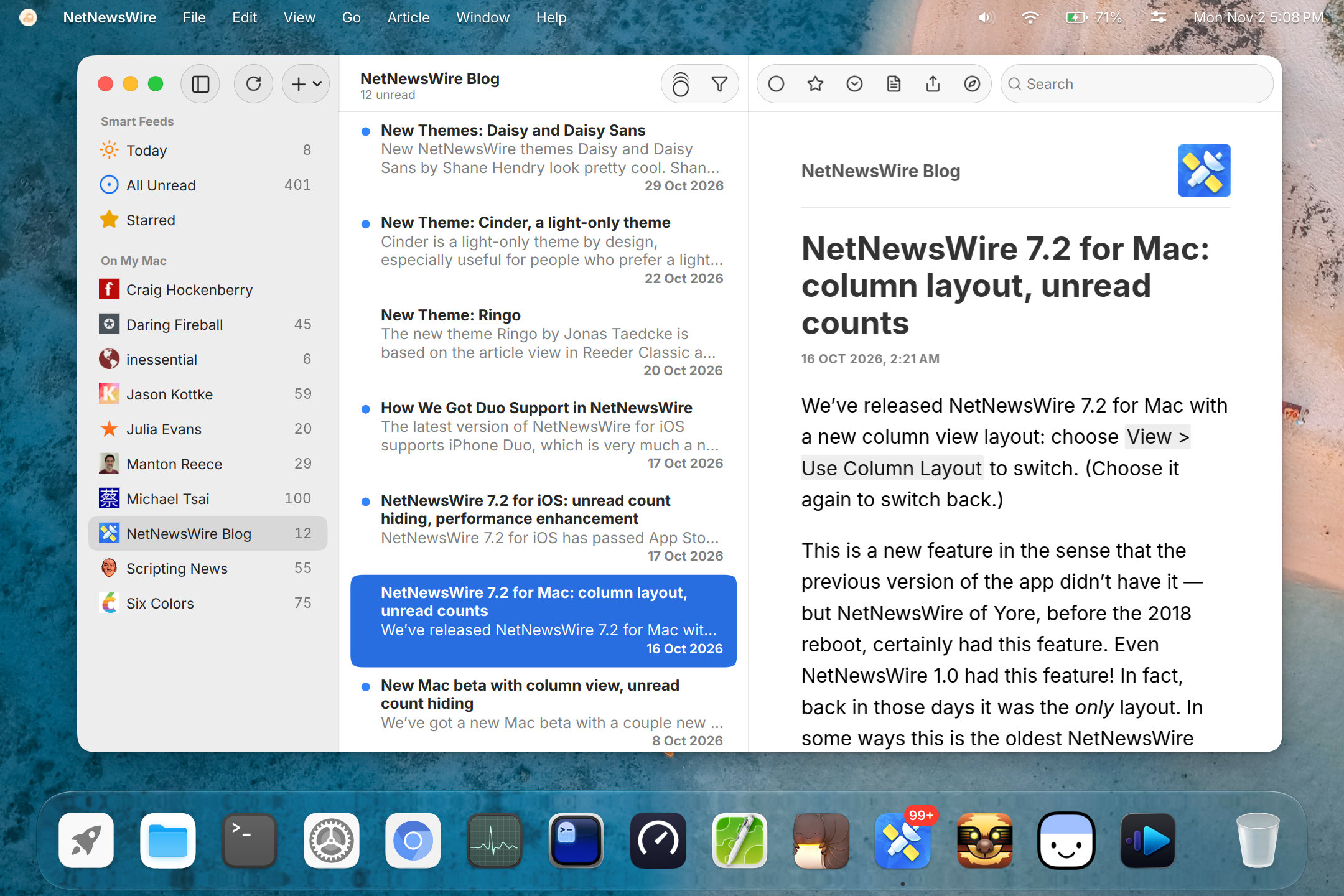
Among them is NetNewsWire, a macOS RSS reader, which the developers say now works with its sidebar, article views, toolbar, feed management, settings, and unread counters. Other demonstrated applications include Ghostty, CotEditor, Keka, and Ookla Speedtest.
The compatibility technology, called Reef, reimplements macOS programming interfaces to allow unmodified Mac applications to run on Linux. According to the developers, it does not emulate a processor or translate CPU instructions. Instead, application code runs directly on the CPU, while Reef provides the macOS frameworks and system interfaces it expects.
The implementation includes a Mach-O executable loader, an Objective-C runtime, Swift support, and replacements for frameworks like AppKit, Foundation, and SwiftUI. Recent work added WebKit integration, Core Data support, and a Metal implementation using OpenGL.
Reef contains about 460,000 lines of project-developed code across more than 80 frameworks. Compatibility remains experimental, and the developers have not announced a date for user availability. Unlike the Cutefish desktop, Reef is not currently open source.
Another notable feature is support for AI agents through the MCP. With user permission, compatible tools like Claude Code and Codex can interact with the desktop, including viewing the screen, clicking, and typing. Cutefish provides a visible stop control and pauses agent interaction when the user resumes using the keyboard or pointer.
The project offers Cutefish 1.0 nightly ISO images based on Debian 13 (Trixie) for AMD64 and ARM64 systems. An APT repository is also available for users who want to install Cutefish Desktop on an existing Debian 13 installation.
Finally, it is important to clarify that Cutefish 1.0 has not yet reached a stable release. The available ISO images are development builds intended mainly for testing.
Image credits: Cutefish