The openSUSE team has released Agama 25, the latest version of its web-based Linux installer, introducing a built-in terminal, improved network configuration, and several usability enhancements.
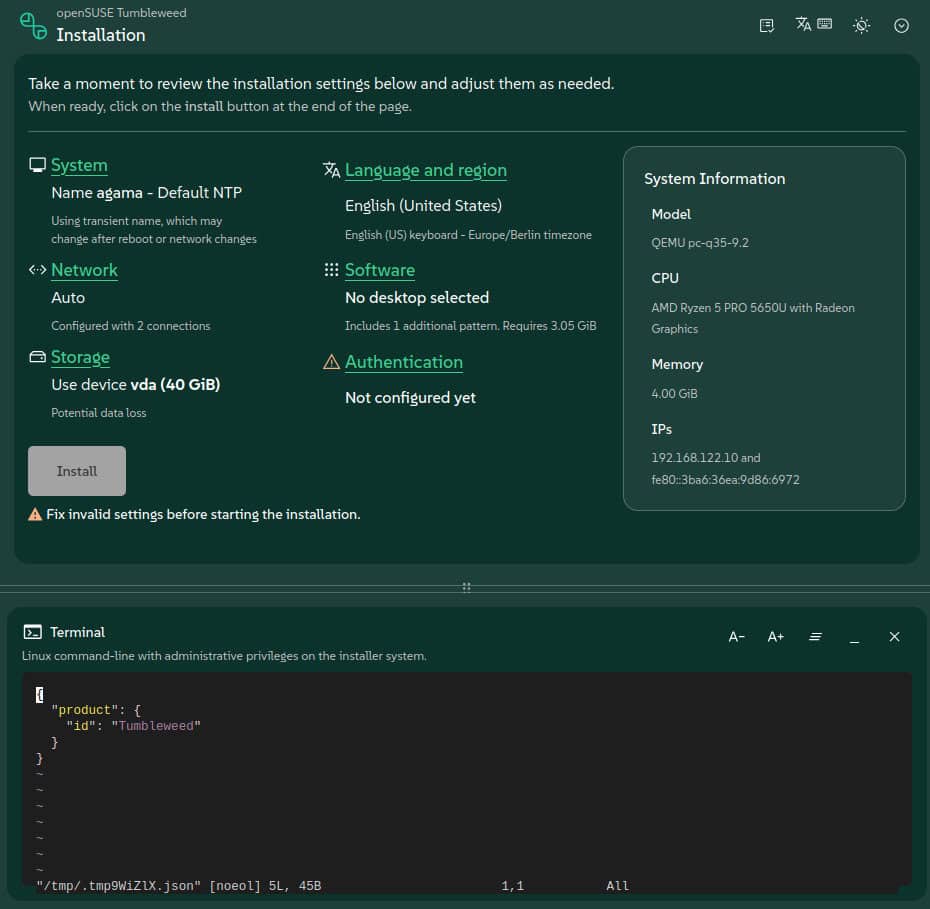
One new addition is an integrated web terminal. Previously, accessing a shell during installation required switching to another virtual console with a keyboard shortcut or connecting remotely through SSH. Now, users can open a terminal directly from Agama’s web interface.
Another improvement is the ability to exit the installation process. Users can now reboot or shut down their machines directly from the installer if they decide not to proceed.
However, this option is available only before installation begins. Once Agama starts applying changes, the exit option disappears to avoid interruptions that could leave the machine inconsistent or unbootable.
Networking configuration has also been refined, especially when setting up bonded or bridged interfaces. Previously, users had to manually enter network device names into a text field. Agama 25 replaces that approach with a searchable, multi-selection interface listing detected network devices. Users can still manually enter devices not yet present on the system.
At the same time, work continues to make Agama the default installer for openSUSE Tumbleweed. Although developers have not announced a specific adoption date, recent progress includes adjustments to registration support, work on 32-bit installation media, and adding RISC-V support.
Another ongoing effort focuses on reducing Agama’s dependency on YaST packages. Originally, the installer reused several YaST components to avoid rewriting functionality from scratch. The team is now gradually moving required functionality into Agama’s own codebase, starting with AutoYaST-related components, with further changes planned.
Finally, the release includes smaller refinements, such as more detailed reporting of network devices and making systemd-boot the default bootloader for MicroOS installations.
For more information, see the announcement or visit the project’s GitHub repository.
Image credits: openSUSE