OpenAI has released its official ChatGPT desktop app for Linux as a preview as part of its effort to create a unified desktop app. The new client includes the familiar ChatGPT experience, along with ChatGPT Work and Codex, all in one application.
In July, OpenAI combined its standalone Codex app with the ChatGPT desktop client on macOS and Windows, keeping Codex as a separate workspace for developers. Now, the Linux preview uses the same setup.
After installing the app, users can switch between ChatGPT and Codex using the menu in the upper-left corner. ChatGPT is for general conversations, while Codex offers a development environment for writing and debugging code, running tests, reviewing changes, and working with local repositories, folders, terminals, and other developer tools.
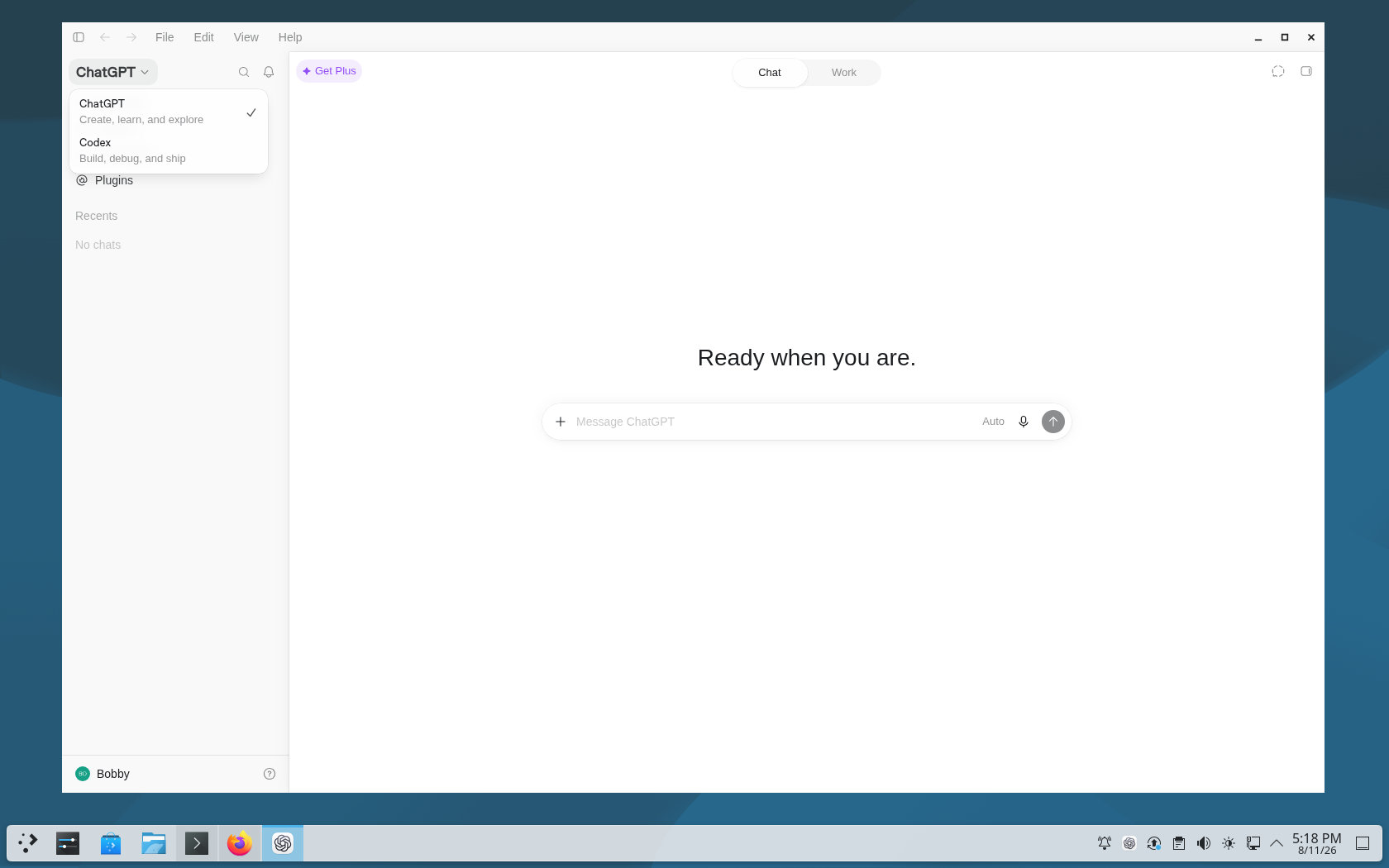
This is important for Linux developers because Codex is more than just a chat interface. The desktop version can open local projects, edit files, make changes, work with Git repositories, and run commands with user permissions – too much power, which should be used with caution before granting the app full access to your file system.
For this preview, OpenAI officially supports Ubuntu 24.04 LTS and 26.04 LTS, Debian 13, and Fedora 43 and 44. The app works on both x64 and ARM64 systems and is available as DEB and RPM packages. Arch Linux is not officially supported, but community packages are already available in the AUR, so users can install the app there too.
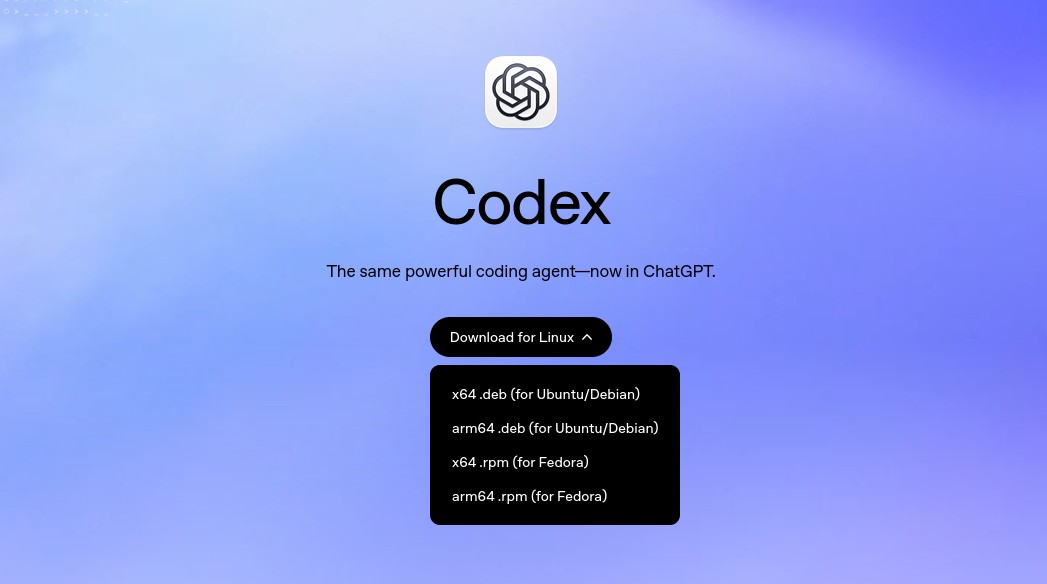
Before this, Linux users could access Codex through other interfaces. OpenAI offers a Codex CLI for Linux and an IDE extension, but the new desktop app now brings the same graphical, project-focused workflow that was only available on macOS and Windows.
In the desktop app, Codex has its own history and workspace instead of being just another ChatGPT mode. Users can choose Codex from the top-left menu, start a new chat, and connect it to a local folder or repository. The ChatGPT side includes the usual chat features and Work, which is OpenAI’s mode for longer, more complex tasks.
Right now, OpenAI is calling the Linux version a preview, so users should expect some bugs and changes as it develops. Still, with official packages for major distributions and support for both x64 and ARM64, Linux is now a main desktop platform for the ChatGPT app, not just a browser option.