
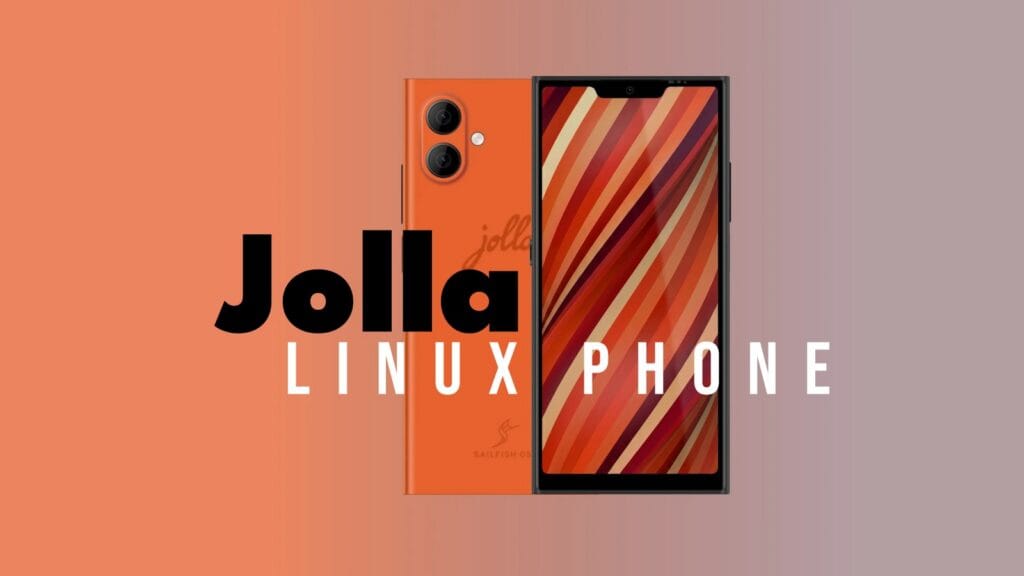
Jolla, a Finnish technology company best known for developing Sailfish OS, a privacy-focused Linux-based mobile operating system that offers an alternative to mainstream Android and iOS platforms, has opened pre-orders for its next-generation Linux smartphone.
This community-defined device, described as “the independent European Do It Together (DIT) Linux phone,” will move into production only if at least 2,000 supporters commit by January 4, 2026.
With that said, the company is taking fully refundable €99 reservations across the EU, UK, Switzerland, and Norway, with the price for early backers set at €499—below the expected final retail range of €599 to €699. If the target is reached, deliveries are planned by the end of the first half of 2026.
The new model is positioned as a successor to the original 2013 Jolla Phone and is designed around the company’s long-standing focus on privacy and user control.
Sailfish OS 5 remains at the center of the experience, offering a Linux-based platform with no tracking, no unsolicited telemetry, and a configurable hardware Privacy Switch that can shut down components such as the microphone, Bluetooth, or Android subsystem. The system supports native Sailfish apps as well as Android applications via Jolla AppSupport.
But what is more interesting is that Jolla shaped this new Linux phone through extensive community input. Over recent months, Sailfish users voted on key specifications and design elements, defining the project’s direction before engineering began.
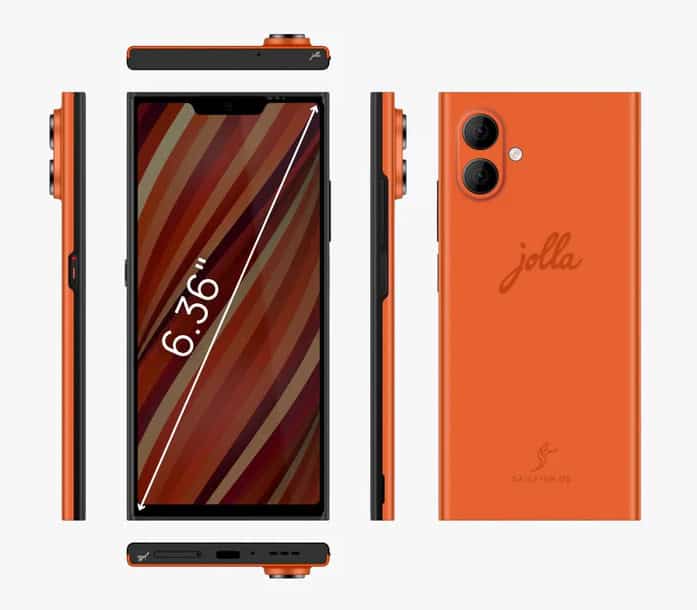
That process resulted in a 6.36-inch Full HD AMOLED display, 12GB of RAM, 256GB of storage with microSD expansion, and a high-performance 5G MediaTek platform.
The phone also includes a 50MP main camera, user-replaceable 5,500mAh battery, dual nano-SIM support, Wi-Fi 6, NFC, and a fingerprint reader. Emphasizing longevity, Jolla guarantees a minimum of five years of OS updates and availability of spare components, including back covers and batteries.
The design retains the Scandinavian aesthetic of the original Jolla Phone, with a clean, minimal look and user-replaceable rear covers offered in Snow White, Kaamos Black, and Orange. Each pre-order also includes an exclusive Special Edition back cover as a nod to early supporters.
Jolla presents the device as an alternative to mainstream smartphone ecosystems, highlighting that its software stack is independent of Google and other large vendors.
The campaign has already reached more than 40% of its 2,000-unit goal, with 29 days left. If the target is met, Jolla will finalize manufacturing preparations and publish the complete hardware specification before collecting final payment. If the project does not proceed, all pre-order payments will be automatically refunded.
For more information, visit Jolla’s website.

OY VEY! Shut it down! So much negativity in the comments. I think this is a great European project. Me and my family bought 3 phones, we have been using Sailfish OS on Xperia 10 II and 10 III for many years and its been a great experience so far. Linux lovers should try to support this project as much as they can. And just remember that privacy orientated phone will allways cost more since you are not giving all your info and data away for free.
While it sounds semi-interesting, I still have a sour taste from a decade ago where Jolla tried to do crowdfunding and mishandled the money. Good luck to anyone that participates in this.
In access to less used phones, a good deal of research is required. T-Mobile excepts nearly anything, but Verizon and ATT, at least for U.S users have Whitelisting issues. My area has thready coverage for T-Mobile and relying on WiFi service at home where ATT/Verizon utility is uncertain becomes a clear concern. The clear concern also seems illogical with a need for ATT and Verizon to clearly explain why they sacrifice market share or limit options applicable to their customer base!
Beyond that, it would be nice to know the bands (Nx) for 5G reception. U.S users would want N71, N41 or N77 and maybe some other similar band utility for the 5G access. Having only one of these bands limits reception to the extent of utility, but can still claim use in the U.S. What is the exact 5G band support here? Is there some way to know.
Beyond that, the phone features no clear keyboard and it is designed, so far as I know for R thumb use for operation. How are online forms to be filled out?: Is speech used for the text generation or a virtual keyboard. Can the virtual keyboard be reconfigured? As far as the R thumb use, can the L thumb be substituted for those with a palsy of the R thumb or an amputated hand/thumb on the hand?
I have any of a number of unanswered concerns for the use of the phone.
I have enjoyed use of a Google Pixel 5 with Graphene and liked the phone, but saw use of banking apps or other required apps for things such as a thermostat or a security device as a problem.
If people want to use the 50 MP camera to deposit a check at say Bank of America or to operate their Ecobee Thermostat, will they have the ease to do this effectively?
> described as
> “the independent European Do It Together (DIT) Linux phone,”
and then
> 6.36-inch
LOL. “Inch”, for a phone maker that is mostly targeting the European market? Why can’t they just write “16 cm” instead? The Roman empire is dead.
“12GB of RAM” should read “12 GiB of RAM”, “2TB” will most likely be “2 TB” (not to be confused with “2 TiB”) etc. See the maker’s web page. They have at least one problem with quality assurance.
Moreover, I am wondering if it is possible to replace the installed Linux distribution with Gentoo Linux and how many closed-source blobs we would have to accept in this open-source Linux phone. Jolla keeps schtum about this option.
Mr.love here that’s shebang!
Love it.
Wow, such a good idea… But the price really hurts.
It’s Linux, should not cost twice than a Xiaomi with the same characteristics, I use Linux at home for free, was expecting a Linux phone to be cheap not that expensive.
Linux does not cost anything, however adding support and finding hardware with compatible drivers does.
Xiaomi subsidize the price of their phones by adding ads all over the place. If you want a device that respects your privacy and does not shove ads in your face, you need to pay the manufacturers/developers.
Linux is a preferred OS for software.
Linux phone also should become a preferred phone for Developers worldwide
Whoever came up with such a design in 2025 should finally get out from under a rock
We desperately need a phone like this. The big brother surveillance super state phones are gonna start getting even more tyrannical.
Can I still pre order from the US?
Sure, but consider Trump’s tariffs
Trumps tariffs wouldn’t matter. Are you a bot?
I would buy it just for the rounded edges. Wouldn’t buy an iphone with the sharp cold metal edges and now Pixel copied the sharp metal edges.
Let’s support this company and give them all our money they seem pretty legit just try and forget that time they ripped off all their Backers with the tablet they never released and pocketed the money