
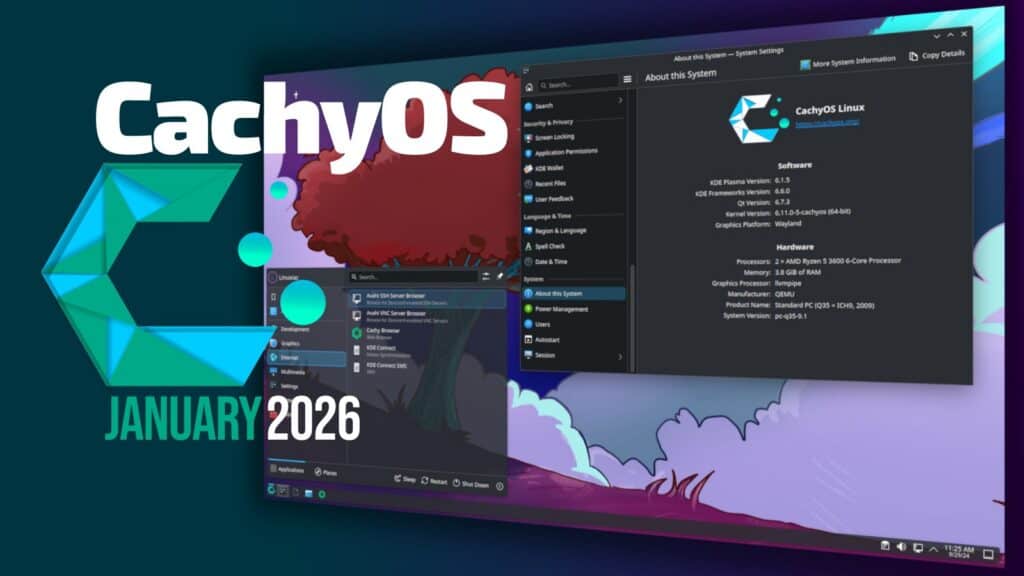
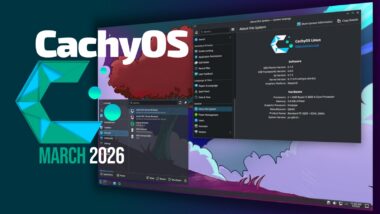
Nearly two months after the previous November update, the Arch-based performance-focused CachyOS has released its first refreshed ISO snapshot for the year, powered by Linux kernel 6.18.
The most visible change arrives in the installer, which has been overhauled to reduce common failure points. Architecture detection now occurs at the very beginning of the process, reducing download sizes by roughly 1 gigabyte. Bootloader selection has been fully integrated into Calamares, with Limine now set as the default.
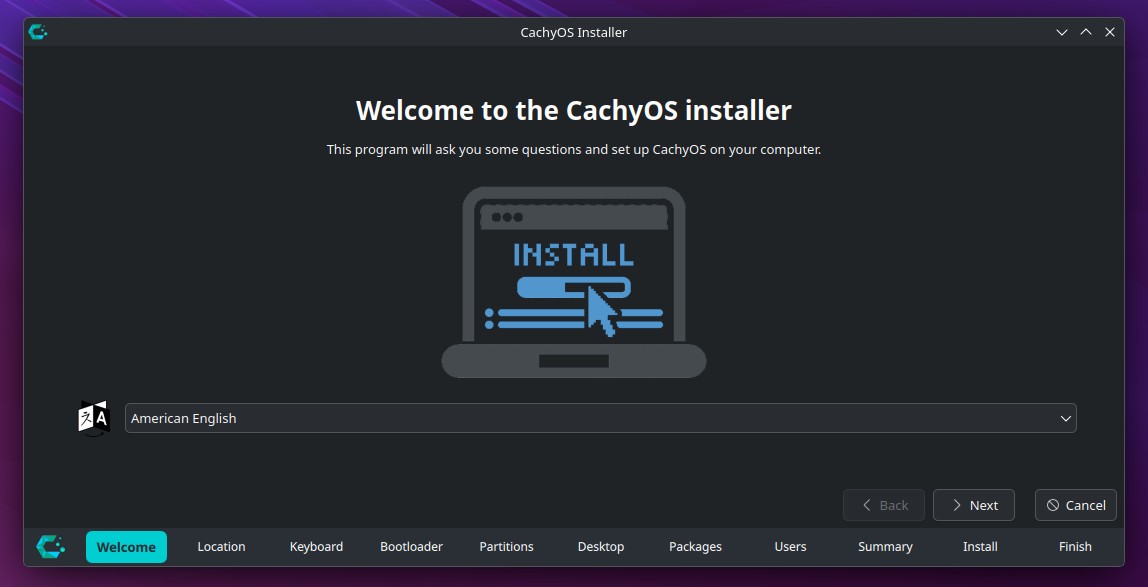
Package installation has been optimized, too, by passing the --needed flag to pacman to prevent unnecessary reinstalls, while Btrfs installations on NVMe drives now default to single-level compression for better balance between performance and space savings. GRUB installations also move to LUKS2 for disk encryption.
The ISO itself notes a notable shift: the CachyOS team replaced SDDM with Plasma Login Manager in the live environment and switched the default session from X11 to Wayland. On top of that, the ISO now ships with both a Stable kernel and an LTS kernel, with the Stable kernel selected by default. Plus, Xorg dependencies have been removed from Wayland-based desktop environments.
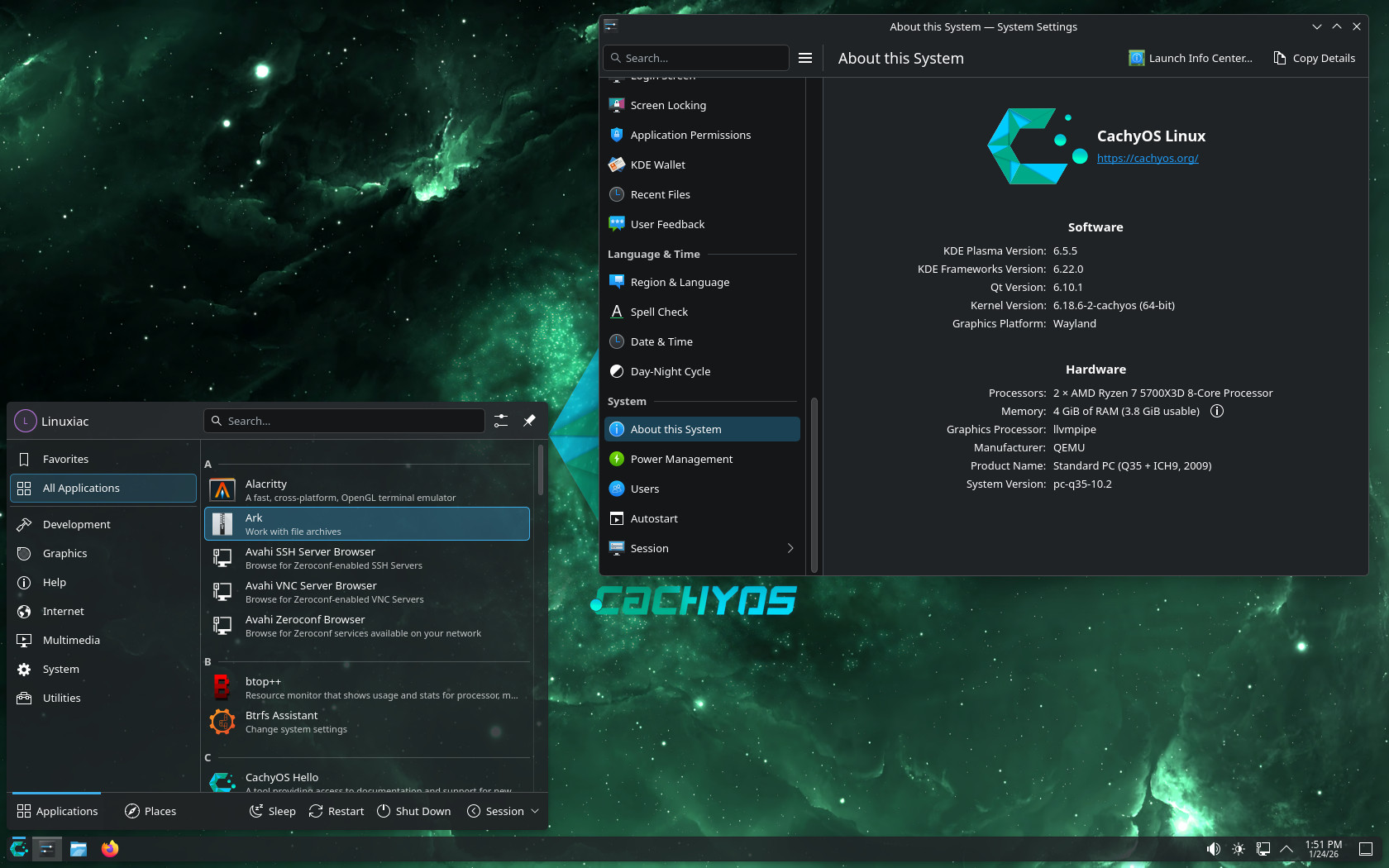
Plasma installations (Plasma 6.5.5) now consistently use Plasma Login Manager, while the Niri setup has been reworked around noctalia-shell with updated configuration files. The GNOME installation path has been simplified, with a cleaner base and a newly introduced subgroup for GNOME applications.
On the hardware and graphics support side, NVIDIA users benefit from the EnableAggressiveVblank option being enabled by default, reducing interrupt overhead on low-latency displays. For older NVIDIA Kepler GPUs, CachyOS now automatically installs the nouveau firmware, enabling VA-API acceleration.
Regarding gaming, Proton-CachyOS gains support for FSR4, a machine-learning-based frame generation feature on RDNA3 and RDNA4 GPUs, optional d7vk support for legacy DirectDraw titles, and imported DualSense haptic feedback patches.
Several long-standing performance and compatibility issues have been addressed, including removing a patch that degraded 1% low-FPS results and improving the handling of DLSS, XeSS, and FSR presets. Wine-on-Wayland setups also receive fixes for keyboard layouts and automatic HDR enablement on NVIDIA discrete GPUs.
Finally, the update includes a broad set of fixes aimed at stability and correctness. Installation issues affecting Framework laptops with Zen 5 CPUs have been resolved, and the installer now blocks progress when an EFI partition is too small, preventing broken installations. Input problems with several game controllers have also been fixed by updating udev rules, while CachyOS Hello now correctly reports the status of the cachy-update service.
For more information, see the announcement.
Existing users are not required to take any special action beyond the usual system update, though Plasma users running SDDM can manually migrate to Plasma Login Manager if desired. For most users, a standard system upgrade with a simple sudo pacman -Syu command is sufficient to receive all improvements.


Wow!
Cachyos rulez!
I have installed with Niri and Noctalia-shell on zfs. It’s simply beautiful and it is killing my distro-hopping virus 😁
Yes! New update for my favorite linux! I am logging in through tty but i think im gonna give plasma-login-manager a shot.