After a year in development, the openSUSE Project has announced the release of openSUSE Leap 16.1, the first minor update in the Leap 16 series. The biggest change is integrating Leap Micro into the main distribution through a new Immutable Mode, allowing traditional and immutable installations to share the same release, maintenance updates, and lifecycle.
Importantly, with this change, Leap Micro will no longer be released separately. Instead, users can boot the standard Leap 16.1 installation image and select Immutable Mode through the Agama installer. Consequently, there will be no Leap Micro 6.3 or 7.0.
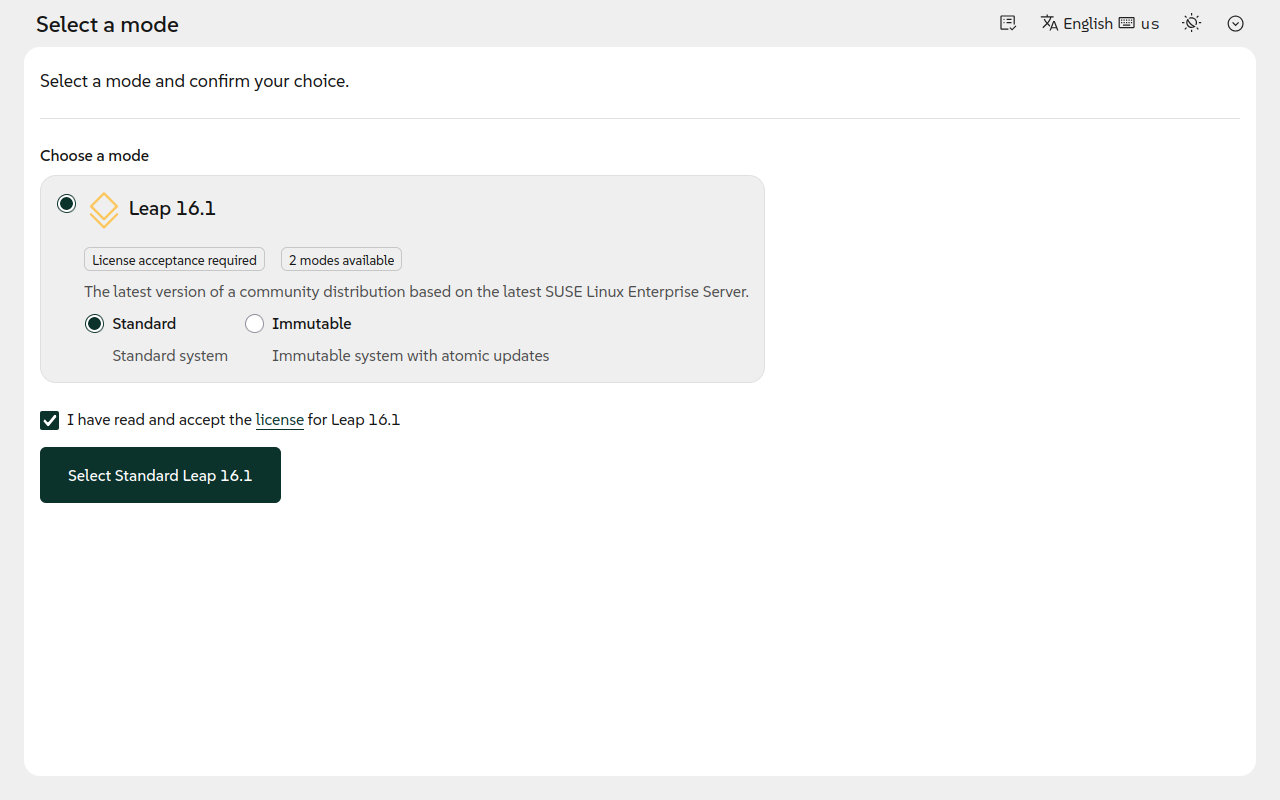
The new mode uses a read-only root filesystem and transactional updates. Each update creates a snapshot allowing users to roll back if something goes wrong. Additional applications can be installed through containers using Podman or Distrobox, while Flatpak is available for desktop software.
Existing Leap Micro users can migrate to Leap 16.1 using the openSUSE Migration tool, although the project currently considers this process experimental. Preconfigured images remain available for virtualization platforms, cloud deployments, and other specialized environments.
Another important development is that Leap 16.1 launches the same day as SUSE Linux Enterprise Server 16.1, aiming to eliminate gaps in maintenance updates between community and enterprise releases while maintaining their close compatibility.
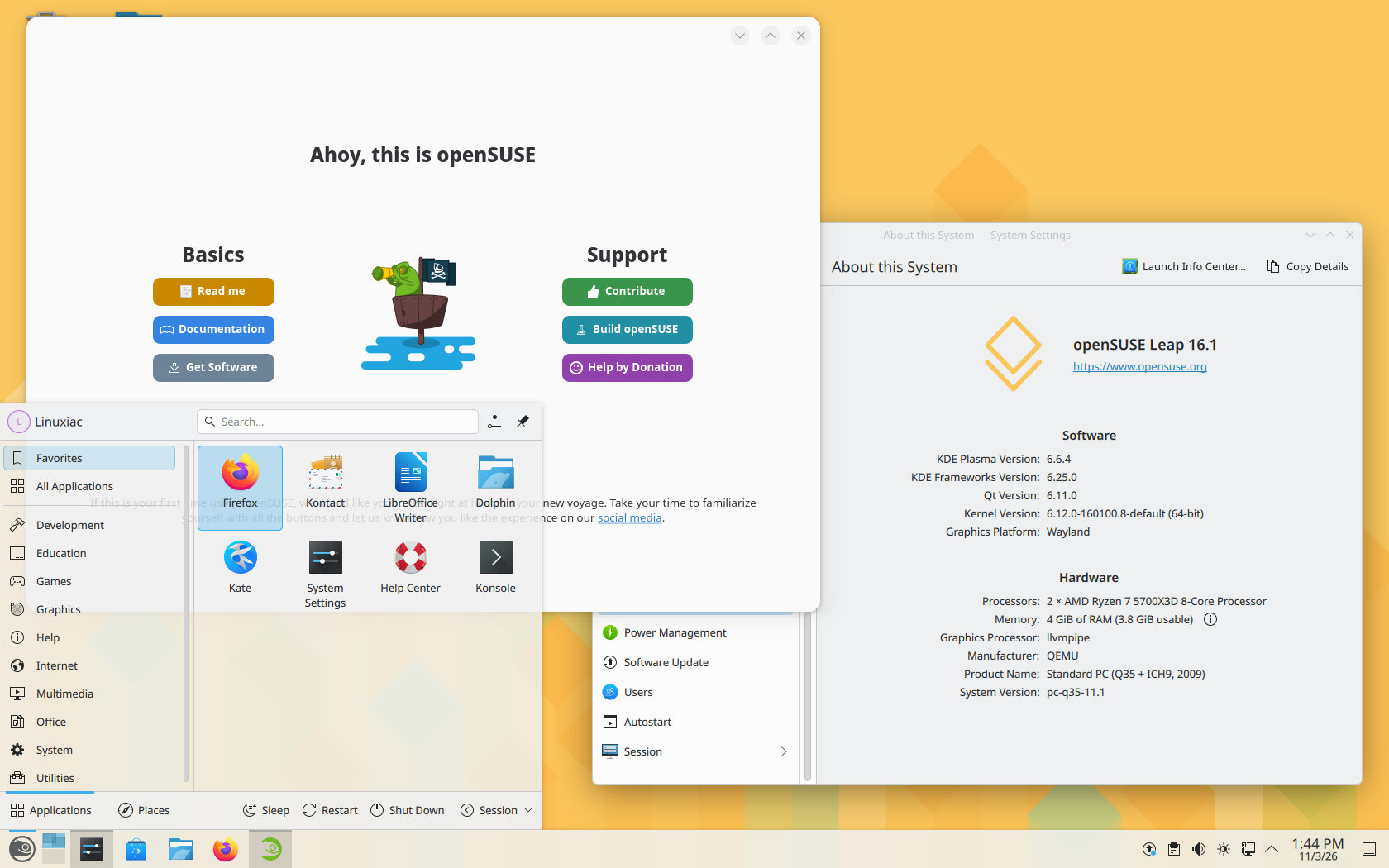
On the desktop side, KDE Plasma receives a substantial update, moving from version 6.4 to 6.6, accompanied by Qt 6.11 and KDE Frameworks 6.25. GNOME stays at version 48 with bug fixes rather than a major upgrade. LXQt advances to 2.4, and Xfce 4.20 continues to offer Wayland support.
The distribution also updates several widely used applications, including LibreOffice 26.2 and GIMP 3.2.
Under the hood, Leap 16.1 retains the Linux kernel 6.12, systemd 257, and glibc 2.40 from its predecessor. The surrounding software stack receives updates, including QEMU 11.0, libvirt 12.4, and Podman 5.8.
Developers gain access to Python 3.14 alongside the default Python 3.13, LLVM 21, PHP 8.5.12, MariaDB 12.3, and PostgreSQL 18. The Agama installer has been updated to version 24.
Regarding hardware and security, Leap 16.1 maintains the requirements introduced with Leap 16.0, including the x86-64-v2 minimum CPU architecture and SELinux as the default Linux Security Module. Support for 32-bit applications stays disabled by default but can be enabled when needed, including for gaming software such as Steam.
Finally, existing Leap 16.0 installations can upgrade to the new release. The project plans annual minor updates through Leap 16.6 in 2031, with traditional and immutable installations following the same release schedule.
For more information or to download the installation images, visit the openSUSE website. The full details are available in the release announcement.