The systemd-free Nitrux 7.0 is here with one of the distribution’s biggest desktop changes in recent years.
The main change is architectural. Instead of relying on several third-party utilities to assemble the desktop session, Nitrux now uses its own coordinated set of shell components managed through nwsm, the distribution’s OpenRC-based user-session lifecycle manager.
The new environment still uses Hyprland, updated to version 0.55.4, but many surrounding components have changed. Waybar, Crystal Dock, SwayNC, Hyprlock, Wlogout, and Grimshot have been removed from the default setup and replaced by Nitrux-developed alternatives.
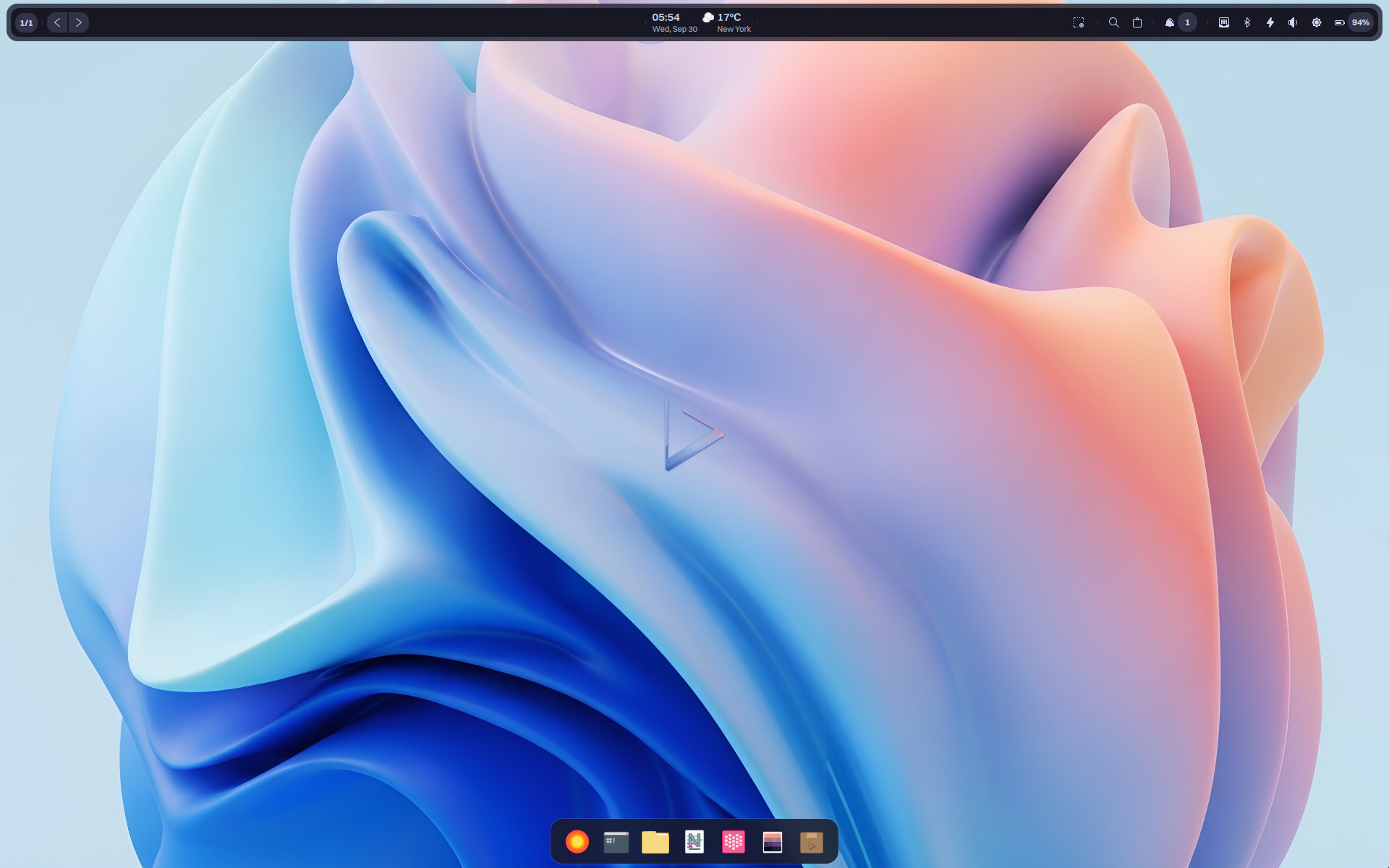
Among them is Valenz, a new MauiKit-based workspace bar providing workspace navigation, notifications, media controls, system tray functionality, clipboard access, screenshots, and various Control Center indicators.
Marina serves as the new workspace dock, with support for multiple displays, application pinning, automatic launcher discovery, window tracking across Hyprland workspaces, and optional auto-hide behavior.
Nitrux 7.0 also introduces Desklock as its native Wayland lock screen, while QMLogout handles logout and power session actions. NudgeOSD manages on-screen indicators like volume changes, and Toma replaces Grimshot as the default screenshot tool, adding screen recording capabilities.
Another major addition is Workspace Settings, now Nitrux’s primary system configuration interface. Users can configure themes, fonts, wallpapers, displays, audio, input devices, networking, Bluetooth, power profiles, accessibility, Flatpak permissions, the greeter, lock screen, Hyprland settings, and other parts of the new environment.
Software management also received a new graphical frontend called AppFinder. Built with MauiKit, it brings together several of Nitrux’s preferred application delivery methods, including NX AppHub AppBoxes, applications from Flathub, locally built AppImages, and Distrobox development environments.
Under the hood, Nitrux 7.0 ships with Linux kernel 7.2.6 carrying CachyOS patches, KDE Frameworks 6.26, NVIDIA Open Kernel Module 615.71.09, and MauiKit 4.0.4.
The MauiKit applications bundled with the distribution have also moved to version 4.0.4, including Index, Pix, Nota, Buho, Clip, Fiery, Shelf, VVave, and Station. Various components receive usability and functionality improvements, such as better file operations in Index, PDF editing and saving support in Shelf, playlist handling in Clip, and metadata editing in VVave.
Installation security received some attention too. Calamares now creates encrypted installations using LUKS2 instead of LUKS1 and uses Argon2id for key derivation. F2FS support has also expanded with compression and encryption.
There is, however, an important Secure Boot caveat. Nitrux says its current GRUB packages contain unsigned UEFI binaries, while the default kernel is unsigned as well. As a result, an installed system may fail to boot while Secure Boot remains enabled.
For additional details, see the official announcement.
Nitrux 7.0 is offered in separate ISO images for NVIDIA systems using the open NVIDIA kernel modules and for AMD and Intel graphics hardware. Existing Nitrux 6.1.0 users will be able to move to the new release through the Nitrux Update Tool System once the OTA upgrade becomes available.
Image credits: Nitrux