
The designers of GNOME have given a glimpse of the direction the GNOME Shell experience might take in the coming years, presenting a set of ideas that include minor interface improvements as well as more ambitious changes to window management.
A very tangible idea relates to the search interface of GNOME Shell. Currently, when you type in the Overview, the entire view is replaced by search results; GNOME, however, wishes to change this by introducing a search overlay that springs from the search field and appears above the current Overview, thus retaining the spatial relationships among the various Shell elements.
This is not merely a mockup; Dev says that there has been recent progress toward implementing it, and the improved search experience is expected to be included in GNOME 51 this fall. In the longer term, GNOME also hopes to make the search results more capable, possibly by providing file previews, allowing multiple actions for individual results, introducing filters, and including other features similar to those found in tools such as Alfred and Raycast.
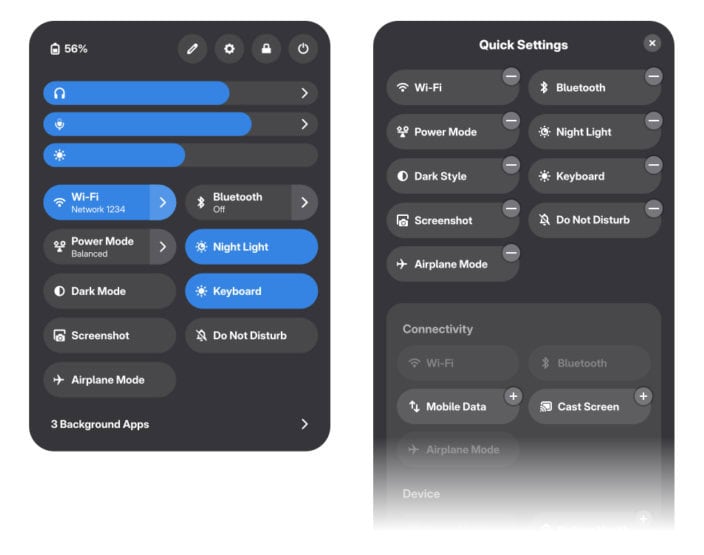
The designers also want to revisit the Quick Settings. The menu has expanded as GNOME has added controls for various features, such as dark mode, Night Light, power modes, and keyboard backlighting. Instead of permanently adding every possible toggle, the new design would let users customize the menu themselves via an inline editor, enabling them to add or remove less-used controls to suit their requirements.
GNOME is also looking to simplify the Calendar popover, which is centered in the top panel. Notifications will be placed next to Quick Settings, so the calendar menu can focus on features such as events, world clocks, and weather. Besides reducing calendar clutter, this change will bring notifications and other frequently used system controls together rather than spreading them across two different parts of the Shell.
There is potential for significant improvements in window organization. One idea draws on a concept GNOME considered when developing GNOME 40: when a window is being dragged in the Overview, the workspaces could shrink to become larger drop targets, eliminating the need to drag windows very precisely onto the relatively small workspace thumbnails.
The most ambitious of the proposals is Mosaic, GNOME’s long-standing idea concerning smarter tiling. Rather than asking users to manually arrange their windows, Mosaic would automatically adjust the size of the existing windows as new ones are added, allocating the available space while taking into account the windows’ preferred dimensions.
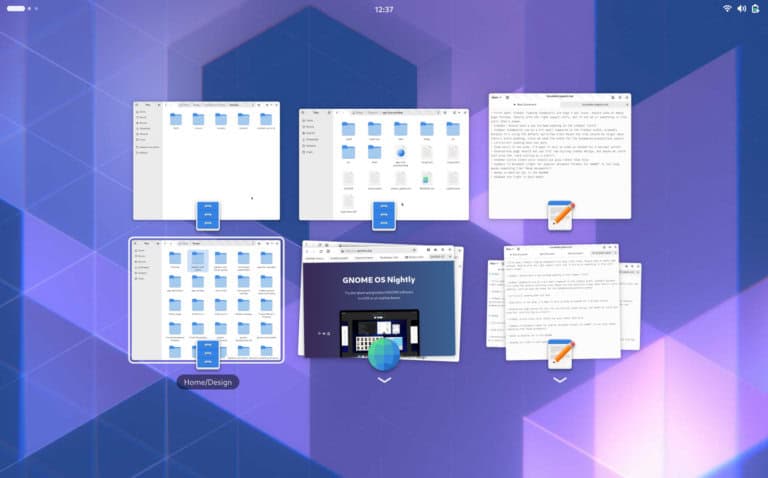
The well-known Alt+Tab and Super+Tab window-switching feature is also under review. At present, GNOME groups windows by application. The design team is exploring a new hybrid solution that would display the most recently used windows separately while grouping older ones by application.
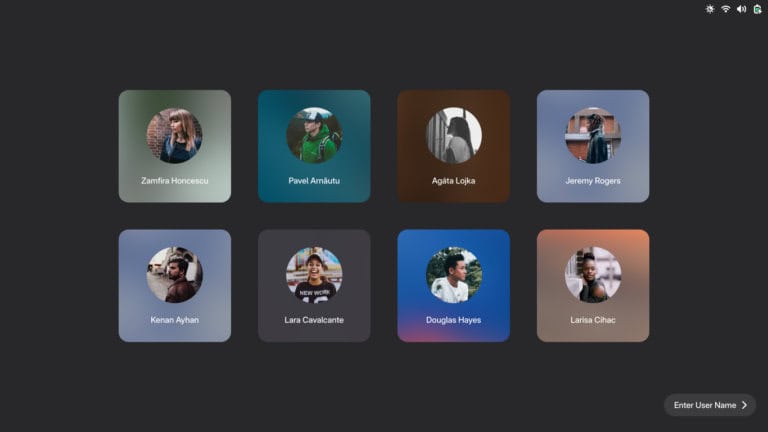
Other suggestions include replacing the current user list on the login screen with a more visual grid, introducing a wider, more expressive battery indicator that displays the remaining percentage more clearly, and, lastly, adding a transparent top panel to GNOME Shell.
The speed at which any of these ideas turn into reality will be largely determined by the amount of development resources available. GNOME points out that for some concepts, implementation alone is sufficient, while for others, prototypes, user testing, further design discussions, or changes to Mutter and GNOME Shell are required first.
Sadly, though, one of the most frequently requested GNOME Shell features is nowhere to be found in this vision: a proper system tray. GNOME removed traditional tray icons years ago, despite continued user demand and the fact that many applications still rely on them. For those hoping to see native system tray support finally make a comeback, there is, unfortunately, no sign of that here.
For additional details, see the post on GNOME’s Blogs.
Image credits: GNOME



what is with an pim (Personal Information Manager) that works with gnome and is not split in calendar, mail, address or contact application etc.
And add more nonsense services, running task and some other things to eat more memory with things that nobody uses, for example I found a service running to detect an Iphone or Ipad plug, some other to detect a camera, many “search” providers, a watcom touch device driver, the annoying gedit (the first thing that I rename), still I love it (after disabling or removing everything on new updates).
As usual, they will just mess up what was working well (the calendar popover being a good example), strip even more features than the empty shell it already is, and make Gnome a tad more unusable.
All the while not listening one bit to what their long-time users or the people who got fed up and switched away have been requesting. Just digging their own grave further.
How to ruin a project 101.
Please, integrate Dash-to-Dock with the DE. Many users will appreciate it.
I think Dash-to-Dock should have been integrated a long time ago!
^^This^^