
Mozilla has released Firefox 157, introducing what the company describes as the browser’s biggest visual refresh in years, internally known as Project Nova.
The update brings a modernized look across the browser chrome, sidebar, and menus, based on Mozilla’s updated design system. The changes are noticeable, with a cleaner, more rounded interface and a more consistent visual language across the browser.
Firefox 157 also introduces new built-in themes with both light and dark variants, giving users more ways to customize the browser without relying on third-party themes.
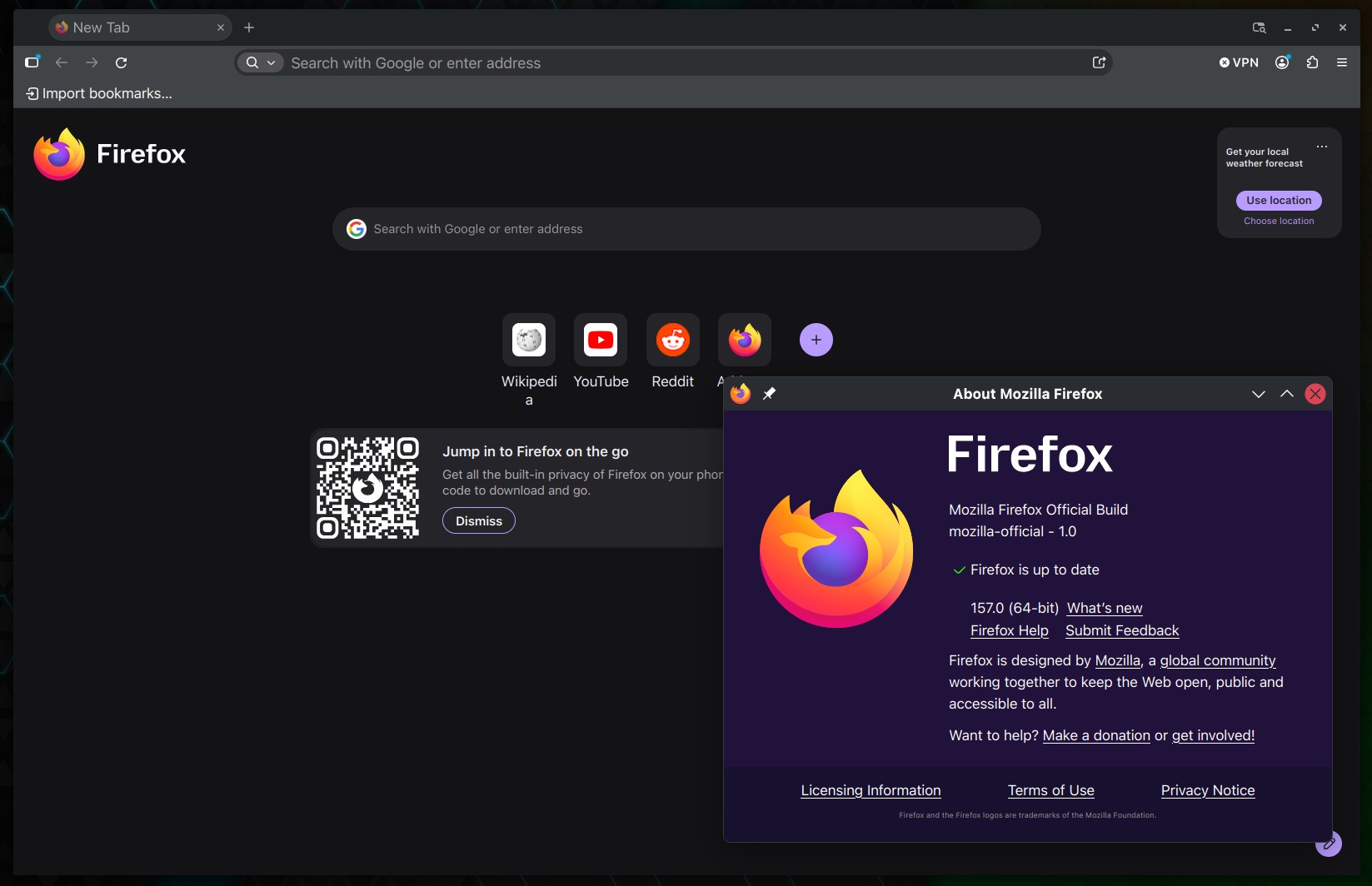
Another addition is a new compact mode that reduces spacing around tabs and toolbar elements. This gives web pages more vertical space and is useful on smaller displays or in split-screen layouts.
On the multimedia side, Firefox can now use hardware AV1 decoding for WebRTC video calls on supported devices. Previously, AV1 video in WebRTC sessions was always decoded in software, potentially placing a heavier load on the CPU.
Mozilla has expanded localized address bar suggestions to more European countries, including Austria, Belgium, Czech Republic, Denmark, Finland, Hungary, Ireland, Luxembourg, the Netherlands, Norway, Poland, Portugal, Slovakia, Spain, Sweden, and Switzerland. The feature remains configurable through Firefox Suggest settings.
Several bugs have been addressed as well. Firefox 157 fixes an issue where selecting an address bar suggestion while a page was still loading could result in Firefox searching for the typed text instead of opening the selected suggestion.
On Windows, HDR videos using some 8-bit formats no longer appear dull or gray. Another fix prevents the Windows taskbar from remaining visible over fullscreen video.
Mozilla has also improved audio and video synchronization when repeatedly changing playback speed, such as when watching YouTube videos. Vertical Tabs users should see the sidebar correctly reappear when moving the pointer to the screen edge while Firefox is in fullscreen mode.
There are a couple of behavioral changes as well. Pressing Tab now moves focus directly to the text field in the address or search bar instead of stopping on the search engine button first, as the button remains accessible with Shift+Tab.
Amazon is also no longer included as a built-in Firefox search engine. Users who still want to use it directly can add it manually as a custom search engine through Firefox’s settings.
Firefox 157 binaries are available from Mozilla’s download servers. Windows and macOS users will get an over-the-air update in the next few days. Linux users should see Firefox 157 in their distro repositories soon, too.




Pure evil, fortunately LibreWolf has buit-in “Enable the Nova redesign” checkbox that has been used at once…
I didn’t even know I had 157 installed.
When launching it, I realized the long discussed new UI interface was there, and it wasn’t pretty.
There is a setting in about:config to turn it off. But, as we know these are only temporary. So I needed a long term fix.
After searching a little, I found how to modify my userChrome.css to change both the roundness to something slightly rounded instead of this ugly madness reminiscent of playskool Gnome adwaita some new unwanted turquoise and purple border colors that were disrupting my theme.
*to change both the roundness … and some new unwanted….
“more rounded interface”
Are people really wanting more rounding? That is the first visual thing I change on any browser. Firefox UI has been awful and inflexible for years. Literally the only reason I have come back to Firefox based browsers is the Manifest v3 fiasco that is ruining Chromium based browsers, Vivaldi being my favorite.
Gone downhill since Brendan Eich left. Too much focus on SJWs instead of making great open-source alternative.
Agreed.
They spend more time and budget on woke politics than on getting Firefox back on track.
Most people in the open source world have moved on to Brave. It is not as customizable but it is less political and decently featured.
I now use both them 50/50, while just a couple years ago my back-up browser was fired up solely for some uncommon use cases.
Shut up with your identity politics! It had nothing to do with any of that. Mozilla is just ran by people that are extremely shortsighted and out of touch with their userbase. It has nothing to do with a political identity…..
oh my… this again.