Canonical has released LXD 6.10.0, the latest long-term support version of its open-source system container and virtual machine manager. It is the first LTS release in the LXD 6 series, building on LXD 5.21 LTS with several additions for production environments.
One notable change is the introduction of image registries, giving administrators centralized control over image sources available to LXD clusters. Projects can restrict image downloads to approved registries, while support for Simple Streams servers and other LXD clusters makes sharing images between environments easier.
Another addition is persistent Changed Block Tracking for virtual machine storage volumes. Using QEMU dirty bitmaps, LXD tracks which disk blocks changed between snapshots, allowing external backup tools to transfer only modified data instead of entire disk images. However, Canonical labels this functionality as experimental and advises against enabling it in production environments.
Disaster recovery has also improved considerably. LXD 6.10 introduces asynchronous Ceph RBD mirroring, allowing standby clusters to receive replicated storage updates through Ceph’s native mechanisms. Replication supports custom storage volumes attached exclusively to instances, while new Prometheus metrics help administrators monitor replication status and recovery point objectives.
On the clustering side, the release adds support for unidirectional and public cluster links, making it easier to connect environments with different network and authentication requirements. It also introduces a durable operations mechanism that preserves critical operations in the cluster database and allows them to resume if the executing node goes offline.
Networking improvements include health checks for OVN load balancer backend pools, allowing administrators to monitor backend availability and configure failure thresholds.
Storage support has expanded: Pure Storage FlashArray now supports Fiber Channel connections, including SCSI/FC and NVMe/FC, while Dell PowerStore adds NVMe/TCP and NVMe/FC support.
Security changes include better visibility into effective user permissions, credential expiration reporting, and improved bearer token lifecycle management.
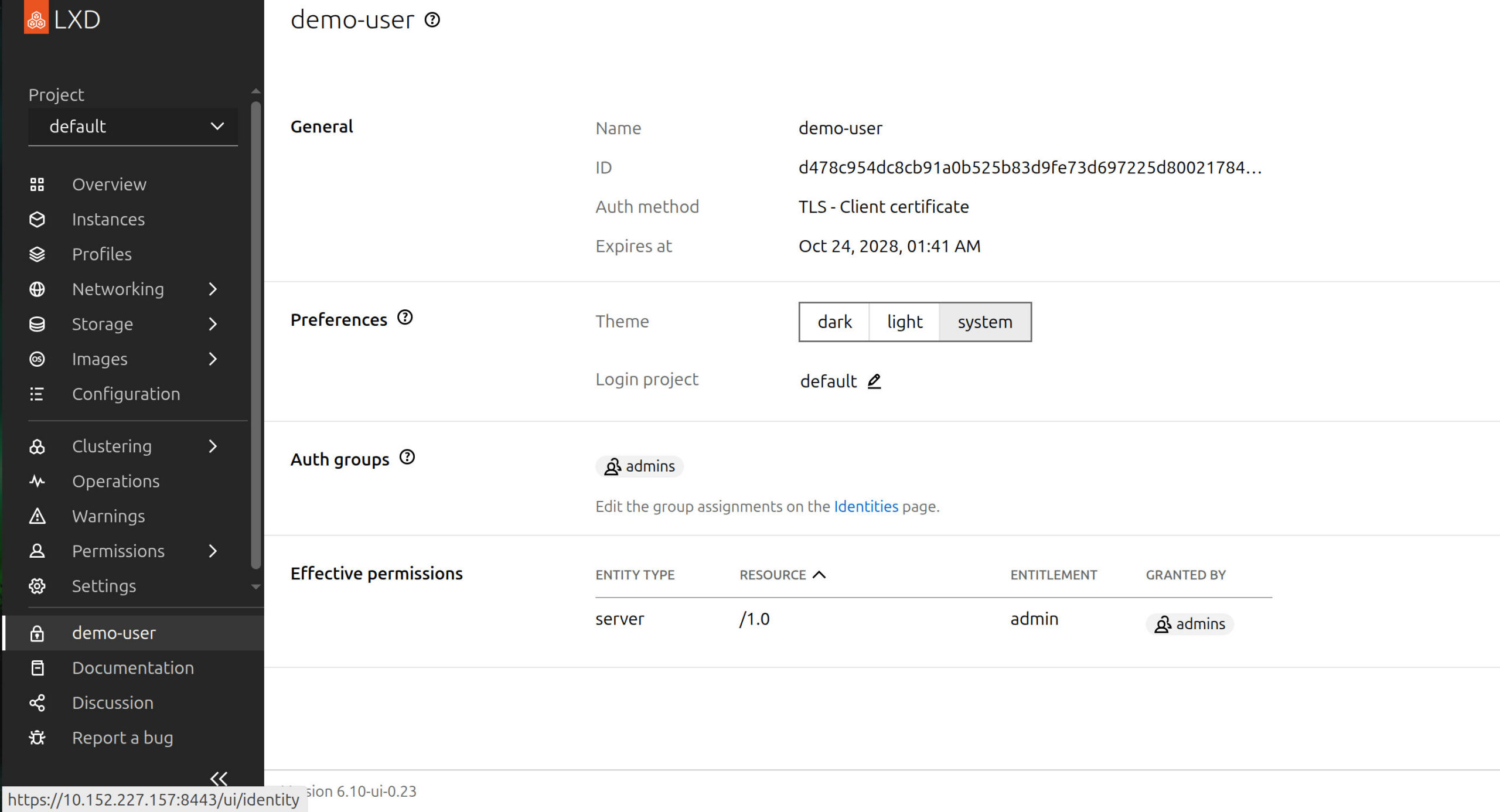
The web UI has been improved too. LXD 6.10 introduces a new dashboard showing information about running instances, projects, cluster members, storage usage, and recent warnings. Administrators can manage identities more easily, copy profiles between projects, upload files to instances, and create directories directly from the file explorer.
Under the hood, the release includes QEMU 10.2.1, LXC and LXCFS 7.0 LTS, updated ZFS components, and newer NVIDIA container tooling. Numerous bug fixes address issues with virtual machine migration, Windows guest booting, storage handling, and cluster reliability.
There are also two compatibility changes worth mentioning. Legacy NVIDIA instance configuration options have been removed in favor of Container Device Interface passthrough. Additionally, the previous cluster healing mechanism has been removed to prevent accidental quorum loss during temporary network disruptions.
For additional details, see the announcement or the release notes.
LXD 6.10 LTS is recommended for production use and receives five years of standard support, through June 2031, with extended coverage available through Ubuntu Pro until 2036.
The release is being progressively rolled out through the 6/stable and latest/stable Snap channels. Users can install it with sudo snap install lxd --channel=6/stable.
Image credits: Canonical