
The 0.11 version of Wayfire has been released as a major update to the extensible 3D Wayland compositor, including significant improvements in fractional display scaling, color management, HDR rendering, Vulkan-powered effects, and the handling of external plugins.
A prominent feature of the new release is a revamped geometry system which aims to achieve better results when fractional scaling is applied. In Wayfire 0.11, the geometry calculations are carried out almost completely using floating-point numbers and are only converted into integer coordinates aligned with the framebuffer at the final rendering stage.
According to the developers, this leads to sharp text when using fractional scales in compatible applications, such as those based on modern GTK4 and Qt, Firefox, and Google Chrome.
HiDPI support has also been introduced for Xwayland applications. As traditional X11 programs running via Xwayland do not make use of the standard Wayland scaling methods, the compositor can now tell them to render their windows at their native physical-pixel resolution.
Another major aspect of the release is color-managed rendering; Wayfire now includes support for per-output ICC profiles, per-surface color management, and experimental HDR output.
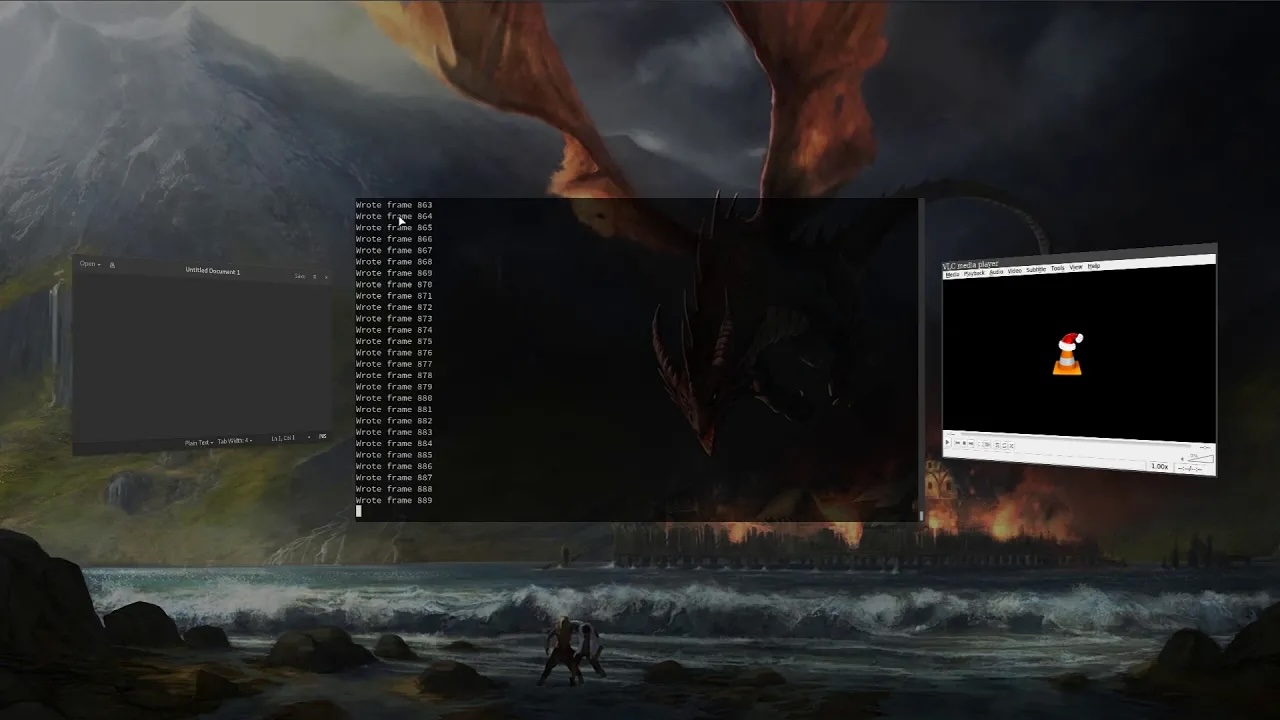
Yet the developers stress that HDR needs to be supported at every stage of the graphics chain, including the renderer, the GPU driver, the physical connector, and the monitor. At present, Wayfire’s fully color-managed HDR pathway requires the Vulkan renderer, and HDR is still disabled by default.
Vulkan support has been improved as well. Wayfire 0.10 included support for the Vulkan and Pixman renderers, whereas version 0.11 extends Vulkan compatibility to further visual effects. This now comprises the 2D and 3D window transformations used by plugins such as Wrot and Switcher, as well as Wayfire’s famous Wobbly window effect.
Wayfire 0.11 also introduces a new wayfire-plugin command intended to simplify installing and maintaining external plugins. If the ipc and ipc-rules plugins are enabled, the tool will automatically reload plugin metadata so that installed plugins can be enabled without restarting the compositor.
Moreover, this update extends Wayfire’s support for modern Wayland protocols, with the new image capture protocols enhancing compatibility with existing screenshot, screen-recording, and desktop portal implementations, and the new ext-toplevel plugin enabling standards-compliant panels and task switchers to list the open windows.
Wayfire 0.11 also includes integration with KDE AppMenu and GTK global-menu, which allows desktop shells to link application menus to their respective Wayland windows.
Apart from the changes mentioned in the headline, many minor improvements have been made to Wayfire’s built-in plugins. The touch gestures have been improved, and the Simple Tile plugin can now temporarily maximize a tiled window without moving it from its current position in the tiling tree.
The ‘maximize’ button also includes a number of functions: left-clicking maximizes the window, middle-clicking maximizes it vertically, and right-clicking maximizes it horizontally. Plus, the decorations now provide extra controls for font scaling, button scaling, and button padding.
Furthermore, new windows can be positioned under the pointer and still stay within the usable output area, and the Vswitch plugin has acquired a new workspace wraparound mode. Per-window animation behavior can now be customized using runtime properties, and the output settings allow the highest available resolution or refresh rate to be selected using the new highres and highrr values.
Finally, the accompanying wf-shell project, which includes wf-background, wf-panel, and wf-dock, has been ported to GTK4. It has also gained a screen locker, a screen-sharing picker, new widgets, and improvements to its existing desktop components.
Full details are available in the git log. The release announcement is here.
Image credits: Wayfire


so this is what you use to add special effects