
JetStream 3 has been released as a major update to one of the web’s most recognized browser benchmarks, marking its first significant refresh since 2019.
For readers unfamiliar with it, JetStream is a benchmark suite designed to measure browser performance in JavaScript and WebAssembly workloads. It is important to understand that it focuses on evaluating compute-intensive aspects of modern web applications, rather than page rendering or interface responsiveness.
The BrowserBench project announced a new version supported by contributors from Apple, Google, Mozilla, and other browser engine developers. According to Chromium’s Blog, JetStream 3 was developed through an open governance, consensus-driven model involving engineers from all major JavaScript and WebAssembly engines.
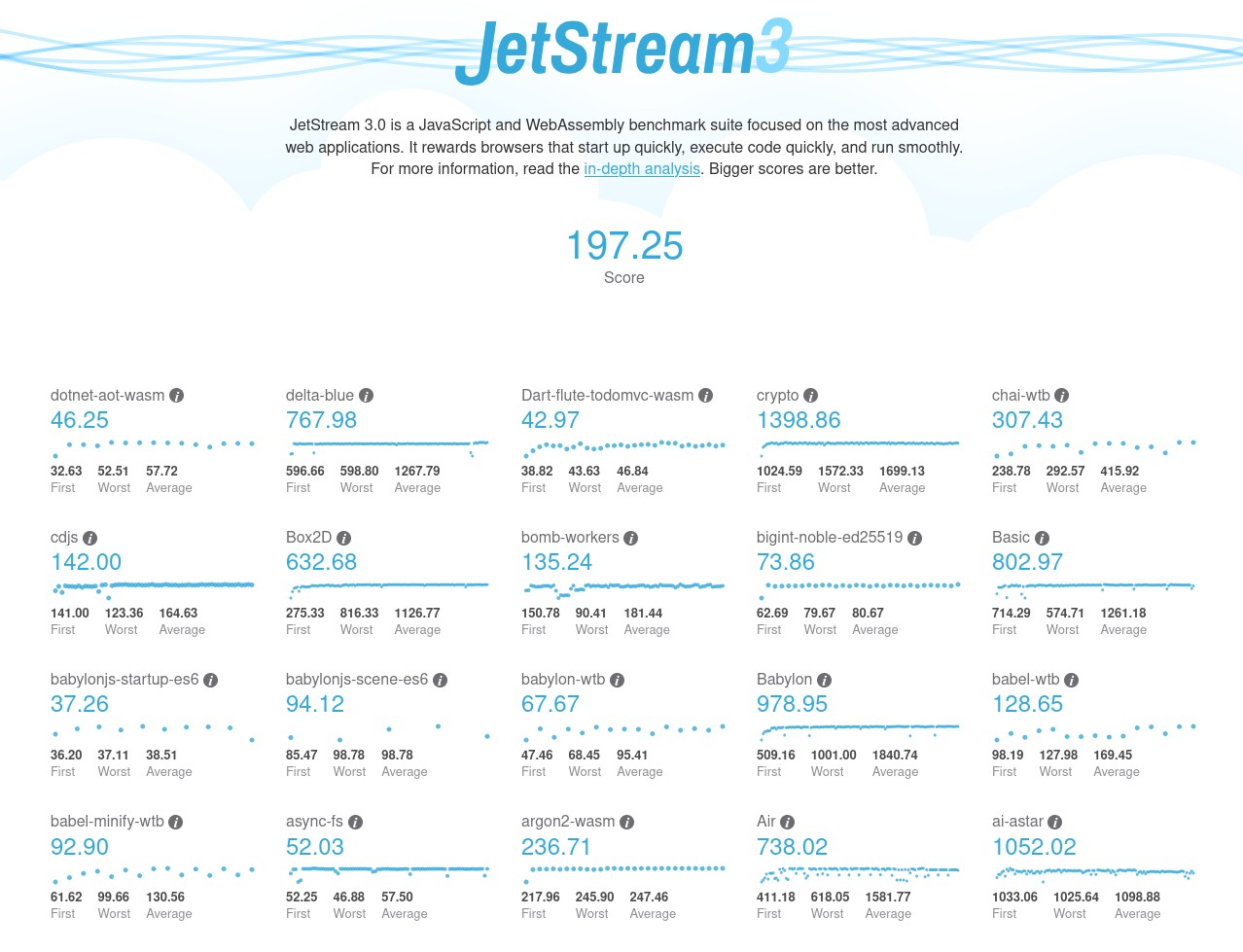
The primary change in JetStream 3 is a shift toward larger, more modern workloads. The BrowserBench team reports that older microbenchmarks have been reduced or removed, with greater emphasis now placed on applications that better represent current web usage.
WebAssembly receives significantly greater representation in this release. JetStream 3 now includes 12 Wasm workloads and supports newer features, including exception handling, SIMD, and WasmGC. The benchmark also expands beyond its traditional C and C++ roots, incorporating workloads built with C#, Dart, Java, Kotlin, Rust, and C++.
For JavaScript, JetStream 3 introduces or updates tests in areas including startup performance, asynchronous code, React server-side rendering, TypeScript compilation, 3D engines, tokenization, proxies, and class fields. Several older asm.js workloads have been removed.
Finally, I’ll just add that while benchmarks like Speedometer focus on everyday browser responsiveness, JetStream remains a clear indicator of how browser engines manage demanding, compute-intensive web workloads, and this latest version is a major step forward in that direction.