KDE developers continue preparing Plasma 6.6, and although there is exactly a month to go before the final stable release (scheduled for February 17, 2026), the team posts weekly updates on the KDE Blogs about what changes to expect from this version. After I covered some of them recently, now we have a new batch to look at.
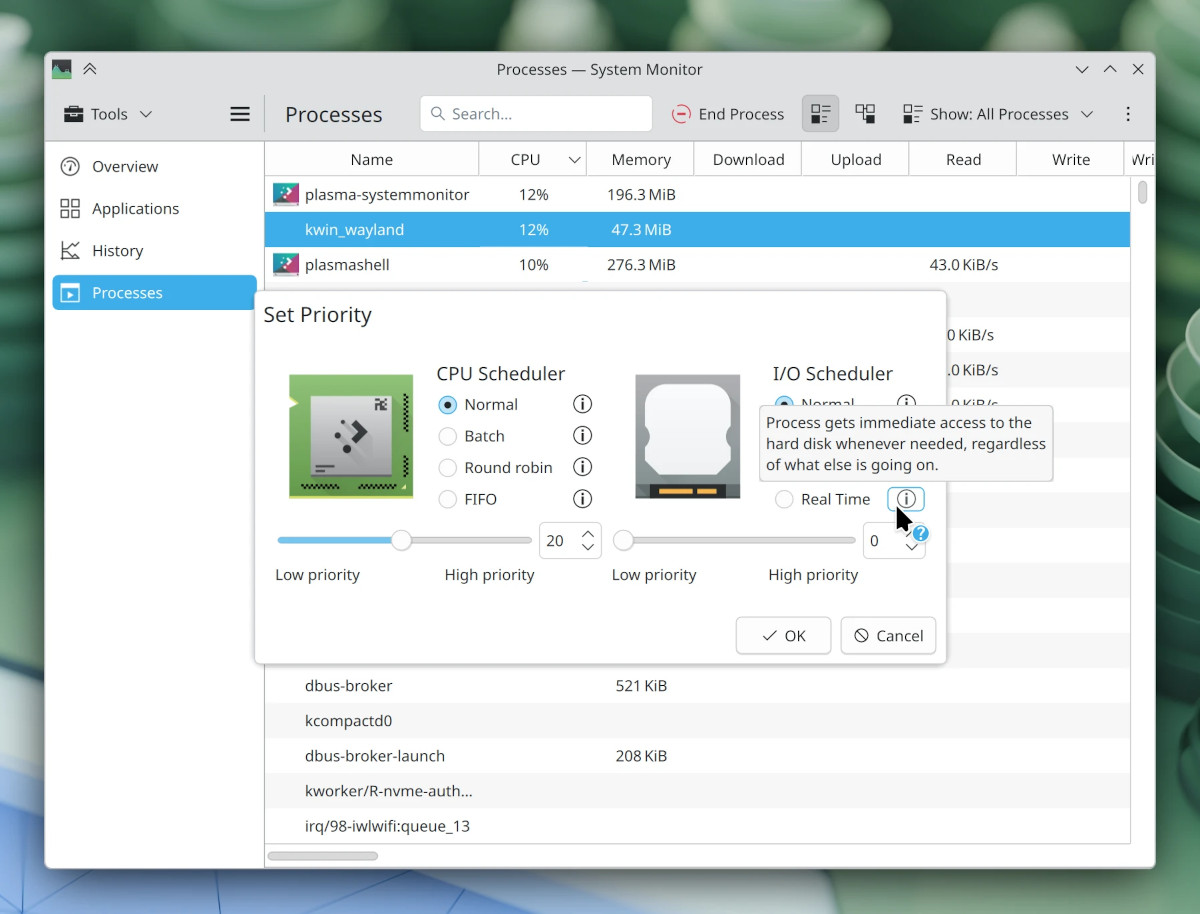
One of the most visible functional additions arrives in System Monitor, which once again allows users to adjust CPU and I/O priority for running processes using a graphical interface. This restores functionality previously available in KSysGuard and removes the need to rely on command-line tools for basic process tuning.
On top of that, several interface refinements will land in this release. For instance, mounting removable storage devices will no longer trigger an automatic file system scan. Instead, disk checks will be a manual action accessible from the device’s expanded options.
Additionally, the screen chooser dialog will gain a search field, making it easier to locate the correct window or display in complex multi-window or multi-monitor setups.
Application launcher behavior has also been refined as Kicker’s search results now remain visually stable while typing, eliminating column flicker and resizing that previously made quick searches feel less responsive. Bluetooth notifications have been cleaned up, replacing technical wording in titles with clearer, more user-friendly messages, with further improvements planned for notification body text.
Regarding HDR support, the Calibrator tool now includes a summary page with an option designed to better align with Windows-style HDR behavior, improving compatibility with games and applications built around that model. On the technical side, Plasma implements version 2 of the Wayland color management protocol and reduces visual glitches observed in Firefox when its experimental HDR mode is enabled.
Finally, as expected, the release will also address several stability issues. A KWin crash that caused laptops to wake from sleep when connected to external displays has been fixed, along with lock-screen focus problems on multi-monitor systems.
Additionally, Discover no longer switches to full-screen mode when opening pop-up dialogs, and the System Settings’ Remote Desktop page now maintains a correct layout even on systems with complex network configurations or large numbers of Docker containers.
For more information, refer to the “This Week in Plasma” post on the KDE Blogs.
Image credits: KDE