Emmabuntüs is a Linux distribution widely used in humanitarian and educational projects, especially in regions with limited access to new hardware. It focuses on refurbishing and extending the life of older computers, while making Linux usable for beginners, nonprofits, schools, and people with disabilities, particularly visually impaired users.
Today, nearly two years after the release of version 5.0, the Emmabuntüs Collective has rolled out Emmabuntüs Debian Edition 6. As the name suggests, it is based on Debian 13.2 and comes as a 64-bit edition with Xfce and LXQt desktop environments.
According to the announcement, this version is the result of a close collaboration with A.S.I. YOVOTOGO and the Togolese Federation of Associations of Persons with Disabilities (FETAPH).
It’s important to note that accessibility work in Emmabuntüs DE 6 was shaped by extensive testing and feedback from blind and visually impaired volunteers, whose contributions guided both usability and feature design. To preserve continuity for existing users, the new accessibility features are disabled by default and can be enabled on demand through a dedicated interface.
At the system level, the release updates the base to Debian 13.2 and introduces several general improvements. Default audio volume is now set to 50 percent, a Wine installation script has been added, and non-functional components such as Deborah and ZuluCrypt-GUI have been removed or replaced, with LuckyLUKS now handling encrypted volumes.
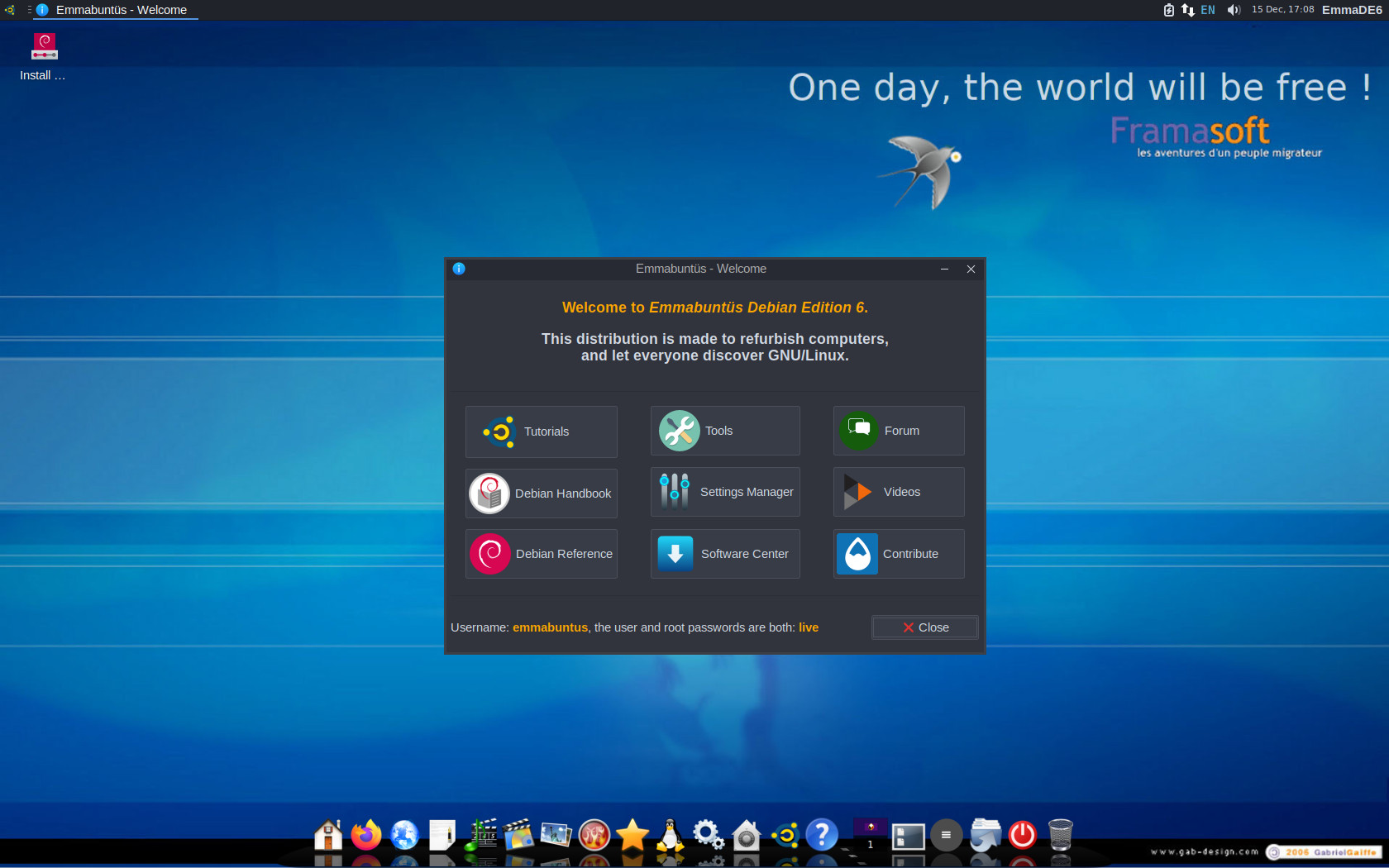
Long-standing issues around locale configuration, timezone selection, and encrypted installations under Calamares and classic Debian installers have been fixed. Core software has also been refreshed, including Firefox ESR 140.6, Thunderbird 140.5, Ventoy 1.1.09, CTparental 5.3.01-1m, Turboprint 2.59-1, and the Debian Beginner’s Handbook 13.1.
Expectably, the biggest changes are on the accessibility side. The control window has been redesigned with YAD, allowing users to receive speech feedback while navigating. New speech engines, such as MBROLA and Piper, are now included, and support for three Orca profiles is available.
Moreover, the distro now provides an accessible interface for safely unmounting USB drives, audible insertion feedback when accessibility mode is active, and improved braille display support. Caja is used for desktop management in accessibility mode, and LIOS has been integrated to provide OCR capabilities.
Additional tools and scripts have been introduced to improve day-to-day usability for visually impaired users. These include KDE Connect integration, battery level announcements for laptops, installer scripts for Index braille embossers, enhanced printer detection via nmap, and consistent handling of the selected speech synthesizer across the system.
The distribution also adds espeakup to enable speech output in Linux console mode, making the system more accessible even outside the graphical environment. Several scripts allow users to disable or restore desktop backgrounds and boot splash screens, reducing visual clutter.
Finally, the Emmabuntüs Collective confirmed that these accessibility enhancements will also be included in a forthcoming update to Emmabuntüs Debian Edition 5, planned for early next year, ensuring continued support for refurbished 32-bit systems.
For a complete list of changes, refer to the release announcement. The installation ISO images are available on the project website’s download section.