
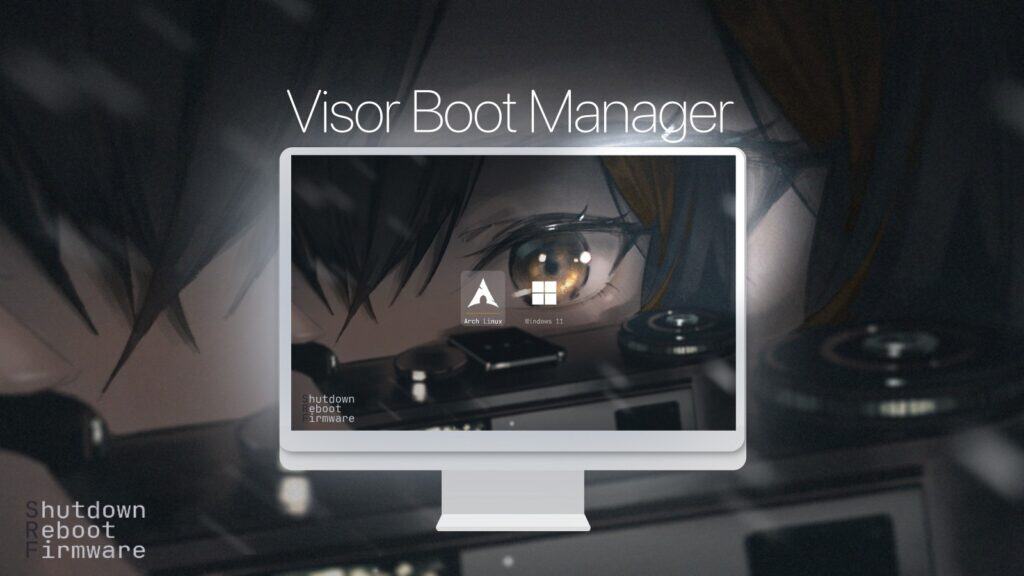
Visor is a new open-source UEFI boot manager for Linux, designed to launch kernels, Unified Kernel Images, Windows, and other EFI applications. Written primarily in C, the project combines the speed and efficiency of GRUB with the polished, icon-driven interface of rEFInd.
One thing that sets it apart from similar offerings is that, rather than using a scripting engine or numerous generated configuration files, Visor relies on a single boot.conf file stored on the EFI System Partition.
At startup, Visor displays a graphical boot menu using the UEFI Graphics Output Protocol. The interface employs double buffering to minimize flickering and features smooth animations when switching between operating systems and boot entries.
The appearance is highly customizable, including backgrounds, colors, icon sizes, spacing, menu titles, selection effects, and the placement of shutdown, reboot, and firmware controls. Visor also supports complete themes in separate configuration files, enabling users to change the overall look without altering the main boot configuration.
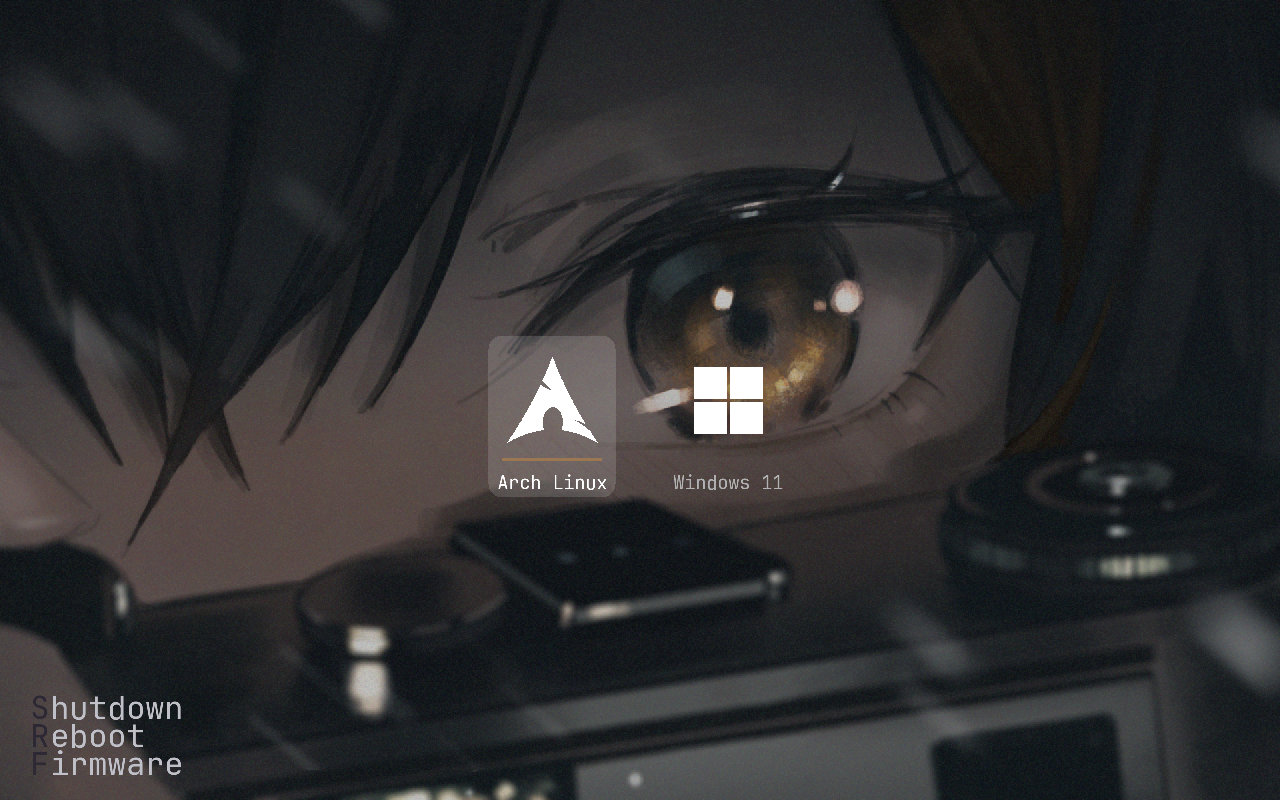
Interestingly, navigation is not limited only to the keyboard. If the system firmware provides a compatible pointer device, users can select and launch entries with a mouse, touchpad, or touchscreen. A text-based menu is available as a fallback when graphical rendering is unavailable.
Visor can boot Linux using EFI stub kernels or Unified Kernel Images, combining the kernel, initramfs, and command-line options into a single EFI executable. The project recommends placing UKIs on the FAT-formatted EFI System Partition for a simple and portable setup.
Traditional setups with separate vmlinuz and initramfs files are also supported. However, accessing files on Linux filesystems such as ext4 or Btrfs requires users to supply an appropriate EFI filesystem driver. Visor does not include these drivers but can load compatible .efi drivers placed in its drivers directory.
In addition to Linux, Visor can chainload other EFI executables, including Microsoft’s Windows Boot Manager, so, yes, it is suitable for dual-boot systems with both Linux and Windows installed.
Another useful feature is automatic boot-entry detection. When no boot.conf file is present, Visor searches for commonly used Linux and Windows loaders and attempts to construct the menu automatically. Users who prefer complete control can instead define entries manually through the configuration file.
Moreover, Visor understands Boot Loader Specification entries used by OSTree-based and image-based Linux systems, including Fedora Silverblue, Fedora Kinoite, Fedora CoreOS, and bootc deployments. Multiple deployments belonging to the same operating system can be grouped under one icon, with users able to browse current, previous, and rollback versions directly from the boot menu.
For systems with boot counting, Visor can decrement the remaining boot-attempt counter before launching an entry. If an update fails to boot after all allowed attempts, the manager automatically falls back to the previous deployment.
Secure Boot is also supported. When launched through shim, Visor uses shim’s verification protocol to check Linux kernels, UKIs, Windows Boot Manager, and other PE-format EFI images before execution. If verification fails while Secure Boot is active, Visor will not start the image.
Additionally, the boot manager itself, along with any separately installed filesystem drivers, must still be signed or launched through an appropriately trusted chain for a fully Secure Boot-compatible setup.
For troubleshooting, Visor writes a boot.log file to the EFI System Partition. The log retains information from the three most recent boots and records configuration parsing, image loading, PNG decoding, driver initialization, and handoff errors.
Installation is managed by the project’s script, which builds Visor, copies the necessary files to the EFI System Partition, and optionally creates a firmware boot entry using efibootmgr. The installer also provides a host-side visor command to build, install, update, sign, validate configurations, check status, and remove the boot manager.
Visor currently targets x86_64 UEFI systems and requires the GNU-EFI development files, GCC, and binutils when building from source. The project is distributed under the permissive BSD 2-Clause license.
More information, source code, installation instructions, and configuration examples are available from the project’s GitHub repository.
Image credits: Visor




I already use rEFInd so I was interested in the headline. Why they used a stupid anime backdrop though, I’ll never understand. What a turn off.
i didnt take into account of how popular it would get, i was making this just to showcase on reddit.
It’s a GitHub project made by one guy. And it says in the article you can change the background image lmao
Is it only for weabs?
no?
Lol, this
Does this fix the issue with standard UEFI in windows/Linux dual boots of windows breaking the boot loader everytime it updates
Is Visor mainly for dual booters with Windows?