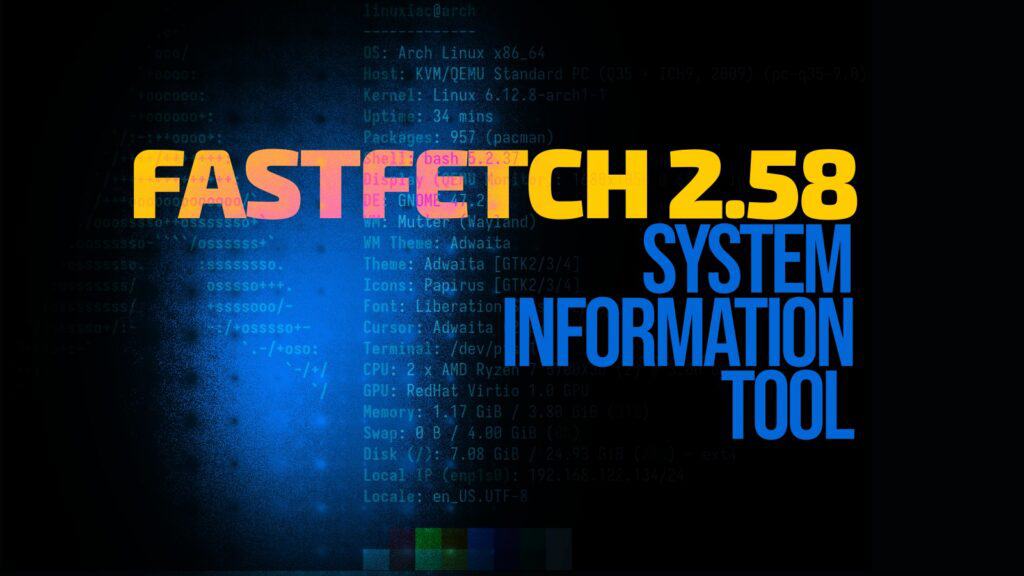
Fastfetch, a widely adopted tool by Linux enthusiasts for showcasing a sleek summary of system information right in the terminal, has just launched version 2.58.
The most notable breaking change is the removal of the de.slowVersionDetection option. Slow version detection is now always enabled, a requirement for non–FHS-compliant distributions such as NixOS. According to the project, keeping this behavior optional was no longer viable given the growing number of systems that rely on it for accurate environment detection.
Fastfetch 2.58 also introduces a new command-line option, --structure-disabled <modules...>, allowing users to temporarily disable the structured output of selected modules. For example, disabling the colors module removes the color blocks from the default output without modifying configuration files.
On the hardware and distribution detection side, the release improves support for Linux ARM devices by detecting chassis types when the information is exposed through the device tree.
Bedrock Linux version detection has also been added. In addition, the tool now respects the DBPath and RootDir settings in pacman.conf when detecting installed packages, improving accuracy on customized Arch-based systems.
Several bug fixes round out the release. A crash affecting systems running KDE Plasma 6.6 has been resolved, restoring stability for affected users. The Command module now works correctly with the --dynamic-interval option, and Quartz Compositor version detection on macOS now correctly reports the WindowServer (SkyLight) version instead of the WindowManager.
Finally, Fastfetch 2.58 also adds the Kiss2 logo to its collection of supported distribution and project logos.
For more information, see the changelog.