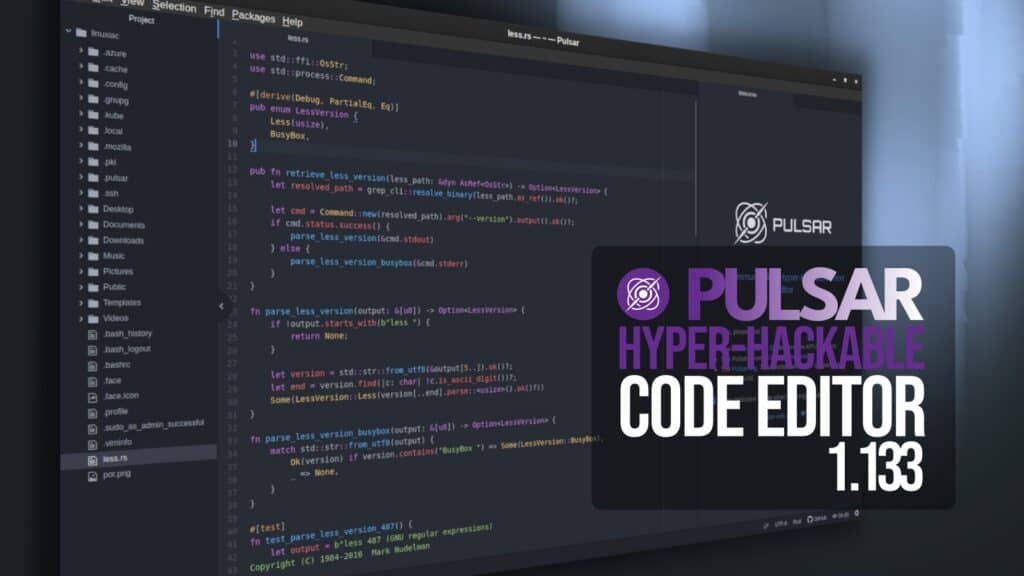
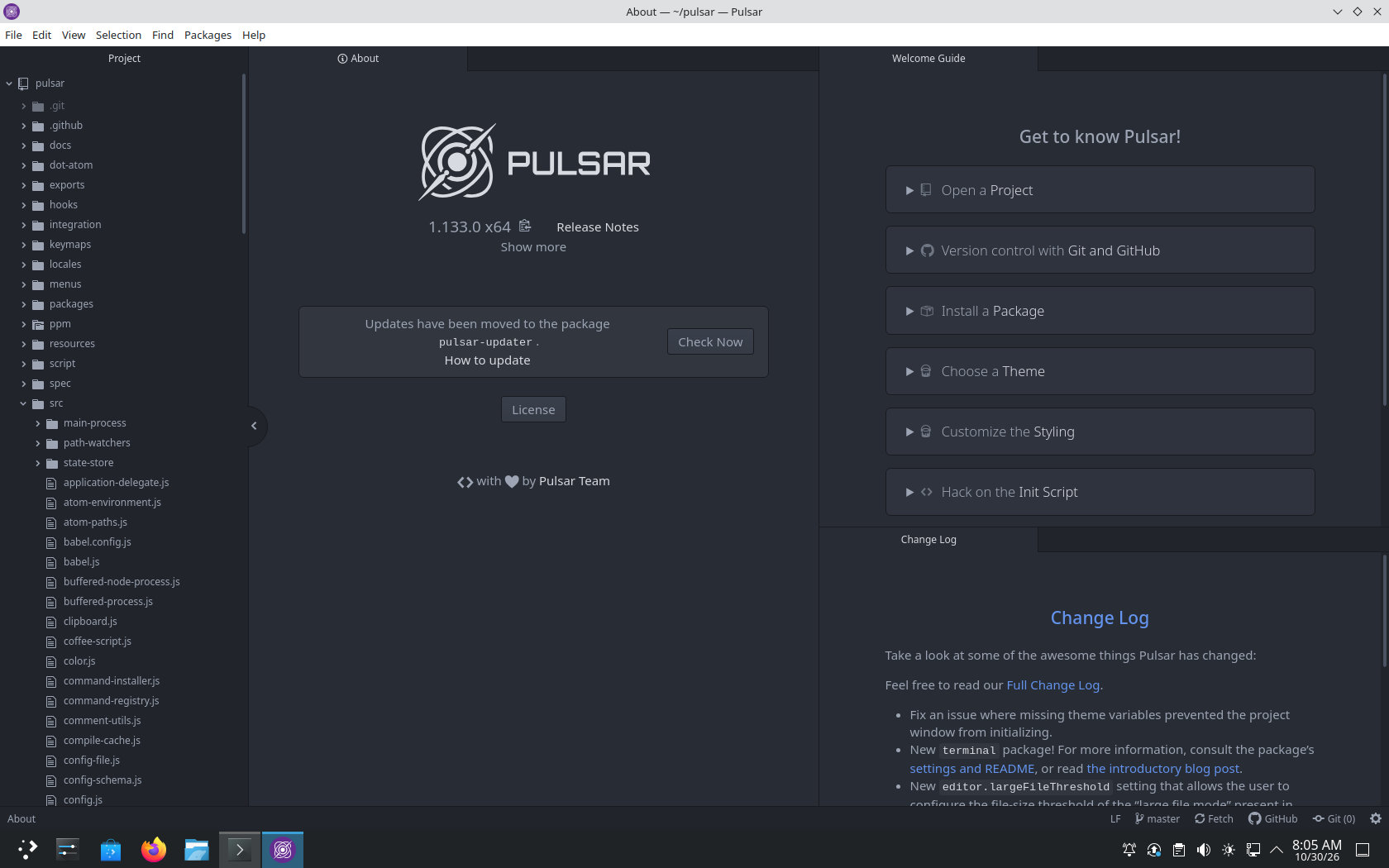
After a longer release cycle, the Pulsar team released version 1.133 of its community-maintained, open-source code editor, continuing development of the former Atom editor.
One of the main improvements concerns the integrated terminal, introduced in the previous 1.132 release. It now supports OSC 8 hyperlinks, allowing terminal applications to display clickable links with arbitrary text. Users can hover over these links to preview their destinations before opening them.
The terminal also gains working-directory tracking through shell integration with Bash, Zsh, Fish, and PowerShell. When users change directories, the terminal tab title updates accordingly, and newly split terminals inherit the original terminal’s current working directory.
Another addition is clickable file paths in terminal output. Both absolute and relative paths are recognized, allowing developers to open files directly from command output, including paths reported by linters. On Linux and Windows, the terminal now also supports the familiar Ctrl+Shift+C and Ctrl+Shift+V shortcuts for copying and pasting.
On the performance side, the developers fixed a syntax-highlighting regression introduced in Pulsar 1.127 that caused noticeable pauses when editing large files.
Pulsar 1.133 also introduces a redesigned file-watching architecture. Alongside the existing nsfw implementation, users can now select @parcel/watcher, the same library used by VS Code. The new option offers improved handling of ignored files and certain complex filesystem situations.
More importantly, file watching now runs in a separate process instead of within Electron’s renderer process. According to the developers, this reduces complexity and the likelihood of application crashes. The existing nsfw implementation remains the default, and users can switch between watchers without restarting the editor.
Another change concerns externally deleted files. Pulsar now distinguishes deleted files from modified ones, introducing a separate state for files removed from disk but still open in the editor. A new setting lets users disable confirmation prompts when closing deleted files without unsaved modifications.
Under the hood, the editor has been upgraded to Electron 32.3.3, providing newer Chromium and Node.js components. This release is the last to support macOS 10.15 Catalina. The developers confirmed that the upcoming Pulsar 1.134 will move to Electron 37 and introduce native Wayland support on Linux without requiring the --ozone-platform flag.
Additional improvements include better syntax highlighting for Python template strings, Perl class syntax, and C#, along with fixes for rare crashes associated with file watching and Git integration. The Pulsar Package Manager has also been updated to Node.js 20.18.1, with several bug and security fixes.
For more information, see the official announcement.