
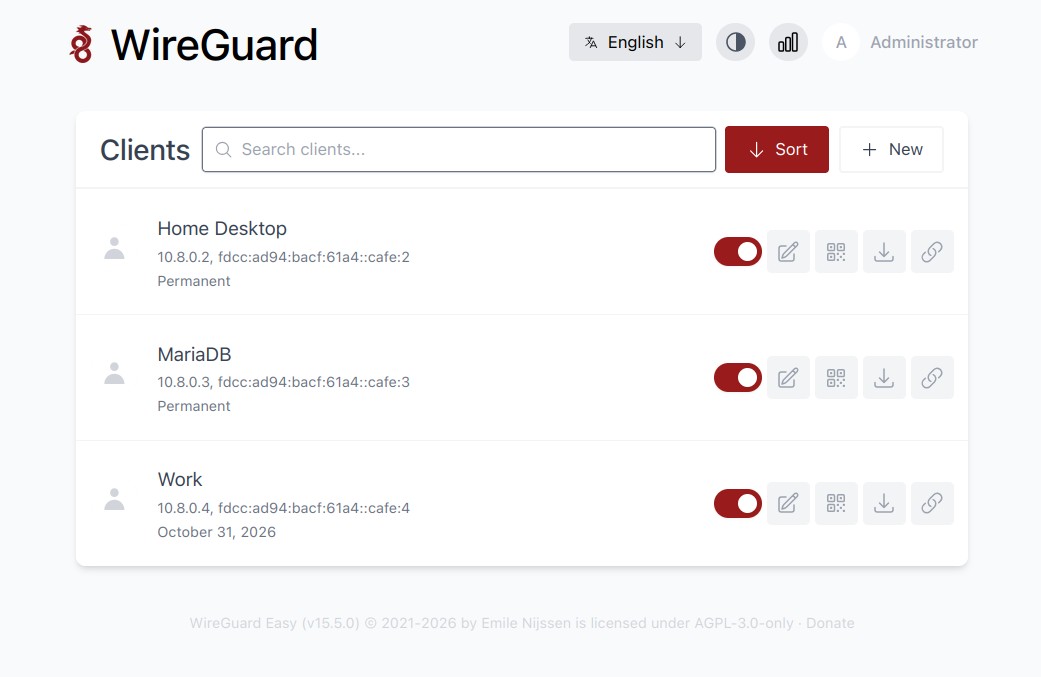
WireGuard Easy, an open-source tool that simplifies setting up and managing WireGuard VPN servers via a web interface, has released version 15.5.
One of the main changes is support for AmneziaWG 3.1, an updated WireGuard-based protocol designed to make VPN traffic harder to identify through deep packet inspection. The release updates the underlying AmneziaWG components, including amneziawg-go, improving compatibility with the newer protocol version.
Regarding security, the developers updated Node.js to address known vulnerabilities and changed the client details API so it no longer includes private keys in its responses, thus reducing the risk of exposing sensitive VPN credentials through API requests.
On the configuration side, administrators can now customize the WireGuard network interface name instead of relying on a predefined one, which adds flexibility for deployments using multiple network interfaces or requiring specific naming conventions.
The update also introduces trusted proxy configuration, useful when running WireGuard Easy behind a reverse proxy. Additionally, the project’s documentation now includes guidance on configuring rate limiting to help protect publicly accessible installations.
Monitoring capabilities have also improved. Prometheus metrics now expose peer endpoint information, giving administrators more data about VPN connections. Another fix ensures IPv6 addresses used as client endpoints are correctly enclosed in brackets, preventing malformed endpoint entries in generated configurations.
Finally, WireGuard Easy 15.5 adds Swedish and Azerbaijani translations, improves several existing translations, and includes documentation for integrating VoidAuth through OpenID Connect. Numerous dependency updates and smaller maintenance fixes round out the release.
For more information, see the changelog. For those who want to deploy it, here’s our guide.