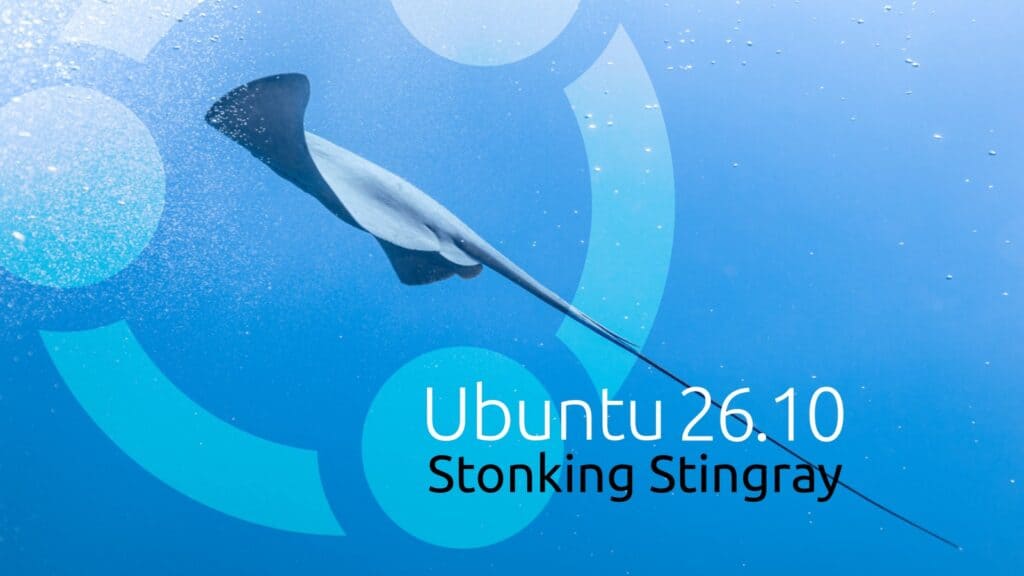
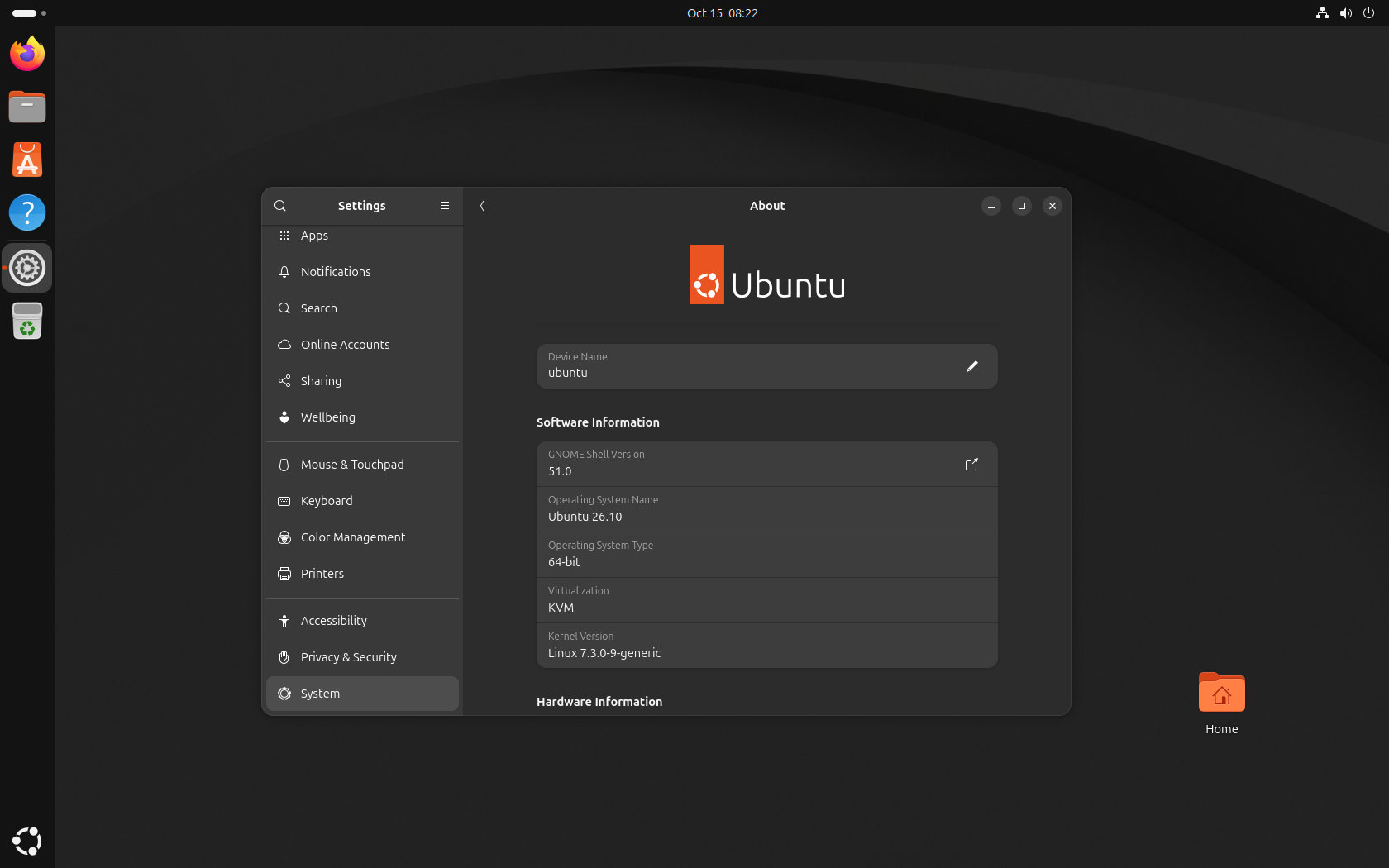
Canonical has officially released Ubuntu 26.10, codenamed “Stonking Stingray,” the latest version of its popular Linux distribution. As an interim release after Ubuntu 26.04 LTS, it comes with nine months of support until July 2027.
Starting with the desktop, Ubuntu 26.10 ships with GNOME 51. Users can expect smoother animations, more responsive interactions, and improved handling of multiple monitors, as GNOME now remembers monitor brightness settings across reboots and HDR changes.
At the same time, display arrangement benefits from improved snapping. The Settings app also adds automatic screen rotation for supported devices and an option to disable the touchpad when an external mouse is connected.
The Files app has received several refinements, including better file selection, faster operations, and clearer notifications. Calendar is also more responsive, particularly in its monthly view, while the Papers document viewer now supports adding visual signatures to PDFs.
Moreover, Ubuntu’s App Center now uses a unified details page for both Snap and DEB packages, presenting application versions, permissions, publisher information, screenshots, and package sizes in one place.
There’s also a dedicated section for managing graphics drivers, making it easier to review and select available NVIDIA driver versions without separate configuration tools. Additionally, the system can now help users install missing multimedia codecs when needed for playback, although some proprietary codecs remain unavailable by default.
Under the hood, Ubuntu 26.10 ships with Linux kernel 7.3, offering updated hardware support and improvements across various subsystems. However, the initial Ubuntu kernel package is based on Linux 7.3-rc6 rather than the final upstream release.
The graphics stack has been updated to Mesa 26.2, improving support for modern GPUs and adding further Vulkan capabilities. Hardware compatibility improvements also target laptops powered by Qualcomm’s Snapdragon X Elite and X2 Elite processors.
One of the more interesting changes in this release is the completion of Ubuntu’s transition to Rust-based core utilities.
Following the migration of most GNU coreutils commands to the Rust-based uutils implementation in Ubuntu 26.04 LTS, Canonical has now switched the remaining commands, including cp, mv, and rm.
As a result, Ubuntu 26.10 now uses Rust implementations for its default core command-line utilities. The change is part of Canonical’s broader efforts to improve memory safety in fundamental system components without changing how users interact with familiar Linux commands.
Another notable change is the replacement of the traditional dbus-daemon with dbus-broker, which offers improved reliability, resource accounting, and scalability. Ubuntu’s existing AppArmor restrictions continue to apply to D-Bus communication.
The release also upgrades systemd to version 261, removing support for legacy System V service scripts.
On the security side, Ubuntu 26.10 introduces OpenSSL 4, with support for Encrypted Client Hello, expanded QUIC functionality, and further improvements related to post-quantum cryptography. Additionally, the Rust-based Sequoia PGP implementation is now available in Ubuntu’s main repository, although traditional GnuPG tools remain available.
Canonical has also expanded TPM-backed full-disk encryption options and introduced additional Secure Boot protections intended to reduce the attack surface during system startup.
On the desktop side, another interesting addition is Myna, an experimental speech-to-text tool that allows users to dictate text directly into applications using a configurable keyboard shortcut.
Unlike cloud-based alternatives, Myna processes speech locally without sending recorded audio to external servers. For now, it remains a technology preview and isn’t installed by default.
Ubuntu 26.10 also adds the ability to check hardware certification status directly from Settings. Enterprise users get authentication improvements, including Microsoft password and multi-factor authentication support through Ubuntu’s authd service.
Developers will find an updated collection of programming languages and tools, including Rust 1.97.1 and OpenJDK 27. And, as usual, there’s a new selection of wallpapers, including community-created designs featuring the release’s stingray mascot.
Finally, keep in mind that Ubuntu 26.10 is a short-term release supported for nine months, until July 2027. Users who prioritize stability and longer maintenance periods may prefer to remain on Ubuntu 26.04 LTS.
Ubuntu 26.10 is available for download from the official Ubuntu servers as desktop and server installation images. For additional information and upgrade instructions, refer to the release notes.