What’s Up Docker 9.0 has been released as a major update to the container update monitoring tool, bringing a new SQLite-based persistence layer, role-based access control, personal API tokens, and a significantly reworked authentication system.
One major change is the move from LokiJS to SQLite, with Drizzle ORM used underneath. The new setup includes automatic database schema migrations, and existing installations can migrate legacy data transparently during the upgrade.
WUD 9.0 also introduces role-based access control with three available roles: Administrator, Read/Write, and Read-Only. Alongside this, users can now be managed directly from the web interface, where administrators can assign roles and reset passwords.
Another notable addition is support for personal API tokens. These can be created with read or write scopes and can optionally be configured with an expiration date, providing a cleaner way to access WUD’s REST API programmatically.
OpenID Connect support has expanded as well, as WUD can now automatically create users and synchronize roles based on group claims from the configured identity provider. User profiles have also been improved, offering password changes, API token management, and synchronization of light or dark theme preferences between sessions.
Moreover, the project replaced the no-longer-maintained Bunyan logger with Pino. A new live log viewer uses Server-Sent Events to display logs directly in the interface.
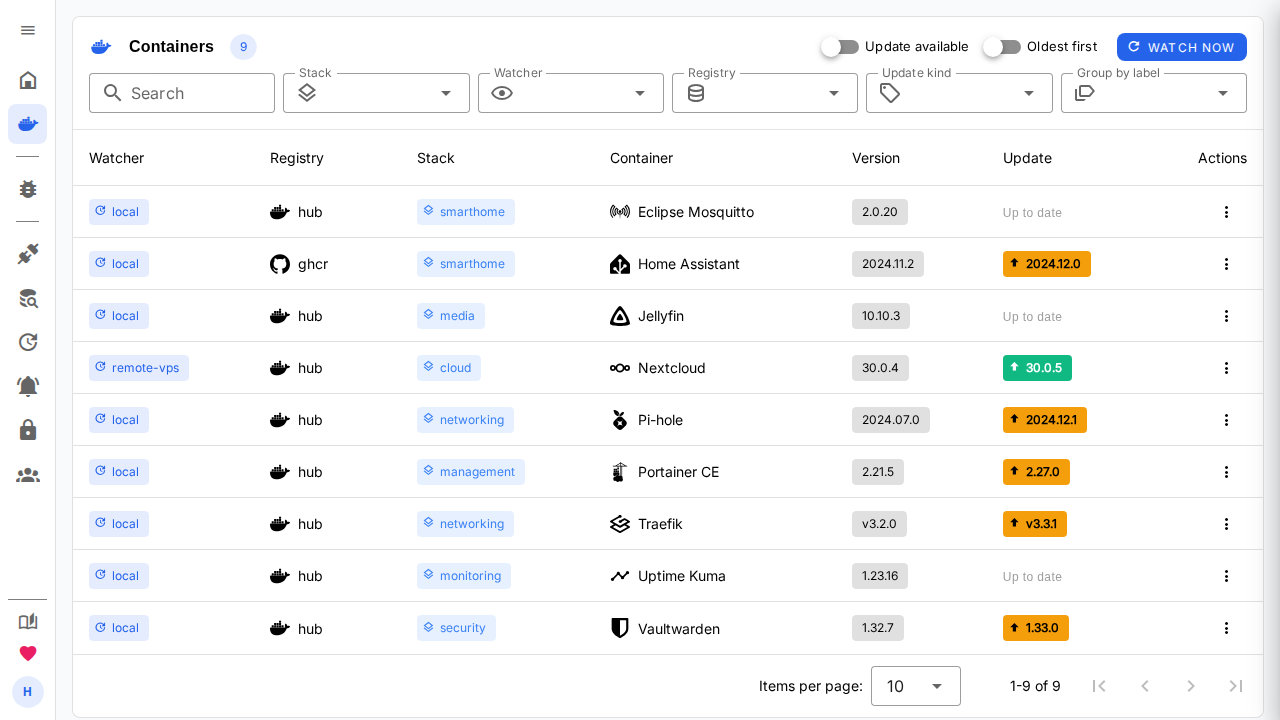
Developers and administrators get new interactive OpenAPI documentation with a built-in request explorer, schema information, and code examples. Docker Compose project names are now displayed in the interface and can be used to filter containers.
However, there are some important breaking changes to keep in mind. Anonymous access has been removed, so WUD 9.0 now requires authentication. As a result, you must configure at least one administrator account; otherwise, the application will refuse to start.
Additionally, the older static Basic Authentication environment variables are deprecated in favor of bootstrap administrator credentials or OIDC, with additional local users managed through the web interface.
Finally, REST API error responses have been standardized, so scripts relying on the old response format may need adjustments. The release also fixes several issues involving Docker watchers, registry providers, semantic version comparisons, SMTP TLS handling, UI settings, and compatibility with Docker 29.8 and newer.
For more details, see the GitHub changelog.
Image credits: WUD