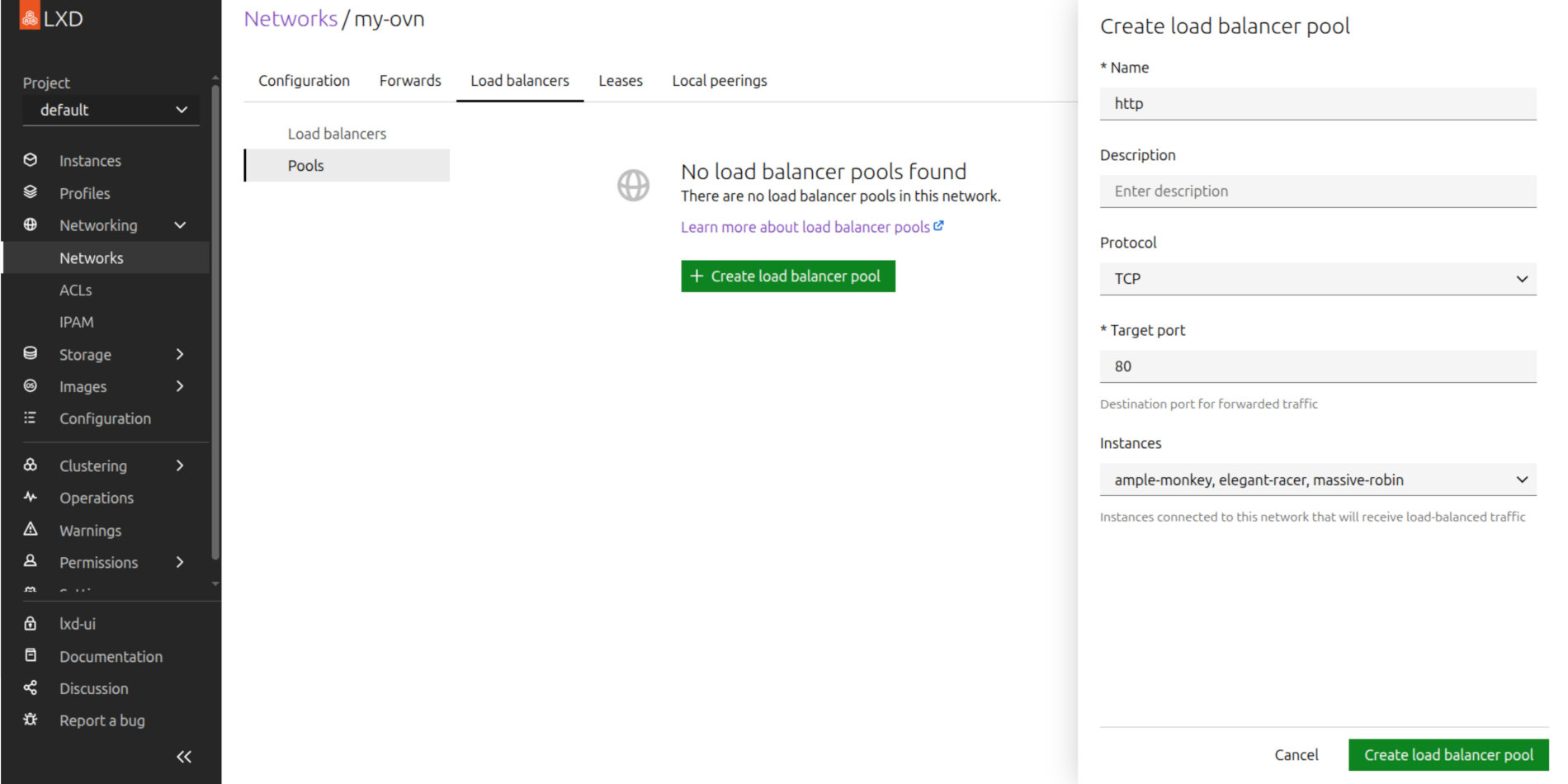
Canonical has released LXD 6.9, the latest feature update to its open-source tool for managing system containers and virtual machines. The update introduces support for OVN load balancer pools, enabling administrators to group backend instances as load-balancing targets.
LXD 6.9 also expands storage support with a new Dell PowerStore driver for iSCSI and Fibre Channel connectivity, allowing direct use of PowerStore arrays as backend storage. A new Fibre Channel connector for remote storage drivers further extends storage transport options beyond iSCSI and NVMe/TCP.
Moreover, this release adds compatibility with PowerFlex 5, guaranteeing alignment with the latest versions of Dell’s software-defined storage stack.
Security and auditing are improved with a new security event type covering authentication, authorization, and related actions. Administrators gain clearer visibility into security activity, and events can be forwarded to Grafana Loki for centralized logging and inspection.
Clustering and replication improvements include an explicit replica mode field and new commands for promoting or demoting project replicas. These changes clarify replica states and provide administrators with improved control over replicated projects.
On top of that, cluster links now include a used_by field that identifies dependent resources, helping prevent accidental changes to active links.
Cluster evacuation behavior is improved as well, with LXD now checking raft quorum before evacuating a member and blocking actions that would leave too few online voters, decreasing the risk of losing quorum during maintenance.
The web UI now includes management for replicators and OVN load balancers, initial file browsing inside instances, improved PowerStore configuration, OIDC access from Settings, and enhanced cluster-link management.
Lastly, LXD 6.9 has a known issue with CDI GPU passthrough on Ubuntu Core 26. Canonical reports that GPU passthrough to containers may fail due to an upstream mismatch between the pc-kernel snap and the mesa-2604 graphics provider snap. No native LXD configuration workaround is currently available.
For additional information, see the annoucement ot refer to the release notes.
LXD remains available as a snap. Installations on the feature release channel will receive the update through the standard snap refresh process.
Keep in mind that LXD 6.9 is a feature release and not an LTS version. Canonical does not recommend it for production use. Users requiring production deployments should continue using the latest LXD 5.21 LTS release.
Image credits: Canonical