After three years in development, GNU Guix 1.5 has been released, marking the start of a newly adopted annual release cycle. But if this name has flown under your radar, let me briefly explain what it is before we move on to the news.
First and foremost, Guix is both a transactional package manager and a full GNU/Linux distribution built around it. As a package manager, guix can be installed on top of most existing Linux systems, where it operates independently of native tools like apt or dnf.
At the same time, Guix System is a standalone operating system (a Linux distro) that uses the same technology to declaratively manage the entire OS, including the kernel, system services, and user environments.
System configuration is defined as code and applied atomically, making it easy to reproduce or revert complete system states. The project follows strict free-software principles and, by default, uses the Linux-libre kernel. Now that we have clarified this, we can move on to the new features in this release.
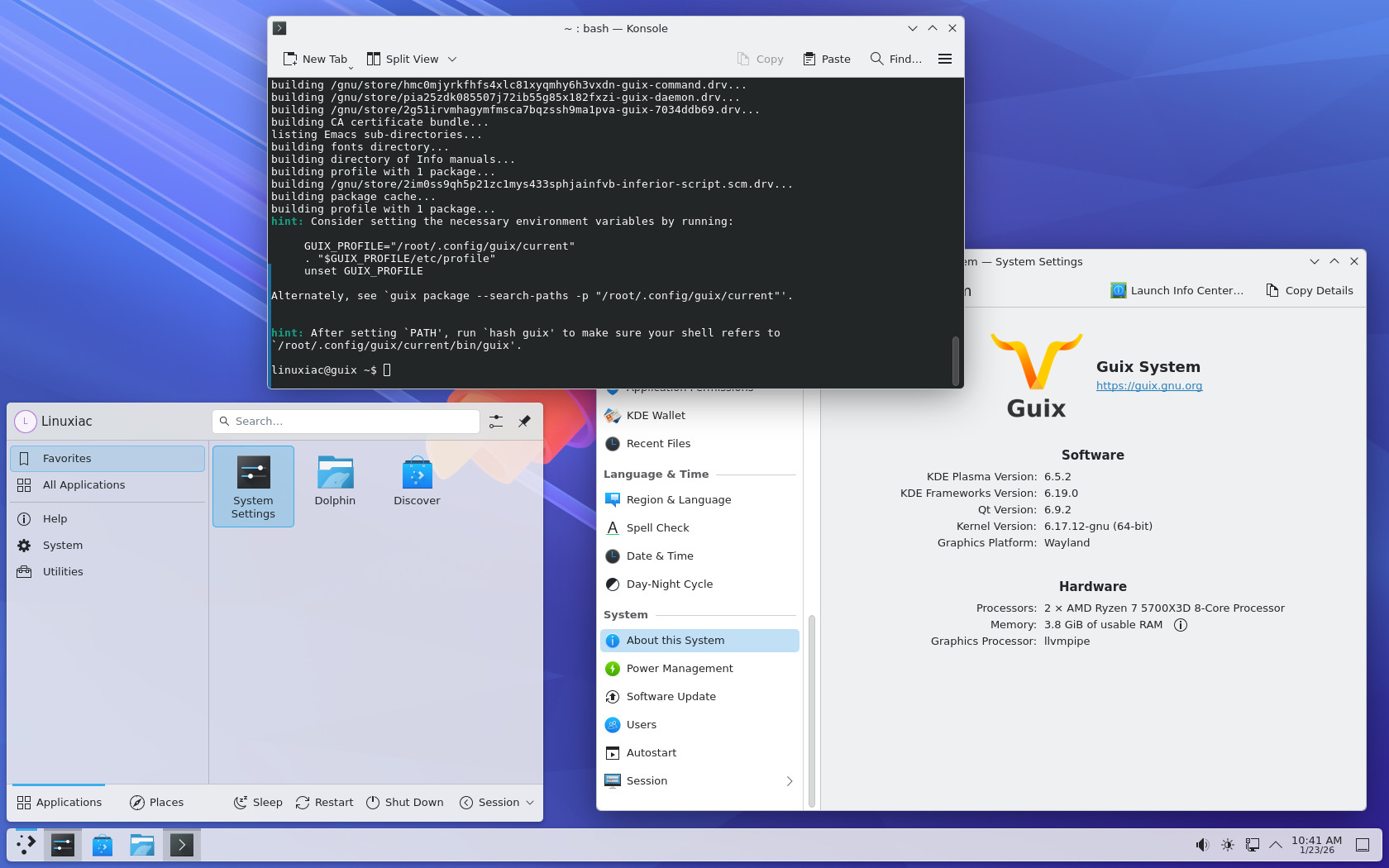
According to the release announcement, over the past three years, Guix added 12,525 new packages and nearly 30,000 package updates. Notable updates include KDE Plasma 6.5, now available via a new Plasma service type, and GNOME 46, which now defaults to Wayland.
Core components such as GCC 15.2, Emacs 30.2, LLVM 21.1, and Linux-libre kernel 6.17 are also included.
On the system side, Guix System now usesthe GNU Shepherd 1.0 service management daemon, introducing timed services, improved logging, and kexec reboot support. Around 40 new system services were added, and privileged program handling was refined to better support Linux capabilities.
Guix 1.5 also brings several command-line improvements, including new output formats for dependency graphs and better container support. The guix pack tool can now produce RPMs and AppImages, making it easier to distribute Guix-built software to non-Guix systems.
On the security side, the Guix daemon can now run without root privileges by default on non-Guix systems, reducing the impact of potential vulnerabilities.
Finally, dev says that the project continues its work on full-source bootstrapping, adding fully bootstrapped Zig and Mono compilers and further reducing the amount of prebuilt binary code required to build the system from source.
For more information, see the announcement.
GNU Guix 1.5 is available as ISO installer images, virtual machine images, and tarballs for installing the package manager on existing GNU/Linux distributions from the project’s download page. Existing users can update by running guix pull.
The new release also introduces official release tarballs for 64-bit RISC-V and expands experimental support for the GNU Hurd on x86_64, including installer integration and service improvements