If you are in the database field, you probably know that the Postgresus project was started with a simple goal: to provide an accessible, self-hosted user interface around the pg_dump command.
It helps developers and small teams manage PostgreSQL backups without relying entirely on command-line workflows, supports different storage options (e.g., S3, Google Drive, FTP), and is positioned as a convenience tool for relatively small PostgreSQL deployments.
Over time, however, Postgresus gained far broader adoption as tens of thousands of users now rely on it daily, including individual developers, DevOps engineers, database administrators, teams, companies, and large enterprises.
So, what was once a simple UI wrapper evolved into a reliable, production-grade backup management system, capable of handling complex backup strategies and operational requirements while remaining easy to use.
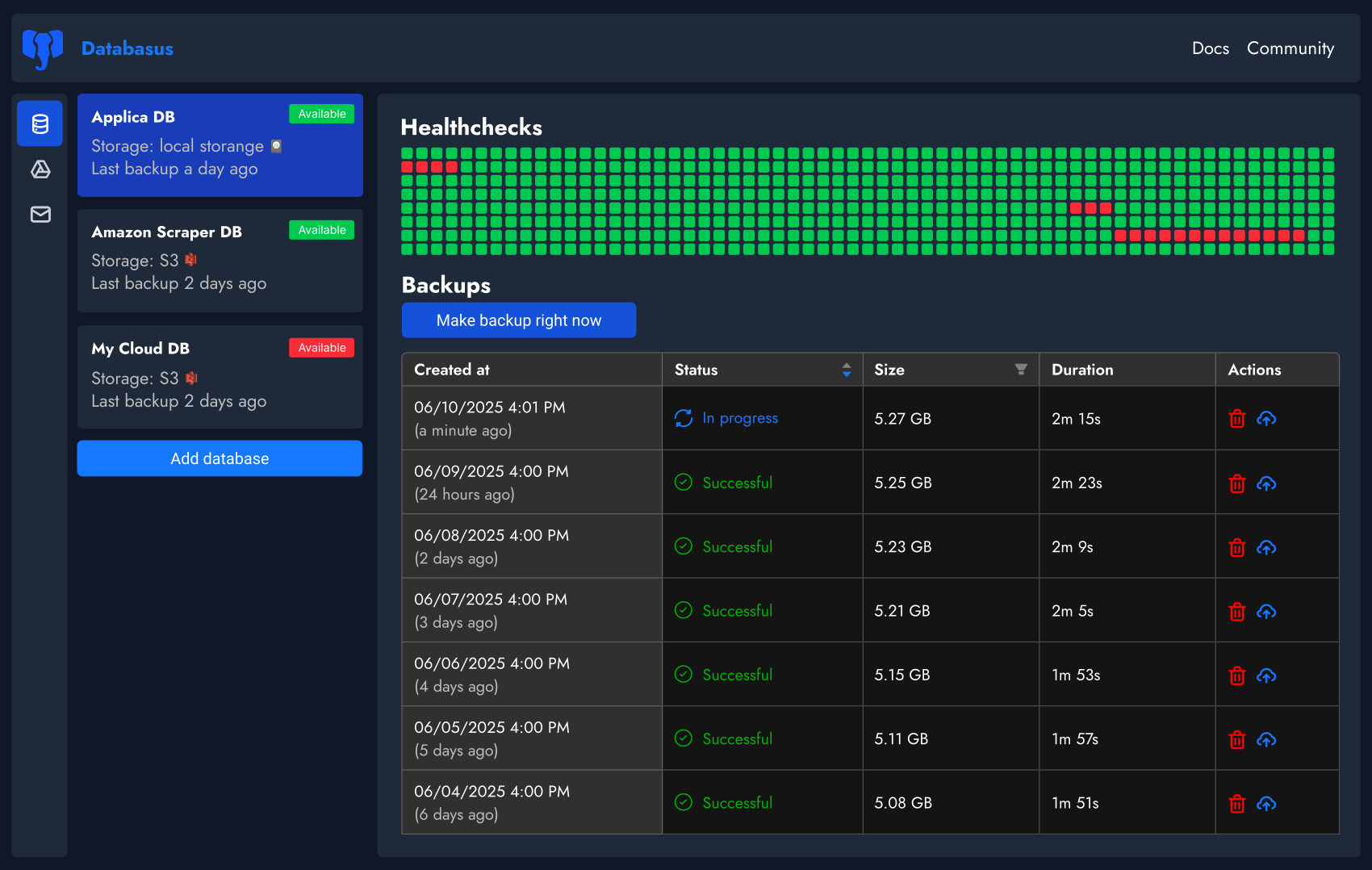
This growth made the original name increasingly misleading, because Postgresus is no longer just a PostgreSQL-focused helper tool. Although PostgreSQL remains the primary database and continues to receive the most complete and optimized support, over time, the project has added support for MySQL, MariaDB, and MongoDB.
All this led the developers to recently decide to rename the tool from Postgresus to Databasus officially. Legal considerations also played a role, as the term “Postgres” is a registered trademark of PostgreSQL Inc., and continuing to use it in the project name posed potential trademark risks. Finally, according to devs, more database engine support is also on the roadmap.
You can read more about this on the project’s GitHub page.
Image credits: Databasus