
OpenShot, a popular free and open-source video editor, has released version 3.4, focusing on performance, stability, and workflow improvements across all supported platforms.
Developers report a major performance boost, with internal tests showing speeds up by about 32% and lower memory use compared to the last version. Clip rendering, timeline actions, FFmpeg decoding, and effects like crop, mask, brightness, and saturation all improved significantly. Exporting is now about 23% faster thanks to changes that reduce CPU load during the export process.
OpenShot 3.4 adds new video effects, giving users more creative options. These include a Sharpen effect with High Pass mode for more detail, a Color Map effect that works with 1D and 3D LUT files for color grading, and a Spherical Projection effect for working with 360-degree, 180-degree, and fisheye footage.
In addition, the update also adds a classic Lens Flare effect and a new Outline effect with better antialiasing.
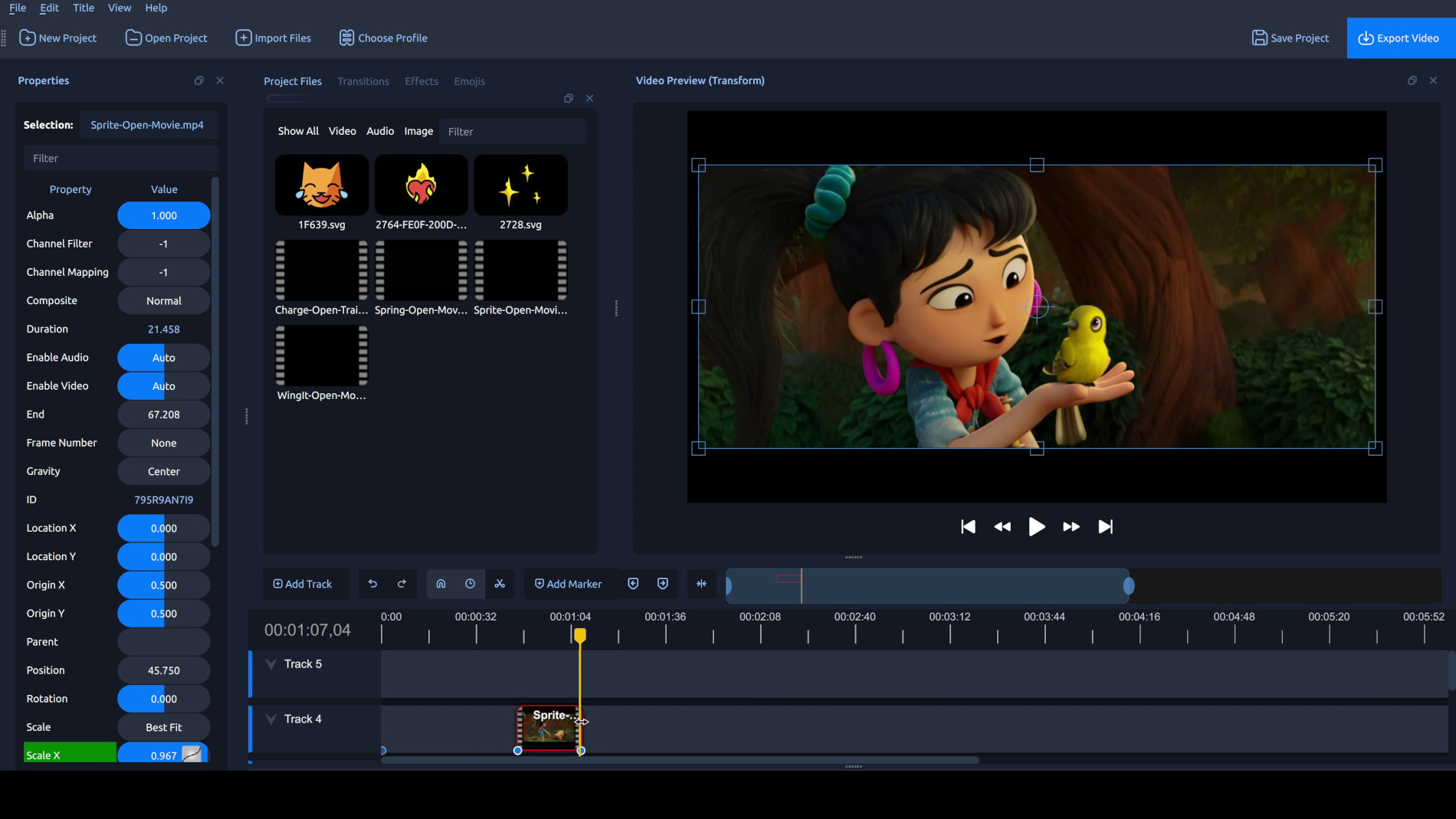
Editing precision and usability have also been improved. Cropping can now be performed interactively directly in the video preview, allowing editors to adjust crop boundaries visually on the canvas. Crop context menus and transform handle synchronization have been refined to provide more predictable behavior when resizing or changing origins.
A new Timing Mode lets you change a clip’s speed by dragging its edges, much like trimming. This gives more accurate, frame-by-frame results and makes speeding up or slowing down clips more reliable.
You can now drag keyframes directly on the timeline and see live previews as you work. Snapping works better for trims and timing changes, and keyframes now snap to targets. Issues like snapping to the same clip, which could cause problems, have been fixed.
For users interested in testing future developments, OpenShot 3.4 includes an Experimental Timeline that can be enabled from the Preferences menu.
Workflow improvements go beyond the timeline. The time menu now includes Repeat, Loop, and Ping-Pong playback options for trims, as well as Timing Mode. You can also edit several clips at once, and it’s easier to switch between selected items in the property dock.
Files can also be copied and pasted directly from the operating system into the Project Files panel, with assets automatically saved into the project’s asset directory.
Moreover, import and export now work better, especially with Final Cut Pro XML files. The process follows standards more closely, improves track order, and makes it easier to move motion data and keyframes back and forth, though some limits remain. EDL import and export are also improved, and timecodes now match industry standards.
On the media handling side, OpenShot now offers more consistent duration handling across difficult media files, better alignment between frame counts and clip durations, and improved support for animated GIFs via FFmpeg, including correct alpha handling. Audio behavior for reversed and time-curved clips has been corrected, and H.265 playback on Apple devices has been improved with proper hvc1 tagging.
For developers, OpenShot 3.4 introduces a new benchmark tool in libopenshot, making it easier to test performance changes and compare versions during development.
Apart from the changes mentioned so far, undo and redo behavior has been hardened, crash scenarios in common editing actions have been reduced, and edge cases in waveform extraction have been addressed. Packaging has also been improved, with AppImage updates aimed at better compatibility on newer Linux distributions, alongside continued maintenance for Windows and macOS builds.
Finally, behind the scenes, OpenShot 3.4 video editor has improved its build and release systems with new automation and autoscaling, making things more reliable and lowering costs. The update also brings new translations, updated supporter credits, and thanks to community contributors for their help with testing and quality.
For more information, see the announcement.
Image credits: OpenShot Project