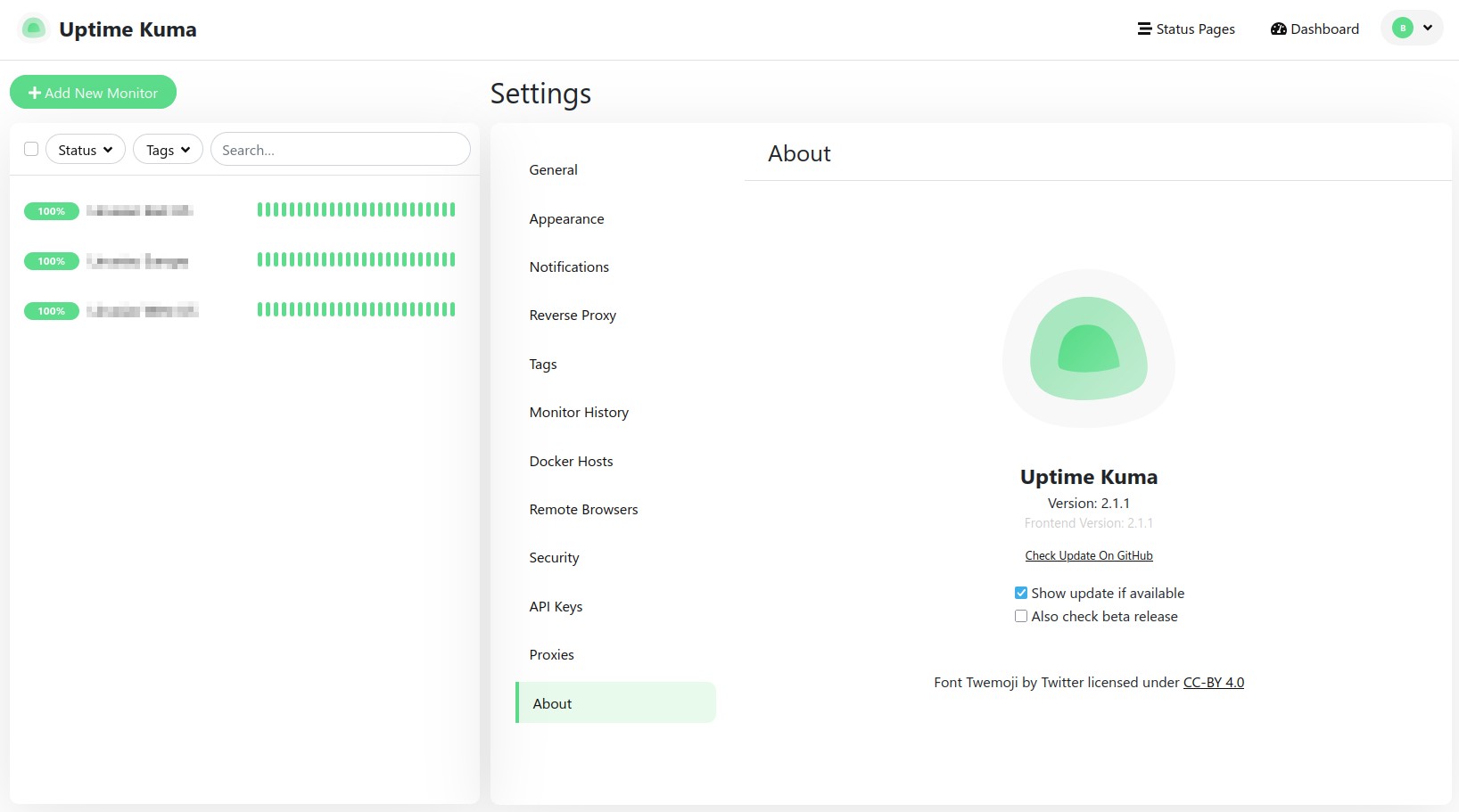
After months of work, Uptime Kuma, a popular open-source uptime monitoring tool with over 80,000 GitHub stars and loved by self-hosting fans, has released version 2.1.
Two major new notification options are now available: Jira Service Management and Google Sheets. These give teams more ways to get alerts, especially if they use ticketing systems or spreadsheets.
Moreover, notifications are now more flexible. You can customize messages for Discord and ntfy with templates, format presets, and extra alert details. Slack notifications can now show monitor group names too.
It’s worth noting that this update adds Globalping support, letting you run checks from probes around the world, not just from your own server. Also, HaloPSA notifications now include monitor_id and heartbeat_id fields to help with automation.
A brand new feature in Kuma 2.1 is the Domain Expiry monitor. With this, you can:
- Reduce noisy expiry logs and improve validation behavior.
- Keep track of when your domain names expire.
- Get alerts before a domain is about to expire.
- Handle RDAP lookups more reliably, including improvements for multi-level public suffixes and static RDAP DNS data.
In addition, this update fixes several monitoring issues. Certificate expiry now uses the correct settings, and there are improvements to MongoDB JSON parsing, RSS pubDate time zones, RADIUS client errors, and monitor selection. Expanding and collapsing nested groups now works better across dashboards.
Localization keeps growing, with Bavarian German now supported, and many translation updates from Weblate contributors have been added.
Like earlier versions, Uptime Kuma 2.1 comes with lots of internal maintenance, updated dependencies, workflow tweaks, and some small security improvements.
To view them all in detail, check the changelog.
Finally, if you haven’t tried Uptime Kuma yet, I’ve written a detailed guide on how to set it up quickly with Docker. Happy monitoring!