Two months after the major Devuan 6 “Excalibur” release and powered by Linux kernel 6.12 LTS, the Devuan team has rolled out the first update in the series, Devuan 6.1, for this systemd-free Linux distro.
Kept in sync with Debian 13.2, this point release introduces no major new features and focuses on correctness, stability, and installation reliability. In light of this, all images include up-to-date packages from the Excalibur repositories, ensuring that new installations start from a fully current software baseline without requiring extensive post-install updates.
Several notable fixes are included. The speech-synthesis installation issue, which previously prevented correct setup, has been resolved, restoring expected accessibility functionality. In addition, multiple bugs affecting the SLiM login manager have been fixed, addressing long-standing problems that could impact desktop logins on fresh systems.
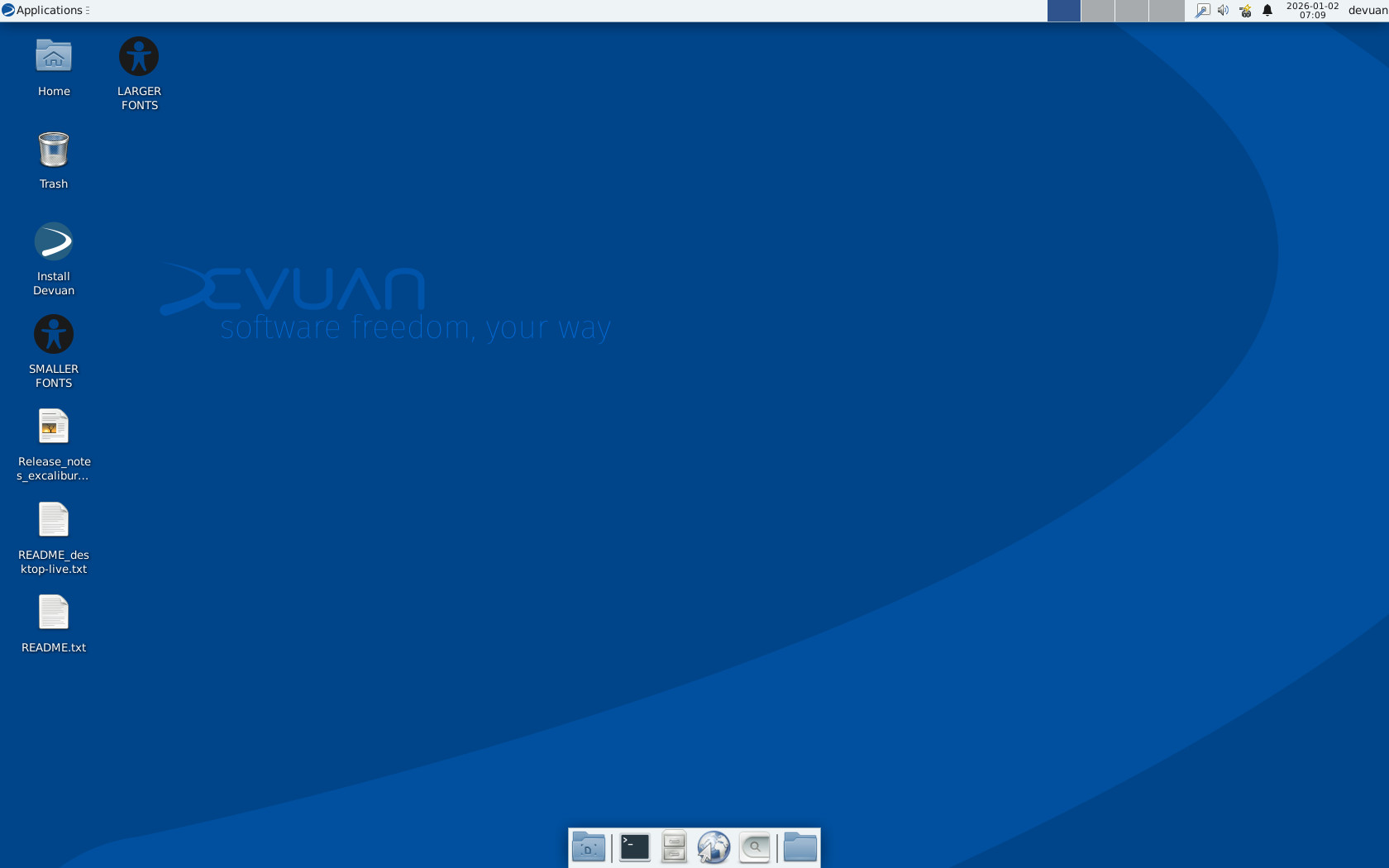
Interesting, alongside the official images, the Devuan community has also produced unofficial Excalibur builds for Raspberry Pi devices. These community-maintained images extend Excalibur’s reach to ARM-based hardware, offering users a ready-made option for running Devuan on popular single-board systems.
Installation images for Devuan 6.1 are available at files.devuan.org. The live ISO comes with the latest Xfce 4.20 desktop environment out of the box. All installation media include non-free firmware, automatically installed only when required by the system’s hardware. Users who prefer a fully free setup can opt out through the “Expert install” option or remove the firmware afterward using a provided script.
Devuan 6.1 is primarily intended for new installations and reinstallations. Existing users who keep their systems up to date should already have these fixes through regular package updates. There are no official release notes for this release, but you can find more details here.
Finally, to note that the Devuan developers have begun work on Devuan 7, codenamed “Freia,” which we can expect to see in the second half of 2027, a few months after Debian 14 “Forky” is released. Repositories for the next version are already open for early testing.