
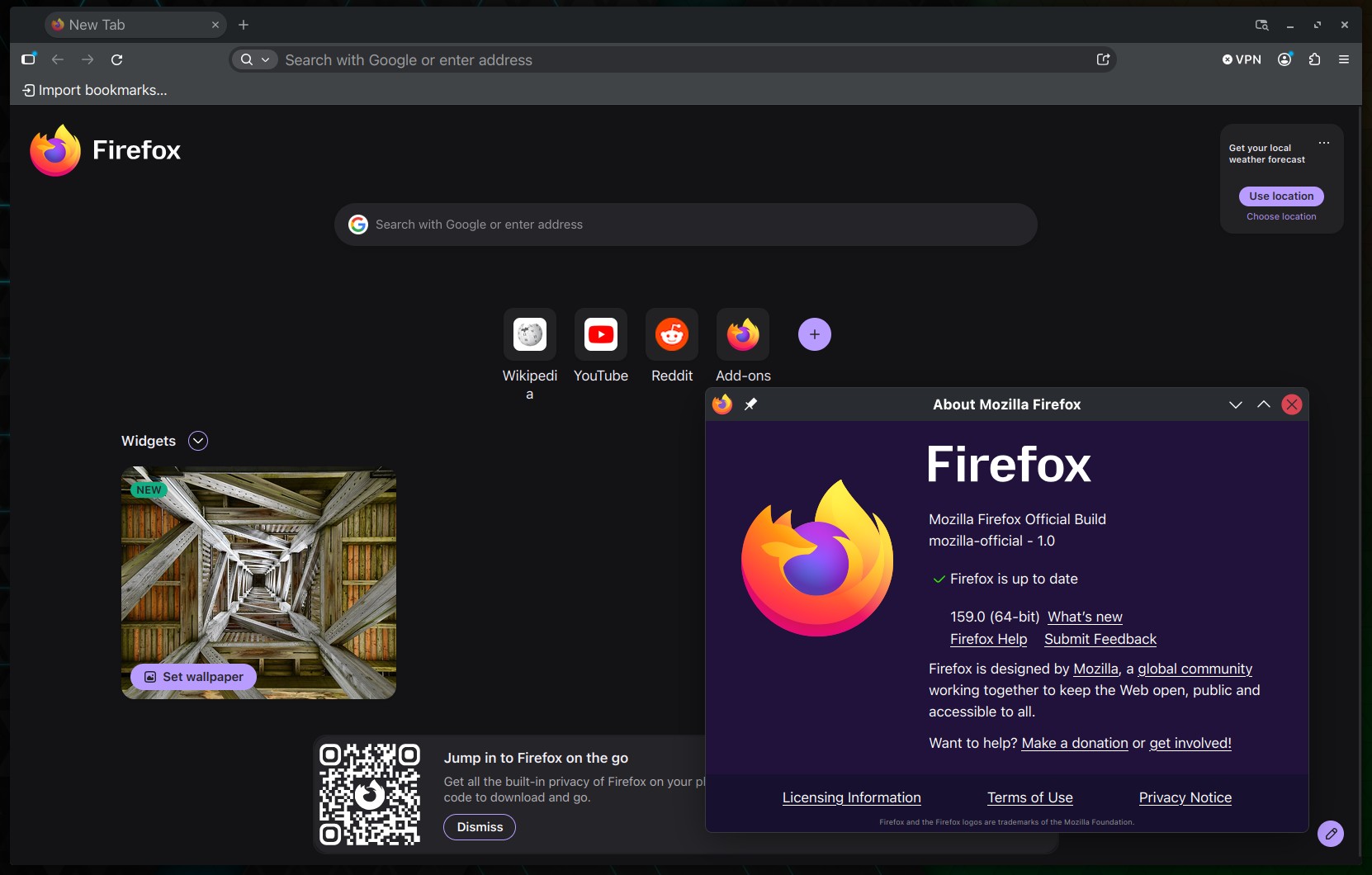
Mozilla has released Firefox 159, the latest version of its open-source web browser, introducing improvements to tab management, easier access to saved passwords, new website monitoring capabilities, and several fixes affecting Linux users, particularly those running Wayland sessions or AMD graphics.
Starting with Linux-specific improvements, Firefox 159 fixes an issue where clicking a tab under Wayland could detach it into a separate window. The release also addresses excessive memory use on Linux systems with AMD graphics when viewing maps or place results on sites like ChatGPT.
Another memory-related fix targets web apps like Zoom, where leaving a minimized window open could cause Firefox’s memory use to grow rapidly. Mozilla also corrected an issue on Linux and Windows where menus and panels kept showing fade-in effects despite animations being disabled in the OS.
On the usability side, Firefox 159 introduces a new keyboard shortcut for searching open tabs. Linux and Windows users can press Ctrl+Shift+A, while macOS users use Cmd+Shift+A. As a result, the Extensions and Themes shortcut moved to Ctrl+Shift+F on Linux and Windows and Cmd+Shift+E on macOS.
The release also makes saved passwords accessible directly from the Firefox sidebar by default, removing the previous need to manually add the Passwords tool.
Another notable addition is website monitoring through Firefox’s Smart Window feature. Using the /watch command in Smart Window’s chat interface, users can ask the browser to monitor web pages for changes like price drops or product restocks and choose how often checks occur.
When a matching change is detected, Firefox shows a desktop notification, while a dot on the Tasks toolbar button indicates new results. Users can manage monitoring tasks through about:smartwindowtasks, where they can edit, pause, manually check, or delete watches. Mozilla notes this feature is rolling out progressively, so availability varies.
Apart from these additions, Firefox 159 includes several general bug fixes. One fixes cases where sites like Slack failed to load when an HTTP/3 connection was rejected instead of falling back to HTTP/2. Another corrects bookmark imports from Google Chrome profiles signed into Google accounts.
Mozilla also fixed a file upload dialog issue that caused Firefox to open the last directory used for saving files instead of the folder previously used for uploads. Long dropdown lists that sometimes showed blank spaces instead of their final options have also been corrected.
For macOS users, Firefox 159 now uses the native system share picker, allowing pages and multiple selected tabs to be shared via AirDrop, Messages, and other apps. Additional fixes address missed gamepad inputs in web games and issues with Apple Writing Tools inserting clipboard content instead of rewritten text.
Finally, Firefox for Android receives improvements addressing frequent tab reloading, especially on Xiaomi and Redmi devices, along with fixes for video playback problems on some websites and alarms being silenced while videos played.
Firefox 159 binaries are available from Mozilla’s download servers. Windows and macOS users will get an over-the-air update in the next few days. Linux users should see Firefox 159 in their distro repositories soon, too.