
Ubuntu has taken another step that, honestly, leaves me scratching my head. While most distributions try to offer as many convenient GUI tools as possible to help users manage every part of their system, Ubuntu… apparently sees things a bit differently.
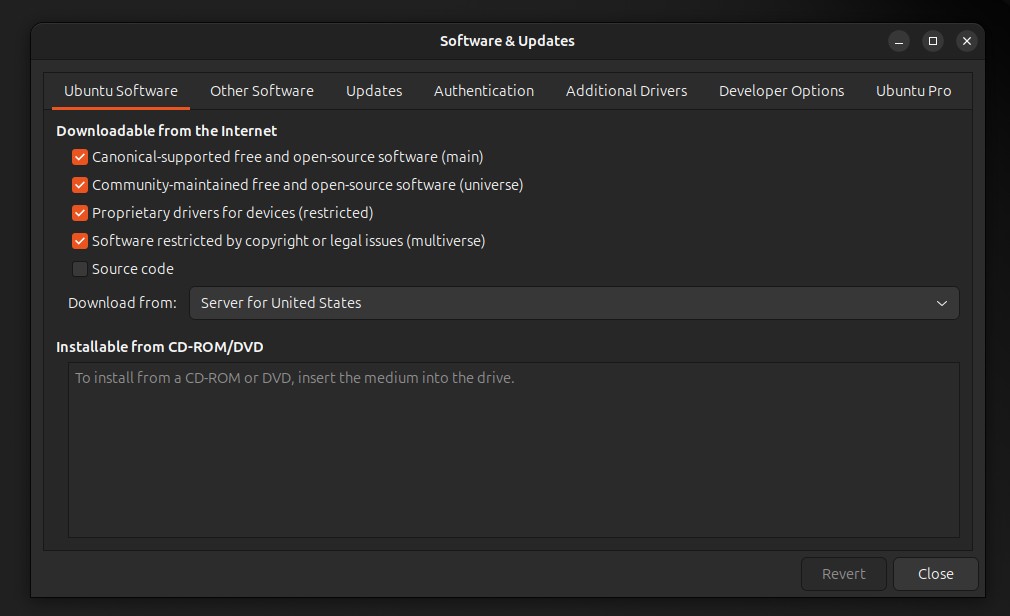
I say this because Ubuntu 26.04 LTS (scheduled for release on April, 23) will no longer ship the long-standing “Software & Updates” graphical tool by default on fresh desktop installs, following a change proposed in Launchpad as bug 2140527.
The adjustment replaces the software-properties-gtk package in the desktop seed with software-properties-common, effectively removing the visible GUI while keeping the underlying repository management tools in place.
However, what really impressed me was the argument used to make this move:
“software-properties is an old gtk application essentially focused on deb/apt world. Many of its features are dangerous or too complex for normal users (removing main, enabling proposed, source without specifying what, …)”
I’m speechless. Many of its features are dangerous or too complex for normal users. Really? Am I missing something, or has Canonical started treating its users like certain closed operating systems do, just point-and-click users who can’t be trusted with an accessible tool for managing their own systems? Dear Canonical, This is Spa…, sorry Linux!
Yes, I know that this change actually does not remove the application from Ubuntu’s repositories. Users will still be able to install the Software & Updates utility on their 26.04 LTS systems manually using APT, and those upgraded from earlier Ubuntu releases will retain the tool if it was already installed. But that’s not the point.
The point is about the broader direction of Ubuntu’s desktop strategy to its user base and the fact that Canonical (once again) forces them to a more curated, controlled user experience. Which, whichever way you look at it, is difficult to reconcile with what Linux is supposed to stand for. And which, at some point, could turn Ubuntu into Closebuntu.



Really tired of these ragebait articles.
This was also dropped by Debian in Trixie over a year ago and I doubt you complained about it.
Software curation is the whole point of a distro.
This tribalism and fake alarmism is stupid. Now your comment section is filled with idiots that treat distros like a religion.
They should let the user decide what is too dangerous or too complex.
Isn’t exactly what they’re doing? Just install the gtk if you want/need it. I dont see this as something objectively negative, only subjectively.
My first usable non windows OS was Mepis Linux around 2004. I bricked it by installing the latest version of Scribus directly from the website. I was assured that apt would handle all the dependencies needed. I did not understand how this would affect the system as a whole. I never made that mistake again. So I think canonical made a good decision. Those who need Software and Updates will know it is what they need. Newbies like me 20 years ago will be spared the disaster I experienced.
Remember, friends don’t let friends use Ubuntu.
I totally disagree. I strongly recommend Ubuntu to all my friends who are thrilled with it.
I used ubuntu long time ago for a test, about of year 2011 at that moment Ubuntu used unity with a buggy and laggy style, never be my choice ! Snap option is the worse other option for a user.
In my opinion, use fedora or debian, if you want a challenge and more, use arch.
I think this is a good move.
Ubuntu is gradually removing any tools that require someone to have technical knowledge to use & it is slowly becoming far more like MacOS.
The aim is for even more orgs to base their tech stack on Ubuntu, from desktop to server, that should draw even more people into the wider Linux ecosystem and see more people enter via Ubuntu and “graduate” onto other distros in their personal life.
Ubuntu should have these kind of changes in a different variant for noobs, else this is going to go in the direction of $#itty mac
I don’t think you’re being treated like a noob, but Ubuntu might be the only distro that people who don’t even know what Linux is are actually using. I don’t see anything wrong with simplifying the update process through the App Center and phasing out some tools that are 20 years old.
I started on *buntu (from CD ;))), moved on because of “weirdness” like this, and this one certainly is in good company. However, it should also be noted that software-properties was also MIA… when Trixie was released in August last year.
software-properties-common was removed from Debian 13 (Trixie) in testing.
https://qa.debian.org/excuses.php?package=software-properties
https://unix.stackexchange.com/questions/800959/debian-13-unable-to-locate-package-software-properties-common
If many people used to Windows finally decide to switch to Linux, the most famous distro is Ubuntu.
Leaving everything “proof of stupidity” is a philosophy that works and is also used in giant companies like Amazon, Stellantis and so on.
Canonical does not prohibit its installation, but by default it is simply not there. The less experienced won’t mess up, the more experienced with a command line will have everything as before.
Another Canonical mistake and a gift to the competition.
Does it really surprise you that much? Seriously? Canonical has made no bones about moving to a more MS-like posture for years. If MS (and others) have their way we’ll be working under en-lamed user accounts, immutable, disposable hardware/software, etc., begging for the smallest “customizations” (colors, fonts, maybe – if we’re good automatons?). They justify this via claims of better security (is that what it is?). I’ve gone to other OSs. I have only one Lubuntu Noble system left (I had 5 or 6 Lubuntu systems before Plucky was retired) and I’ll change it over as well.
ubundows