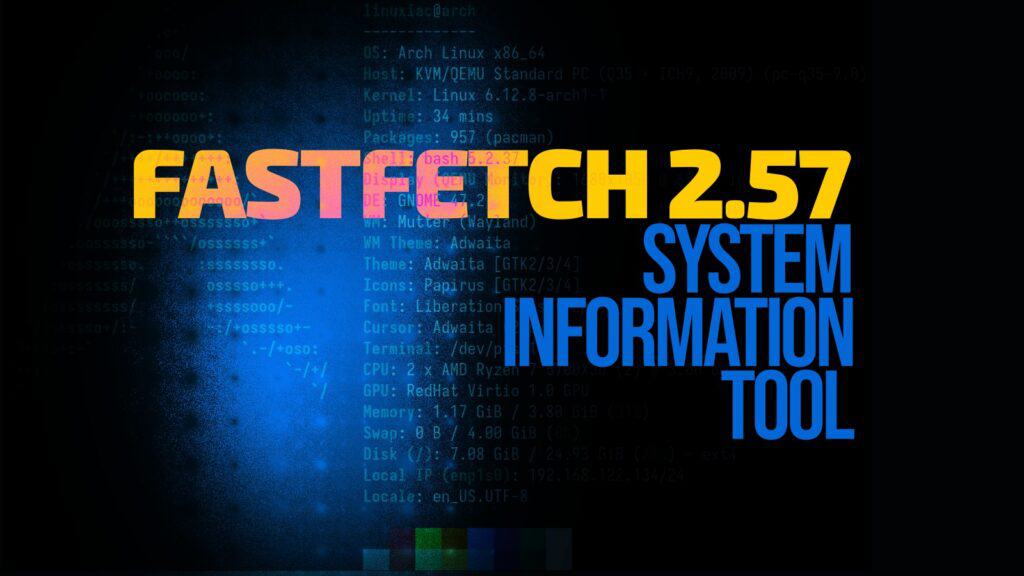
Fastfetch, a widely adopted tool by Linux enthusiasts for showcasing a sleek summary of system information right in the terminal, has just launched version 2.57.
One of the most visible changes in this release is the formal deprecation of support for Windows 7 and Windows 8.x. While compatibility remains available for now, the project explains that these older versions lack proper ANSI escape code support and several APIs required by Fastfetch.
According to devs, maintaining workarounds has increased code complexity, prompting the introduction of a dedicated CMake option, ENABLE_WIN7_COMPAT. Prebuilt Windows binaries distributed via Scoop and Winget are now built without this compatibility layer, targeting Windows 10 version 1607 and newer. Legacy support will be fully removed in version 2.60.
On Linux systems, Fastfetch 2.57 adds version detection for the COSMIC desktop environment and the Niri Wayland compositor, as well as improved terminal support. Fastfetch can now detect cosmic-term versions and terminal fonts, add urxvt font detection, and improve xterm font handling by checking additional configuration keys.
Additionally, Secure Boot detection is now supported on macOS, and uptime reporting has been made more accurate on Windows 10 and later.
Windows users also benefit from improved GPU detection and error handling, as well as more robust PCI ID parsing. Plus, color configuration now supports xterm 256-color codes via explicit color index notation, offering finer control over output styling.
Fastfetch 2.57 also introduces a new Logo module designed for structured output. The module allows querying built-in logo data directly in JSON format, improving integration with scripts and external tooling that rely on machine-readable system information.
Beyond new features, the release delivers a bunch of bug fixes. These include skipping loopback routes during network interface detection on Linux, correcting CPU speed detection on s390x systems, addressing networking issues and memory leaks, and fixing incorrect executable path reporting on macOS.
For more information, see the changelog.